Description
SOLD to Princeton University
This unique collection took over 50 years to put together. Many items in this collection have not been available for over 25 years years and especially in excellent to new condition.
Years putting the collection together
I had to purchase a number of magazines that were intentionally deceptively descripted falsely. Example " This magazine is in excellent or new condition" when I receive the magazine I found the covers either were torn or heavy creasing, or there was spine wear or at the top or bottom of the spine there were long splits. Inside pages were missing of pages that had cut outs or writing on pages through out, moisture stains etc. Most of this collection accrued in the 1970s, through the 1990s, Going into the 2000s I found a few of the magazine series are still available like Tiger and Butch, Unique, a few Vagarbond's. This collection in this condition will never be available again.
If seriously interested
If interested in this unique historical collection (the only one of its kind inn the world) please contact us by email or phone and we will discuss and provide more information for satisfaction to conclude a sale. All sales will be bank wire transfer
DSI
DSI (Directory Services, Inc) was a gay porn mail-order company that started in the middle 1960s closed in the early to middle 1970s. This company was involved in a very important legal obscenity issue with the Federal government showing frontal nudity frontal nudity (Post Office) in which it won.
The DSI collection presented here is the most comprehensive collection of DSI (Directory Services, Inc) of its kind in the world (there are 5 pieces missing to complete the collection). All the items listed are in excellent to new condition. If interested please contact us for more information on this unique collection of gay erotic history, Serious enquiries only
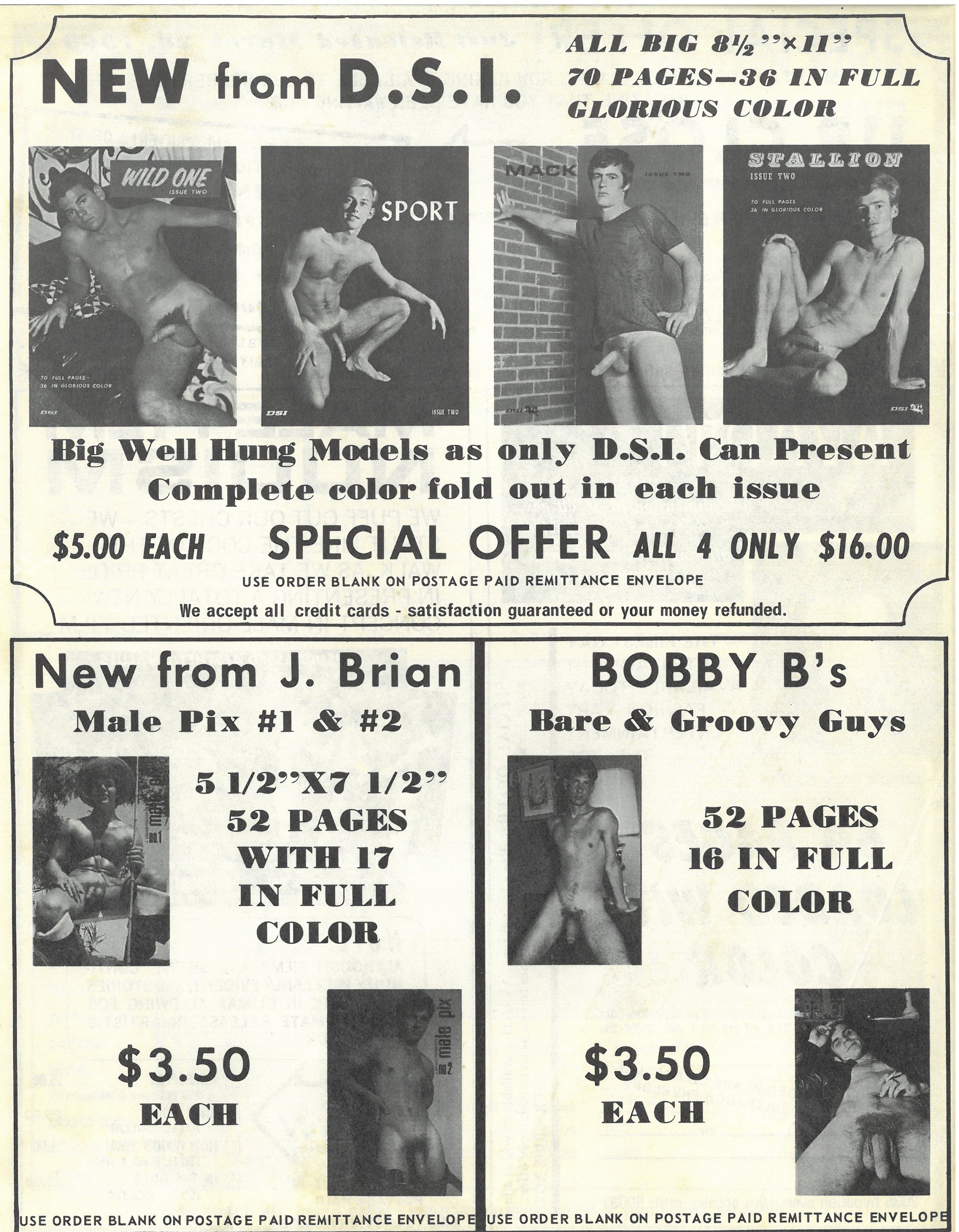
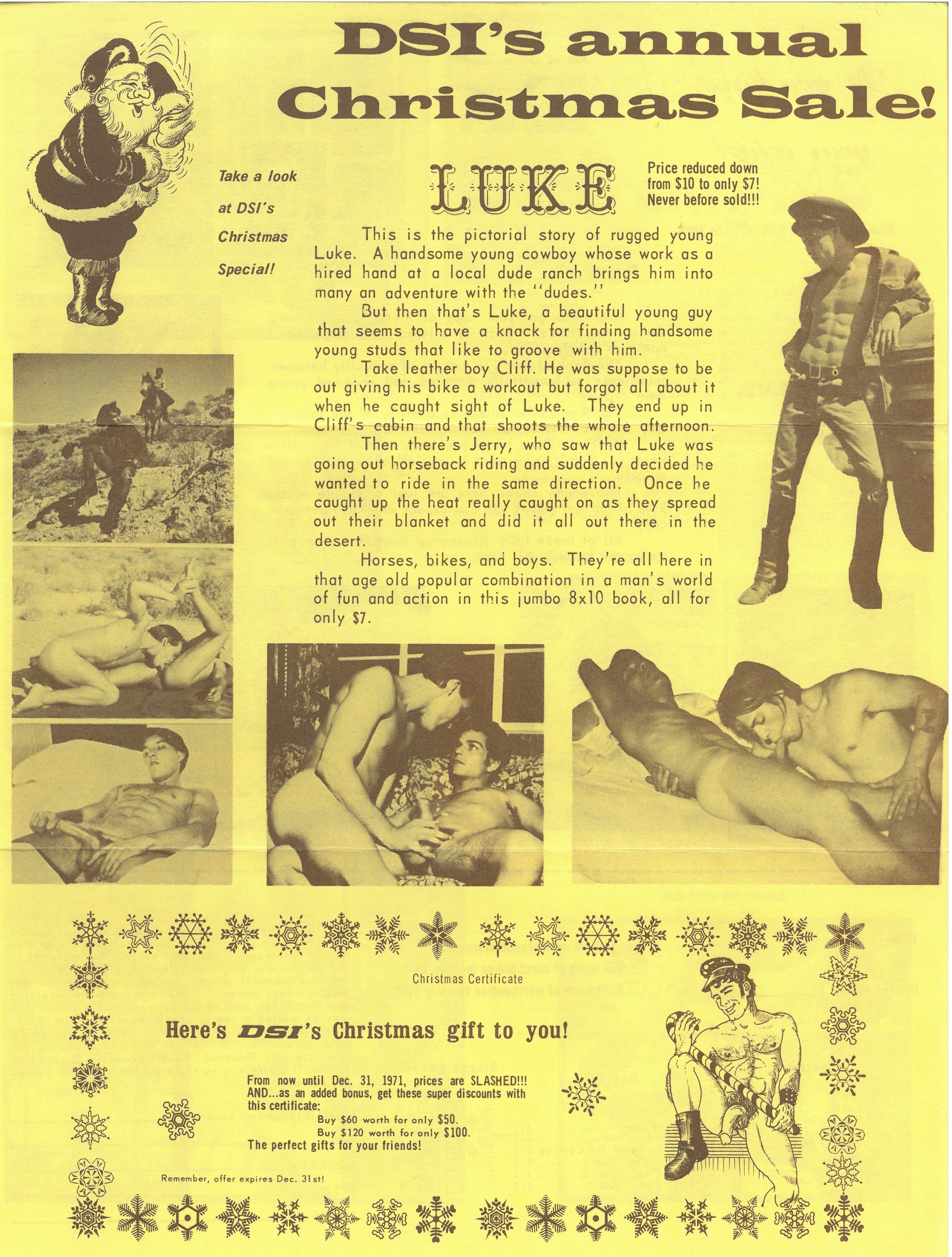
27 Promotional Brochures 27
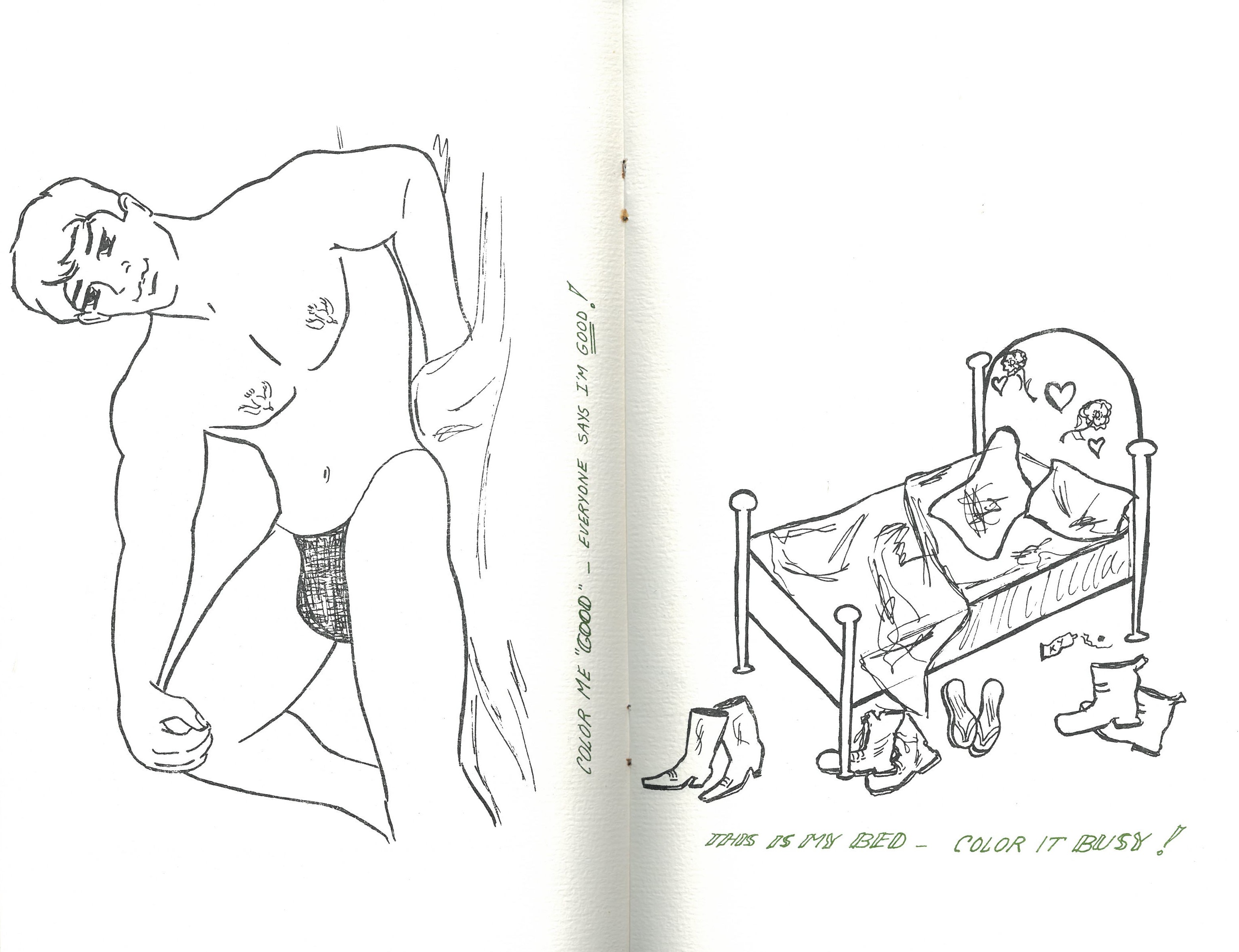
9 Album small booklets 9
1 Anal Intercourse V3 Soft cover 1970, 48 pages 5 1/2 x 8 1/2
1 Book of Studs 1970, 94 pages, 8 1/2 x 11
1 Boys 1
13 Butch 1 - 13
6 Galerie 1 - 6
2 Greyhuff 4 & 5 (missing number 1, 2, 3)
2 Greyhuff Review 1 & 2
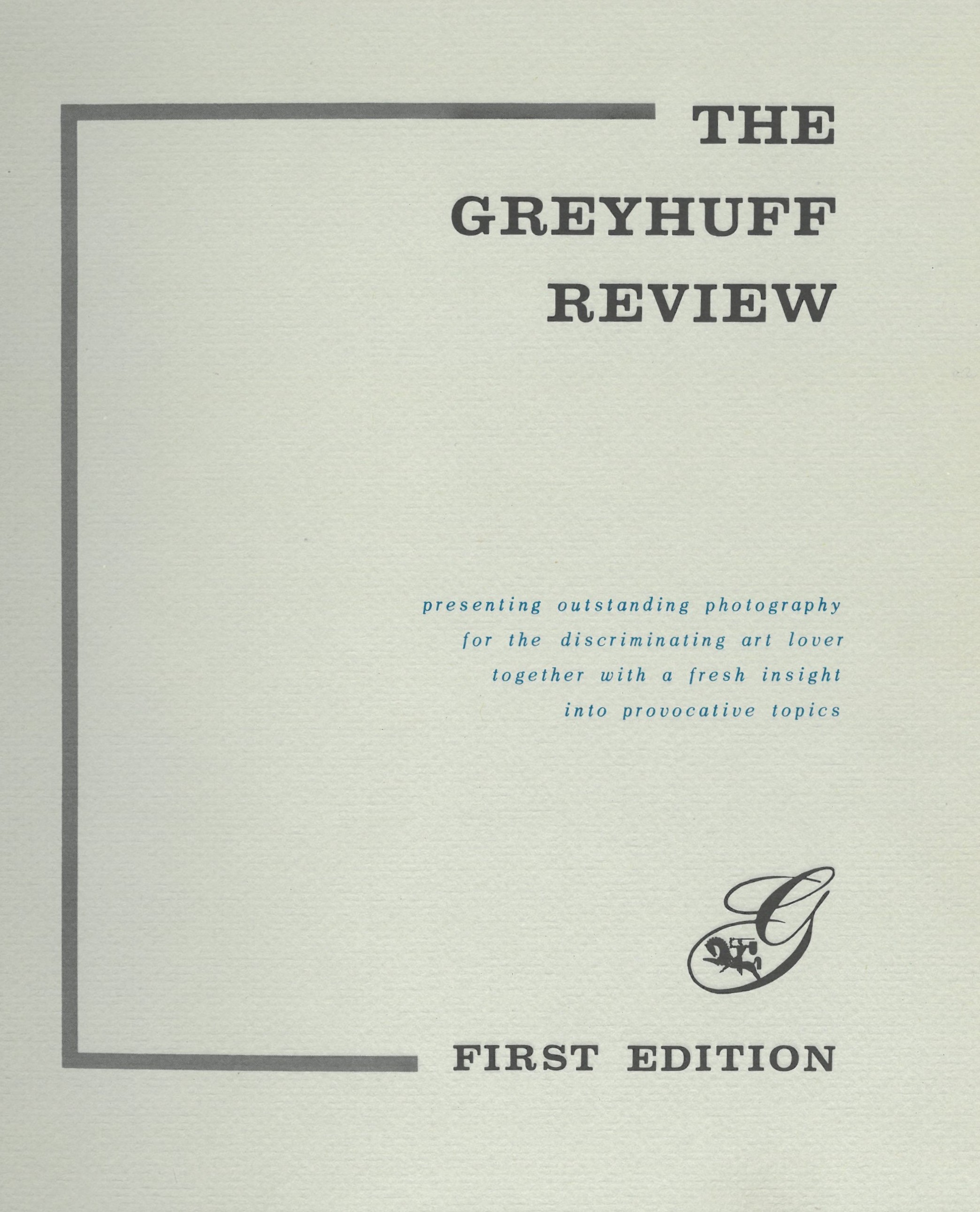
1 Greyhuff Review V1 (1st edition) 1965, 30 pages 8 1/2 x 11 padded cover
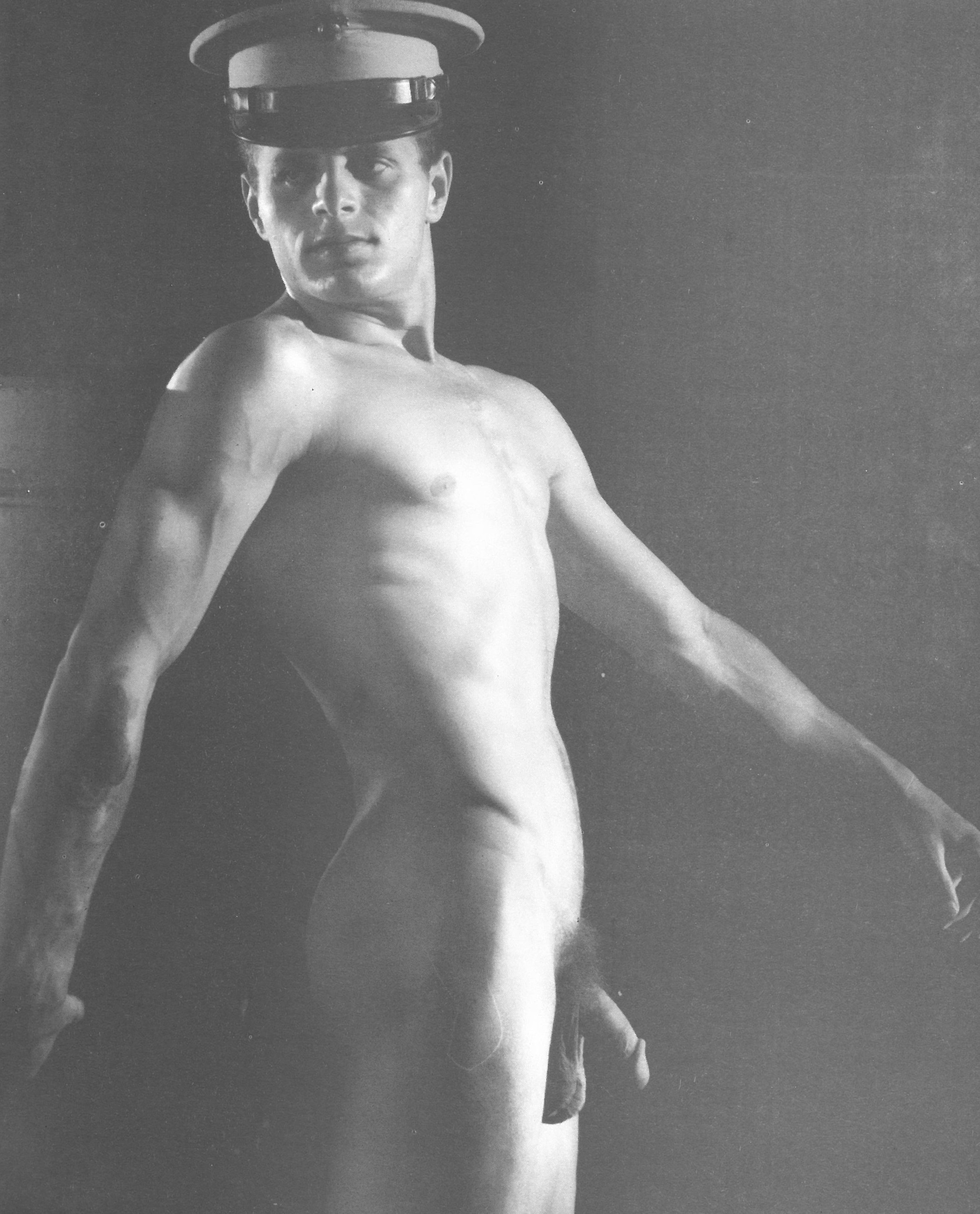
1 Greyhuff Review V2 1965, 32 pages 8 1/2 x 11. padded cover, 110lb cover paper stock, Photos B&W with transparent paper overlay for each photo. The Book has pulled away from the cover binding at the spine
1 Man Page number is screwed up (printing error) 300 pages 8 1/2 x 11
2 Mannlich 1 & 2
2 Masculus 1
1 Photorama 1
1 Premier 1
1 Ray Fuller Album 1 Soft cover 1969 - 1970, pages 94, 8 1/2 x 11
6 Rugged 1 - 6
1 Sport 1
1 Stallion 2 (missing #1)
6 Tiger 1 - 6
1 Troy
1 Tryst 1
4 Unique 1 - 4
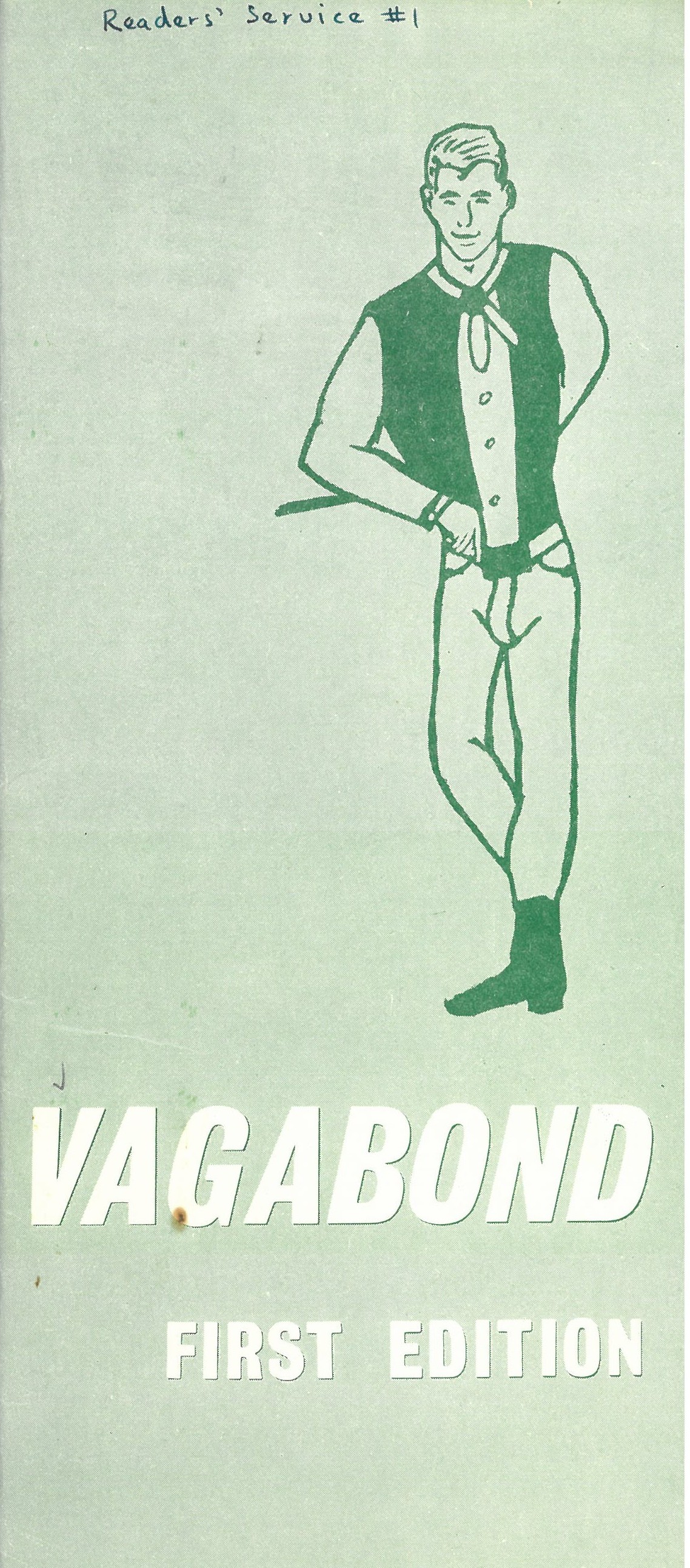
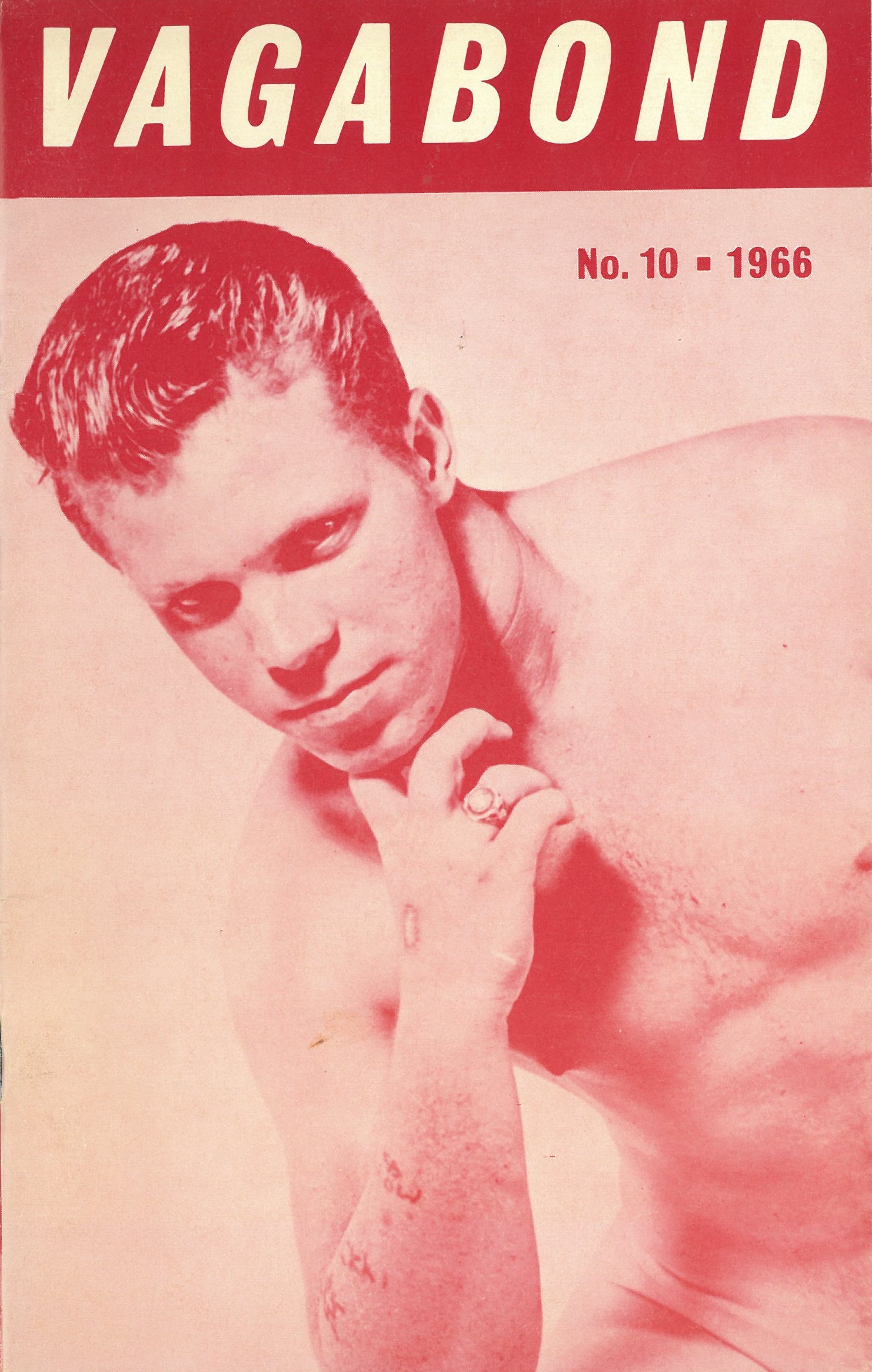
9 Vagabond 1 - 10 (missing N6)
2 Wild One 1 - 2
Total 103 pieces
Missing
Mack magazine
Greyhuff 4 & 5 (missing number 1, 2, 3)
Vagabond #6
DSI
Founded in 1963 in Minneapolis, Directory Services, Inc. (DSI) had a simple business model: market directories of physique photography studios, book services, and bars to gay men throughout the country to help them navigate an increasingly dense web of gay commercial enterprises. Soon DSI owners Conrad Germain and Lloyd Spinar expanded their mail order business to market a host of items, including physique magazines, books, toiletries, and clothing. By 1967 they employed fourteen full-time employees, making them arguably the largest gay-owned and gay-oriented enterprise in the world.
DSI represented a major shift away from small, independent outfits such as Bob Mizer's Athletic Model Guild toward corporate conglomerates that controlled numerous gay businesses and had the income to fight and win legal cases against the forces of censorship. In 1967 DSI won a crucial, but virtually forgotten, legal victory against the U.S. Post Office that allowed male full-frontal nudity in American magazines, ushering in an era of open homoeroticism. Looking at the history of DSI and its relationship to its customers, federal censorship authorities, and homophile organizations, this paper explores the important, overlooked role that such gay enterprises played in the history of gay community formation and resistance.
The Founders
Conrad Germain was born in South Dakota and enlisted in the U.S. Air Force. He was 22 years old and had just gotten out of the military when he decided to go to New York City, it was at this time that he decided to come out of the closet. On his way to NY, he stopped over in Minneapolis to visit some relatives, and never left. The reason for this was he met Lloyd Spinar, a 20-something graphic artist for the local newspaper. Now how did they meet, well they met at a gay bar and fell head over heels for each other.
At that time Spinar had already started a gay business he called "The Vagabond Club." Which was a listing of the gay and gay-friendly bars, hotels, restaurant, and vacation spots in the area, and was trying to sell it to other gay men. Also at that time Spinar's boss discovered his young employee was gay and fired him.
In 1963, Lloyd Spinar and Conrad Germain decided to go into business together and founded a company called Directory Services, Inc., (DSI) in Minneapolis, Minnesota guide for local gay businesses.
After a while they expanded their directory to cover the entire United States. It was a huge success. Vagabond became their cover business. They published a catalog that listed for sale a wide range of items with gay themes that would appeal to gay men. This included greeting cards, jewelry, campy records (one song was "Stanley the Manly Transvestite"), clothing, and fashion accessories. Soon, they were publishing a second catalog full of fiction and nonfiction paperback books about homosexuality. They also continued to publish their gay travel guide, “279 Places to Go for a Gay Time”.
DSI soon offered a credit card to its customers, so they could make purchases without fear of exposure. The company also provided a pen-pal service, so gay men could contact one another. And it began to develop black-and-white and color film for gay men, so that homoerotic and nude photographs could be developed without fear that the local photo lab would turn them in for arrest or obscenity.
DSI Trial
Assistant U.S. Attorney Stanley H. Green trotted out a local psychiatrist who said the nude images would give young boys "the wrong idea." Gay on DSI's mailing list were contact by the federal government and blackmailing into testifying (under threat of being outed and losing their jobs). Several of these men said that reading the magazines had induced them to cruising for sex. One gay man said the magazines had turned him gay; another testified that such images were always wrong. Two gay teenage boys were put on the stand and said they had received DSI advertisements in the mail. A photographer told the court that the magazines lacked artistic merit, while a local art student was called to the stand and said he was "distracted by the sailor's hat" in one photograph. A Catholic priest said that homosexuals should be pitied, not prosecuted, but also said that the magazines were morbid and tended to "recruit" homosexuals.
A Minneapolis postal inspector claimed he had received 4,180 complaints about the magazine (which is odd, because it was available only by subscription). Finally, the prosecution trotted out Anthony Dambrowski, aka "Bob Anthony," himself a former photographer of the male nude and the man behind the famous gay nude magazine Champ. Broken by repeated prosecutions, Dambrowski testified against Spinar and Germain and said that 80 percent of the people on their mailing list were "homosexuals". (Even the local press was sickened by Dambrowski's appearance and denounced it.) Almost everything produced by DSI in the past year was produced as evidence: Magazines, promotional fliers, brochures, one-sheets, etc.
Defense attorney Ronald Meshbesher said DSI's photos were artistic and thus protected. But that was just the legalese he had to use. In fact, the defense brought out a number expert witnesses with national reputations to testify on DSI's behalf. Had Call was the key behind this strategy. He'd pushed for a hard defense and had been instrumental in finding the expert witnesses and getting them to testify on DSI's behalf. The witnesses included the Rev. Dr. Robert T. McIlvenna, a Methodist minister and founder of the Council on Religion and the Homosexual; Dr. Wordell Pomeroy, former Director of the Kinsey Institute for Sex Research at the University of Indiana; sociologist Sara Harris, author of House of 10,000 Pleasures; and Dr. Walter Alvarez, a physician with the Mayo Clinic.
Other the strategies Meshbesher used in the trial was a "community standards" defense. He hired an investigator to purchase materials around the country, arguing that the availability of nude female images (such as in Playboy Magazine) meant that it was reasonable for there to be nude male images commensurately available to the public. Using a customer survey, he convinced the presiding judge that some of the customers for nude male photographs were women, not just homosexual men.
The late June trial lasted 13 days. Presiding over the bench trial was Earl R. Larson, a judge on the U.S. District Court for the District of Minnesota. On July 26, 1967, Judge Larson handed down in his ruling in United States v. Spinar and Germain, Case 4-67 CR 15 (D.C.Minn. 1967). Judge Larson acquitted the defendants on all counts in a seven-page decision that provided a ringing defense of the rights of "sexual minorities" to have their speech constitutionally protected.
The dismissing of all charges by Judge Larson extended the capacity of companies like DSI to use the postal system to distribute sexually explicit gay material. The case was significant, and it made the front page of the Advocate’s Premier Issue Volume 1, Issue 1.
Free speech historians, gay rights historians, and the media -- then and now -- called the ruling a landmark in gay rights. Legally, the decision only applied to federal courts in Minnesota. But Larson's ruling was so well-written, so legally sound, so ringing in its endorsement of the rights of homosexuals, judges nationwide began to privately cite it as a rationale for their own decisions striking down obscenity charges at gay publishers.
Two months after the verdict, Don Michaels began publishing a small gay newsmagazine in Los Angeles. It was called The Advocate. It’s very first cover story was about DSI Sale's victory.
Spinar and Germain were elated. In subsequent issues of their magazines, they ran full-frontal nude images with the caption "This photo was declared NOT obscene in a Federal Court
Sadly, that was not the end of things.
Furious federal prosecutors went after Spinar and Germain time and time again. Their goal was to seek an obscenity conviction. Barring that, they sought to drive them into bankruptcy.
In 1970, DSI Sales was raided again. This time, the federal government opted for a jury trial. The narrow-minded jury convicted Spinar and Germain on all counts in late July 1970. This conviction, however, was overturned in Spinar and Germain v. United States, 440 F.2d 1241 (1971).
Nearing bankruptcy from the constant legal harassment and impoundment of products, Spinar and Germain called it quits in the mid-1970s.
There is an interesting sidenote to DSI’s legal issues.
Spinar and Germain established another important legal precedent that has nothing to do with free speech. The raid against DSI Sales in 1967 hadn't been the first one. The company had been prosecuted before, in 1964. It's not clear what the outcome of this case was. It could not have resulted in a conviction, because Spinar and Germain never went to jail or were fined. However, they had been called before a grand jury to testify about their company. The two men sued the federal government, arguing that they had not been permitted to speak to legal counsel while testifying before the grand jury. However, the Eighth Circuit Court of Appeals held in Directory Services, Inc. v. United States, 353 F.2d 299 (8th Cir., 1965), that individuals testifying before grand juries were not entitled to legal counsel. A grand jury proceeding, the court said, was merely investigatory. No criminal charges had been filed against either man at this point. Neither the Constitution's 5th Amendment prohibition against self-incrimination nor federal codes of legal procedure gave witnesses before grand juries the right to legal counsel.
 DSI, Vintage Gay Erotic Porn Collection, Bijouworld.com