
BijouBlog

Interesting and provocative thoughts on gay history, gay sexual history, gay porn, and gay popular culture.

1970s & 1980s Porn Directors on Porn Filmmaking


posted by guest blogger Miriam Webster


Jack Deveau:
[Credits include Left-Handed, Drive, Ballet Down the Highway, Good Hot Stuff, Wanted: Billy the Kid, A Night at the Adonis, Rough Trades, Sex Magic, Fire Island Fever, Dune Buddies, Times Square Strip]


"We were looking for a while to describe the porno movie because it doesn't really relate to anything else. it is only starting to find its milieu, or genre, whatever you want to call it. It's a musical comedy, but now instead of singing, they fuck. Now that I've been able to make that generalization I think, well, are they going to sing a happy song now or a sad one? What condition is this character in? And then we try to structure the sex in those terms... Good or bad, gay or straight, this is becoming a literature that you can't ignore. Now there are 40 films in our library and there are a number of other organizations or companies who have the same thing. There are magazines in Europe who are devoting whole issues every other month to critiques of the erotic cinema. Eventually this will have to become a literature." -- Soho Weekly News, 1975
 

Jack Deveau
Jack Deveau on the sets of Ballet Down the Highway and Sex Magic
Jack Deveau shooting Ballet Down the Highway & Sex Magic


Peter de Rome:
[Credits include The Erotic Films of Peter de Rome, Adam and Yves, The Destroying Angel]

"I think that we've barely scratched the surface of pornography in filmmaking, and that it has become a sort of mandatory thing in sex films to show a positive view of sex and all of the sex is supposed to be the ultimate, the pinnacle of excitement and life simply isn't like that. It seems to me that sometime we've got to get honest about sex and admit to ourselves that very few sexual encounters do work out agreeably or are compltetely successful. I think we can learn from our failures as from our successes. I have a very simple if not simplistic attitude toward sex films, and that is that sex is just as much a part of life as living, eating, breathing, sleeping. It's just another function of life and I don't see why it can't be depicted dramatically just as those other functions are and as honestly, too. And I think we have to show every aspect of sex in films before we can really say we are making sex films."
 

Peter de Rome
Peter de Rome directing the stars of The Destroying Angel

Peter de Rome directing the stars of The Destroying Angel


Michael Goodwin:
[Credits include The Goodjac Chronicles, Goodjac Too]

"Filmmakers have prettied-up and candy-coated male sex so much that most people who do get off on it don't think that they're worthy of being photographed or seen. That's a real putdown of the community. I don't think it was planned that way, but everybody just got on the bandwagon. Good-looking sex and tantric moments are going on with people who have pot bellies, have hair in the wrong places, or don't have hair in the right places. I believe people want to see that kind of good sex... I'm stepping into this the way those people stepped into those rockets: they believed in what they were doing, they believed it was for a good cause, they believed it would do some good for people, and they just stepped in and did it." -- Mandate, 1986

Goodjac series logo
Michael Goodwin shooting The Goodjac Chronicles


Al Parker:
[Credits include Dangerous, Therapy, Head Trips, One in a Billion, Rangers, Oversize Load, Strange Places Strange Things, High Tech]

"Surge is a small company - very small. People are amazed when they find out that Surge was basically two people, my lover, Steven [Steve Taylor], and me. When you think of a studio, you think of M-G-M or Warners, but all of our sets were built in our living room in the house at Hermosa Beach, which was a 1500 square foot house that had a wonderful cathedral ceiling. But if you pulled up my carpets, my floors were ruined. I mean, there were nail holes everywhere. We trashed that house - but that house was our studio. And all of our successful films from One in a Billion to High Tech were done in that house." -- Manshots, 1990
 

Al Parker on the set of Strange Places Strange Things


Steve Scott:
[Credits include Track Meet, Rough Cut, Twelve at Noon, Gemini, Inches, Wanted, Games, Turned On!, A Few Good Men, Screenplay, Non-Stop]

"We're trying to create an erection. Now, to me, that's a feat in itself. It's a harder job than legit films. A lot of people may talk down porno, but I'll stand up to David Lean, to all of 'em, because what we do, in the limited time we do it in... Why, we're now doing 70 to 75 minutes on Inches for maybe ten, twelve thousand dollars. That's unheard of! That's lunch! So, it's an undertaking, and what we've done to date we're proud of, and hopefully we'll go on making milestones. And we don't like to cheat the audience. At least when they come out of the theatre from watching one of our films they're satisfied, they're entertained, and they don't feel like they're ripped off... and they may come back to see the next one." -- Skin, 1980
 

Steve Scott filming Twelve at Noon
  8623 Hits

Jack Deveau: Vintage Gay Porn Director Profile

by guest blogger Miriam Webster

Jack Deveau filming

Jack Deveau was one of the major directors, producers, and distributors of gay porn from 1972 to 1982. He made films that were “literate, artistically ambitious and, of course, sexually hot” (Mandate); shot films in Paris, Fire Island, NYC, and Woodstock, NY; and helped to launch careers in gay porn for countless writers, directors, actors, and musicians. Hand in Hand Films, the studio co-founded by Deveau with Robert Alvarez and Jaap Penraat, was referred to as “the M.G.M of gay porno” (with Deveau dubbed “the Louis B. Mayer”) and was known for making and distributing many high quality productions.

Jack was born in Manhattan, New York on January 25, 1935. He attended Cornell University, Sir George Williams College, and McGill University. In the early '70s, he was working at an architecture and graphic design business and – with his business partner, renowned architect/designer Jaap Penraat – had developed several patents and co-authored a book. At this time, Jack's lover Robert Alvarez and their friend, Rebel Without a Cause actor Sal Mineo, suggested to Jack that he ought to get into making movies. Robert told Manshots, in a 1982 interview, that he knew Jack would be well-suited for this profession: “I thought he was a natural. I thought he had a kind of charisma, the ability to make people listen, to make people enjoy what they were doing... Whoever he set his sights on, he could somehow charm into doing anything or saying what he wanted. He was the kind of person who, literally, had a lot of tricks up his sleeve – because he'd studied magic [when he was young] – and he was used to dealing with people.”
 

Jack and cast on the set of Sex Magic
Jack and cast on the set of Sex Magic (1977)

Jack Deveau, cast & crew on the set of Ballet Down the Highway (1975)

Alvarez had become a film editor several years prior, working on underground/experimental films and documentaries and laying the music track for landmark early gay hardcore film Boys in the Sand (Wakefield Poole), which Jack also helped to promote. Alvarez wanted to make a film with Jack “because from the beginning I wanted us to work together. That's part of what the relationship meant to me. I just wanted him around all the time.” Jack had seen some of his friends producing porn films and making a profit from them, but he was still unsure about being in the movie business. Sal convinced Jack to accompany him to a production meeting for one of his upcoming films. “I didn't really know what he had in mind,” said Jack, “but I went and sat quietly in a corner while a room full of film executives said some of the dumbest things I'd ever heard. I thought, I could do better than that, so with a little more encouragement, I became a film producer.”

Deveau, Alvarez, and Penraat formed New York-based studio Hand in Hand Films in 1972 with the aim of creating an alternative to the minimally plotted West Coast gay films that made up the majority of what was being produced. They wanted to create a definite East Coast look and feel and to produce artistically and narratively strong releases. The studio began with the production of their first film, Left-Handed, a feature directed by Deveau and Penraat about a hustler who seduces, then dumps, a straight man.
 

Ray Frank and Robert Rikas, stars of Left-Handed
Ray Frank and Robert Rikas, stars of Left-Handed (1972)

Robert Alvarez remarked on the film's tone and themes to Manshots, saying “It's cynical in a way, because Jack was cynical in a way about a lot of gay relationships and things that happen in gay society... It had a real story to tell. It had characters you could identify with, whether you liked them or not. Like, the lead character is sort of a shit. It was a breakthrough in that sense because it had an anti-hero. It also had all the required elements to make it a hardcore film.” The film's budget – fairly large compared to what was being spent on gay porn films at the time – came from Jack, who sold his stocks and took out loans to pay for it.

Left-Handed was shot on 16mm on a Bolex, as were many later Hand in Hand films. Jack was the primary cinematographer for the films he directed as well as for several of their other productions by different directors. Alvarez referred to Jack as a “tinkerer” who had a background in still photography: “He knew about the exposures and focus and all that business... He knew how to take a camera apart and put it back together. He knew exactly what made it work.”
 

The Carnegie Hall Cinema preparing to premiere American Cream & Left-Handed

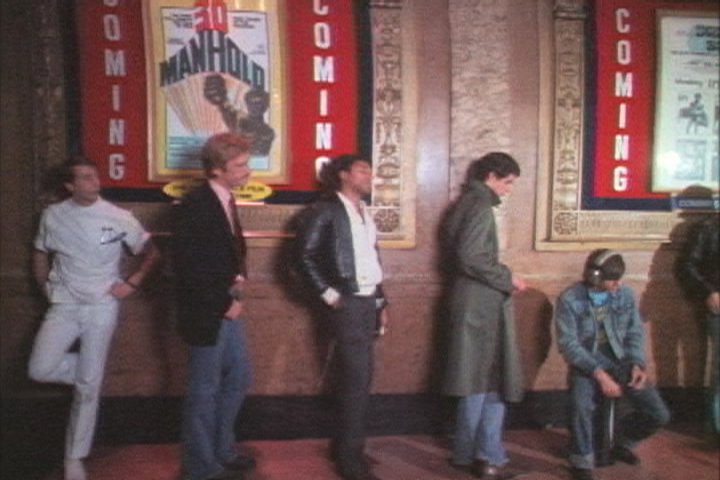
Left-Handed premiered at the Carnegie Hall Cinema, adjacent to Carnegie Hall, and was well-received, getting glowing reviews from Variety and a number of gay publications. The film ran for a time there and at the 55th Street Playhouse, also in NYC. Then Jack and Robert took “a cross-country trip in Jack's new Maserati (Jack felt we had to look the part of movie moguls) to meet and sell our movie to other cities' owners of gay x-rated venues.” Having got to know the exhibitors in the gay film market, Hand in Hand began to make and distribute additional films, becoming the first company to “provide a sort of national clearing house for gay films” (Manshots). Instead of selling prints to exhibitors, which most people were doing at the time and which resulted in many pirated film prints being created and screened, Hand in Hand rented out prints of the films they carried, winning over exhibitors by guaranteeing that they would have high quality new product regularly available. They were able to achieve this by promoting the brand name of Hand in Hand, itself, and attracting other directors to it. These included Peter de Rome (whose collection of shorts, The Erotic Films of Peter de Rome, was Hand in Hand's next release), Tom DeSimone (Catching Up, The Idol), Arch Brown (The Night Before), playwright Jean-Claude van Itallie (American Cream), John Stephens (Jack), and more.

1974 saw the release of Jack's most wild and ambitious film, Drive, co-written with and starring Christopher Rage and featuring a cast of 50 men; a short stint where Jack and Robert owned the Lincoln Art Theatre in New York (where they showed Drive and Gerard Damiano's classic straight porn The Devil in Miss Jones); and Jack and Peter de Rome shooting de Rome's first feature, Adam and Yves, in Paris. (Jack was the cinematographer and producer for Peter's second and final feature, The Destroying Angel, in 1976.)
 

Poster for and stars of Adam and Yves
Peter de Rome's Adam and Yves (1974)

Jack Deveau and Peter de Rome filming Adam and Yves in France

Jack Deveau and Peter de Rome on the set of The Destroying Angel (1976)

Jack Deveau and Peter de Rome on the set of The Destroying Angel (1976)


Jack (who had French roots) spent more time in France shortly afterwards, when Hand in Hand's documentary Good Hot Stuff (1975), a fascinating behind the scenes look at the production of gay porn films in the '70s, became the first gay porn film to open in Paris, billed there as Histoires d'Hommes. The run in Paris was successful. Said Jack, “Not only did we get lots of interesting press and critical attention, most of it quite favorable, but the film out-grossed Nashville our opening week. The most satisfying part of the whole experience, though, was to be treated as a serious filmmaker.”
 

Jack and Robert Alvarez in front of a Histoires d'Hommes billboard in Paris

You can watch excerpts from Good Hot Stuff here on our YouTube channel and see clips of Jack Deveau, himself, discussing filmmaking. He would return to Paris a year later to shoot Le Musee (later re-titled Strictly Forbidden and released, after a delay, posthumously) at the Musee Rodin, with cooperation from the French government.
 

Jack with Jaap Penraat, Peter de Rome & Christopher Rage in Good Hot Stuff (1976)
Jack with Penraat, de Rome & Christopher Rage in Good Hot Stuff (1975)

After Good Hot Stuff, Jack directed two excellent dramatic character pieces, Ballet Down the Highway and Wanted: Billy the Kid, in quick succession. Ballet Down the Highway was highly promoted and, according to an oddly glib and scathing Michael's Thing write-up, had a large premiere with champagne and souvenir t-shirts which was attended by Jamie Gillis, Divine, and Tennessee Williams.
 

Hand in Hand make-up artist Gene Kelton, Jack Deveau, Jettie Jenraat, Jamie Gillis, and Divine at the Ballet Down the Highway premiere

Hand in Hand make-up artist Gene Kelton, Jack Deveau, Jettie Penraat, Jamie Gillis, and Divine at the Ballet Down the Highway premiere


Jack always sought out talented writers and cast and crew members to work with. He recruited writer Lorenzo Mans (aka P.P. Mans) for Ballet Down the Highway and worked with trained dancers on a choreographed ballet sequence in that film. Hand in Hand soundtracks include outstanding original music by Emmy Award-winning television and Broadway composer Stan Freeman (Left-Handed, Drive, Ballet Down the Highway) and talented orchestral composer David Earnest (The Night Before, Drive, Adam and Yves, Ballet Down the Highway, and Wanted: Billy the Kid).

In performers, Jack would use his instincts to find men who had the right combination of elements to work well on screen: “When you're looking for men who can suck and fuck for the screen and in front of a crew of technicians, there's a poise and confidence that emanates from those who can. You can feel it just sitting and talking to someone. We also ask why the applicant wants to appear in a pornographic movie. If money is the only answer, I'm rarely interested in going any further. The work of being in a porn film, the physical and mental demands, just can't be bought with money alone. You have to have some interest in being in front of a camera, whether through sheer narcissism or attempting to ply your craft as an actor. And as corny as it sounds, there is such a thing as star quality, a sense of himself a man can have that sets him apart.”
 

Star Henk van Dijk licking Jack Deveau's light meter on the set of Ballet Down the Highway (1975)

Star Henk van Dijk licking Jack Deveau's light meter on the set of Ballet Down the Highway (1975)


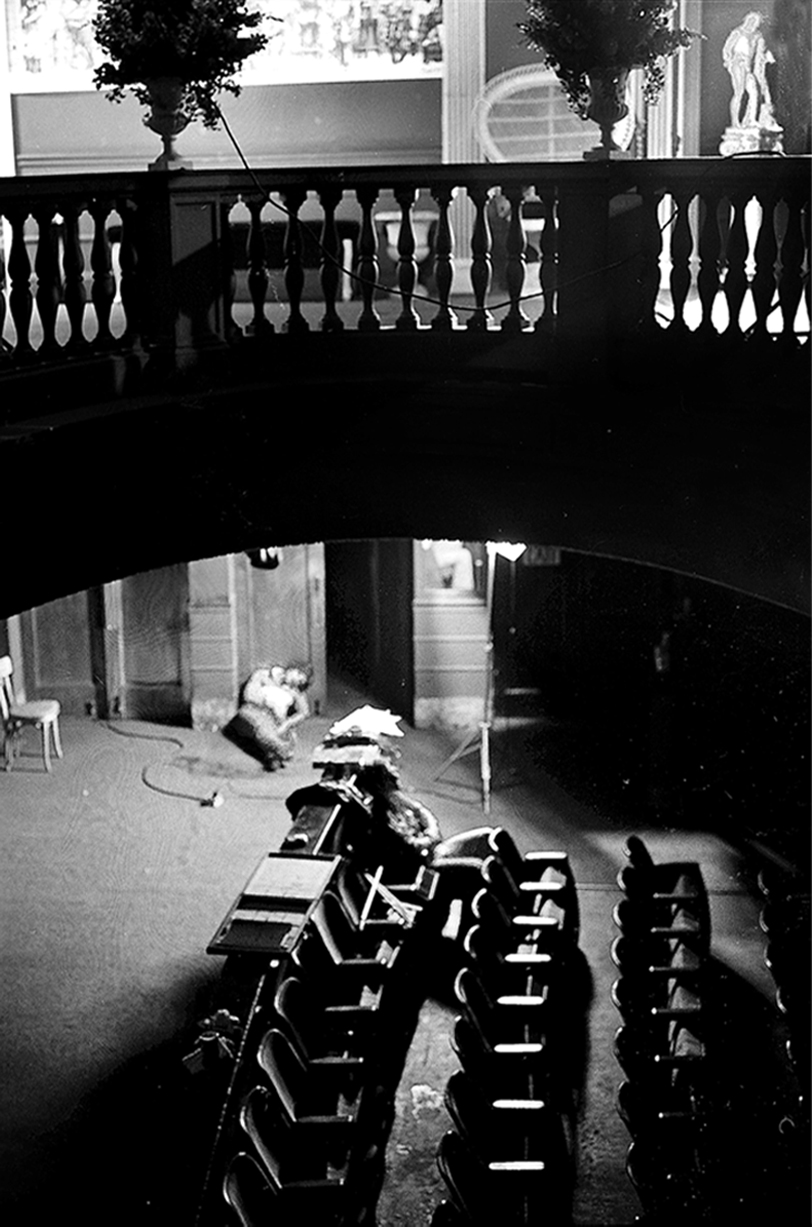
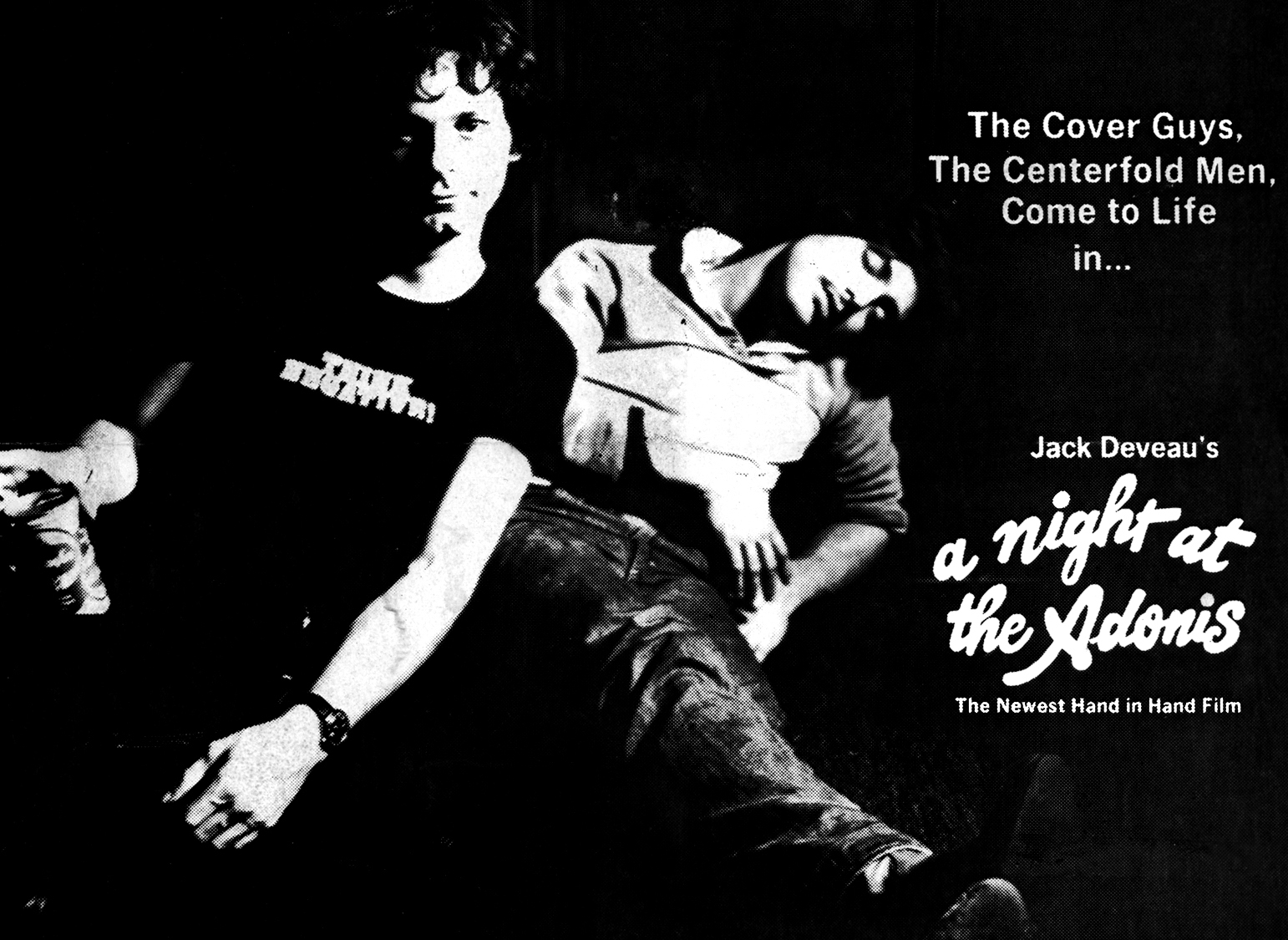
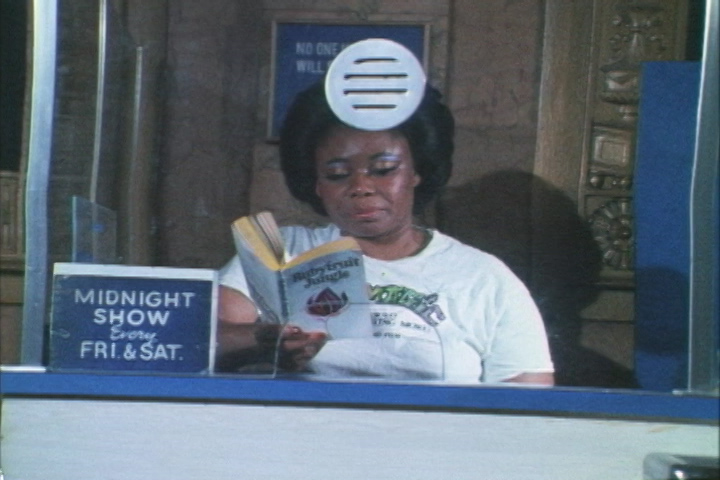
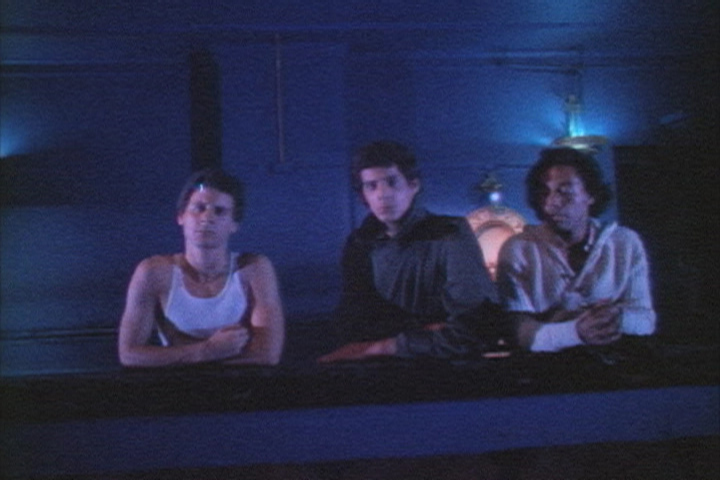
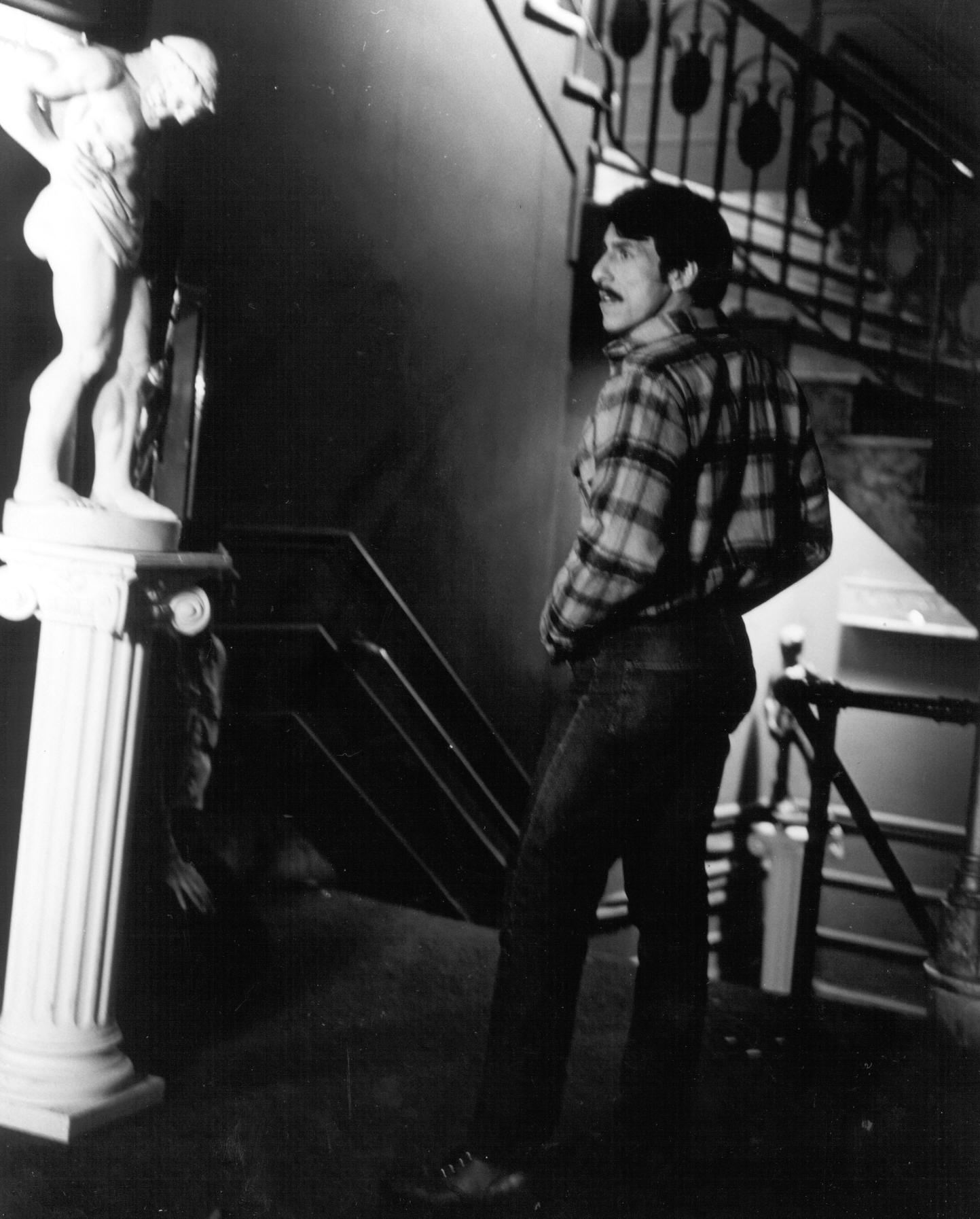
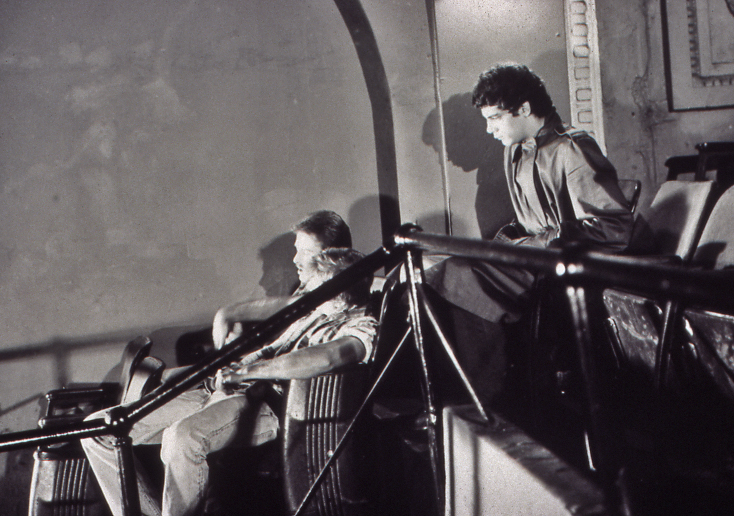
In addition to Jack's charm and people skills, Robert Alvarez discussed with Manshots his quickness and adaptability, which helped Jack to reshape anything that wasn't working during the shooting of a film and make it function. Jack's friend and Hand in Hand business associate Kees Chapman described how Jack always wanted to use the best equipment. For A Night at the Adonis (a 1978 film set in the Adonis Theater and starring Jack Wrangler, Malo, and Jayson MacBride), Jack wanted to get a stead cam, “which he was just dying to use, and this was the place to use it.” They were supposed to be cutting back on their spending because of changes in the industry taking place by the late '70s which made large scale productions less profitable, but Jack still wanted to get the technical side right. Chapman: “I miss Jack's influence that way, because – as much as I was always trying to pull him back and say, 'You can't rent another light because we can't afford it' – he'd go rent ten more – and he'd always be right.'”
 

Geraldo, Jack Deveau, Jayson MacBride & Malo in A Night at the Adonis (1978)

Geraldo, Jack Wrangler, Jayson MacBride & Malo in A Night at the Adonis (1978)


Jack wanted Hand in Hand's films to be well-executed and taken seriously by other filmmakers and by viewers. He was an early force shaping the newly forming genre of hardcore. His interview with Soho Weekly News contains some fascinating commentary on structure of the genre from Jack: “We came to an interesting idea about porno movies. We were looking for a while to describe the porno movie because it doesn't really relate to anything else. It is only starting to find its milieu, or genre, whatever you want to call it. It's a musical comedy, but now instead of singing, they fuck. Now that I've been able to make that generalization I think, well, are they going to sing a happy song now or a sad one? What condition is this character in? And then we try to structure the sex in those terms.”

Robert Alvarez commented to Manshots that “there was a period there where there was a lot of magic going on. It's not ever going to be the same again. There was a period in porn filmmaking when there was hope that you could do something... You could do whatever the hell you wanted. You could be as audacious as you wanted. You were working on a very low budget. You knew there was a limit on how much you could spend. You had that much money to do something. Therefore you could do whatever you wanted as long as you had the required amount of sex scenes.”

Hand in Hand amassed at least 40 films in their library, Jack directing many more through 1982 (Rough Trades, Hot House, Sex Magic, Dune Buddies, Fire Island Fever, Just Blonds, The Boys from Riverside Drive, and Times Square Strip), and they had plans to begin developing some non-pornographic gay films that could reach a wider audience.

Jack Deveau's filmography as writer, director, cinematographer, and producer

Jack Deveau passed away on December 2, 1982 after a long battle with cancer. Strictly Forbidden and a second shorts collection with segments directed by Deveau, In Heat, (following Hand in Hand's 1980 shorts compilation, Private Collection) were released posthumously. The adult film industry changed considerably in the following years with the advent of home video and the decline of porn theaters. Hand in Hand continued to operate as a mail order business until Kees Chapman died in 1988, at which point Alvarez sold Hand in Hand's entire library to Bijou Video, where we still preserve and carry their films, available on DVD and Video on Demand. They are truly worth checking out and range from beautiful and artistic, to bizarre, to romantic, campy, sleazy, funny, thoughtful, surreal, sweet, clever, dramatic – all while being hot.
 

Vintage posters for Dune Buddies, Ballet Down the Highway & Drive

Vintage posters for Dune Buddies, Ballet Down the Highway & Drive


Jack had hope for the legacy of the films he produced and for gay films as a whole: “There are magazines in Europe who are devoting whole issues every other month to critiques of the erotic cinema. Eventually this will have to become a literature... There are many stories to be told, as people finally listen to and begin to understand the experiences of gay men and women. I think there'll soon be a larger audience for movies about the way gay people feel about themselves and how they interact with the rest of society. And from a purely commercial standpoint, gay people have been supporting the film industry for years. It's about time they started getting some feedback.”

Alvarez also touched on Jack's notion of gay porn as recorded literature in his Manshots interview.

Manshots: What were his strengths that made his films so special?
Alvarez: Jack said what he wanted to.
Manshots: The fact that he made erotic films that said anything at all is a rarity.
Alvarez: Yes, I feel it's an unfinished story. I feel that there's more there than even I can comment on. One of the things that Jack always said was that “no matter what – this is recorded literature, or a piece of literature. You can be sure when you're dead that that piece of literature will be around.” As long as the film negative doesn't deteriorate or the lab doesn't burn down, it's true. Whatever is there that he made is going to be there for a long time. Who knows what people will make of it – but it will be there.
 

Jack Deveau illustrated portrait
  9237 Hits

The Real Benefit of Same-Sex Marriage: Human Dignity

The Real Benefit of Same-Sex Marriage: Human Dignity


This scenario is unfortunately all-too familiar: a gay man dies, and his partner ends up having to fight the “blood family” for property, a dwelling place, even a burial space. Unless a gay couple takes extraordinary, expensive legal measures, which in some cases means even adopting each other (see this link for a famous case), they are not legally protected, which protections and benefits would happen automatically if they were a heterosexual couple.
 

I know one person the above scenario happened to. He had to leave his dwelling of twenty-five years. His partner's homophobic family banned him from the funeral, and stole the burial plot. Why? He was not legally protected.


In another case, another friend of mine was much more fortunate. They lived in Florida, a state notorious for its homophobia (hello, Anita Bryant). Luckily, the partner's sister and brotherin-law were on good terms with him and followed his instructions about the sale of the house and other matters of the estate. Regardless of the financial situation, they respected the relationship. Their respect showed they saw my friend as a person, not an enemy “other” or an impersonal commodity.

The Edie Windsor case publicized and created much-needed discourse at the highest level the fundamental injustice of our defining only by gender civil marriage (yes, civil, not religious/sacramental). Edie would have had to pay an astronomical amount of inheritance tax on her wife's estate (yes, wife) because, as above, they were not a heterosexual couple. In response to this case, the Supreme Court struck down DOMA.

In other words, the civil society essentially treats those who do not fit heteronormative social structures as second-class citizens in a country which purports (and has failed and still fails to do) to operate under a claim that all people are created equal.

What I've said so far is not new, but I think it is really about not just the issue of same-sex couples being able to enjoy the economic, social, and psychological benefits of civil marriage, but about human dignity.

Human dignity transcends the physical ties of blood and the laws people make to be able to live together (which often results in people using each other as commodities, rather than persons). We experience human dignity by showing empathy and compassion for a person outside yourself, which means being able to find a piece, however difficult that may be, of that person in you, a process of growing, really becoming. To use the language of the famous Jewish philosopher Martin Buber, we need to enter into an I-Thou relationship, rather than an I-It one.
 

It's unfortunate that many of the benefits that those who enter into marriage are commodities (and in the past, remember, the wife [and the children] were essentially property of the husband), but I am hoping that we will get to the point that marriage equality is not just about a legal transaction. It's the recognition of the dignity of each human person as a complex, imperfect, non-binary becoming.


  5145 Hits

Come to the Cabaret

Come to the Cabaret

“Come to the cabaret ...”

I watched the movie Cabaret when I was in high school under adult supervision (I guess it was beyond my parents to figure out that Sally Bowles was not at all judgmental about her gay friends).
 

The I graduated in college to the gender bending Victor, Victoria, much of which takes place in nightclubs/gay bars which seem to be pretty much be synonymous with cabarets.

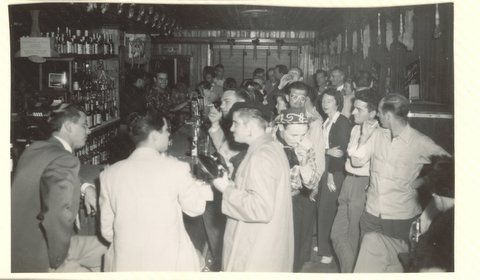
Live entertainment … torchy songs around the piano … lamps with shades on the tables … people smoking … all dressed up in evening gowns and tuxedos …. scenes that were also commonplace in mainstream Hollywood movies of the 30s and 40s, except in those movies, they were pretty much heterosexual, though the usual sultry contralto (low, almost masculine) voice of the lead female singer singing songs usually about elusive romance and hidden passions and perhaps a “sissy” waiter hinted at gender bending.
 

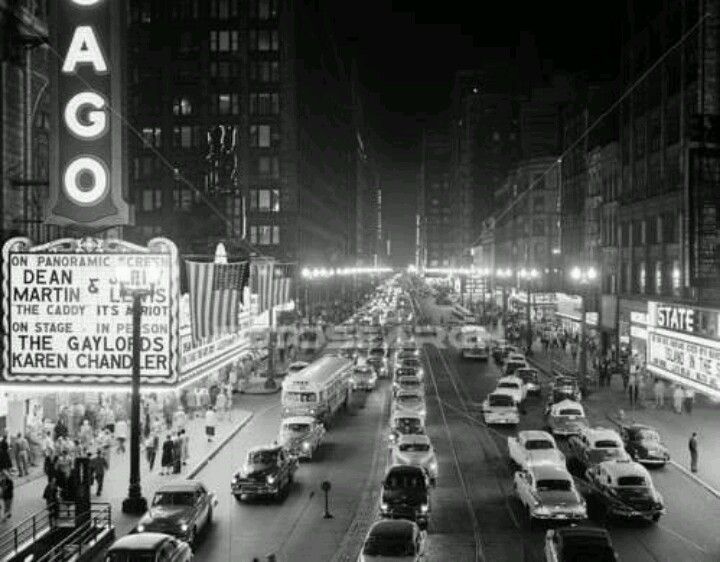
When I first came out in the eighties, there was a big gay bar that I guess you could also call a cabaret in Chicago, called Gentry. It was rumored to be the place to pick up a rich husband. Now, apparently, such places were not at all uncommon in Chicago, strictly gay cabarets often featuring drag performers, as far back as the 1930s.

According to Lucinda Fleeson in an article called “The Gay 30s,” there was place called Diamond Lil's, at 909 North Rush Street (get the reference to Mae West?), that was so popular people ended up being turned away. And the high society people flocked to those places; the Chicago Gray Line Sightseeing Company included gay pick up venues such as Bughouse Square in front of the Newberry Library as part of its package, appealing to the allure of what is strange, different, “queer.”


Yes, Chicago was Sin City, until mayor Edward Kelly decided to “clean up” the nightlife, and the moral panic of 1936 (everyone was a potential sex predator; remember the 1980s Satanic day care crisis? Same mentality) pretty much ended what was called “The Pansy Craze.”

Tastes have changed, and cabaret seems to have become a more specialized entertainment, not because of its audience, but because of its musical appeal. Some claim that piano bars/cabarets in general declined by the late eighties because of the popularity of electronic music, disc jockeys, bands, and even live karaoke.

In fact, I can't think of a specifically gay cabaret in Chicago since the closing of Gentry (it tried to revive itself in Boystown after leaving the Rush Street area, but it has since closed). There's a place called Davenports in the hipster area Wicker Park which is a piano bar not specifically gay (I noticed on its schedule a gay tribute for Pride Month, focusing on gay icons of the past, but no drag acts), and Mary's Attic, a gay venue in the now heavily gay area of Andersonville often puts on cabaret acts.


Perhaps the fascination with retro for these demographics might have something to do with the popularity of these venues … but tastes (and gay icons) have changed, or one might even claim, they've become more eclectic, especially for millenials who can stream practically anything in a millisecond.

Still, it's awesome to be able to find places in Chicago that keep cabaret, now taking on the status of a tradition, alive in the Chicago area.

  4176 Hits
Tags:

So Long, Farewell ...

The Bijou Theater, the oldest consecutively running gay porn movie theater and sex club in the United States, officially closes its doors on September 30, 2015, at 9 a.m.


Bijou has become an icon representing that time in gay history, the 1970s, where gay men, long hidden in the shadows, emerged as both liberators and the  liberated. The nonstop mansex party had begun.

The AIDS crisis of the 1980s threatened to turn the lights out for a community still struggling with its identity, but it regrouped and continued its fight for justice,  focusing now on political and social equality and confronting directly the new Religious Rights and its allies, culminating in the historical SCOTUS ruling that  legalized same-sex marriage throughout the United States.

Even though the lights will literally go out and the music turn off at the Bijou Theater next week after 45 years, remember that the sexual freedom Bijou represents ultimately transcends a physical location.

The next time you find the right guy with whom to enjoy the hottest mansex, think of the Bijou and what Dorothy said at the end of The Wizard of Oz, “But it wasn't a dream. It was a place. And you and you and you - and you were there. But you couldn't have been, could you?...No, Aunt Em, this was a real, truly live place. And I remember that some of it wasn't very nice, but most of it was beautiful.”

  4529 Hits
GO to Top