
BijouBlog

Interesting and provocative thoughts on gay history, gay sexual history, gay porn, and gay popular culture.

Interview with Director Tom DeSimone: Part 2 – Hollywood & Mainstream Directing

posted by guest blogger Miriam Webster


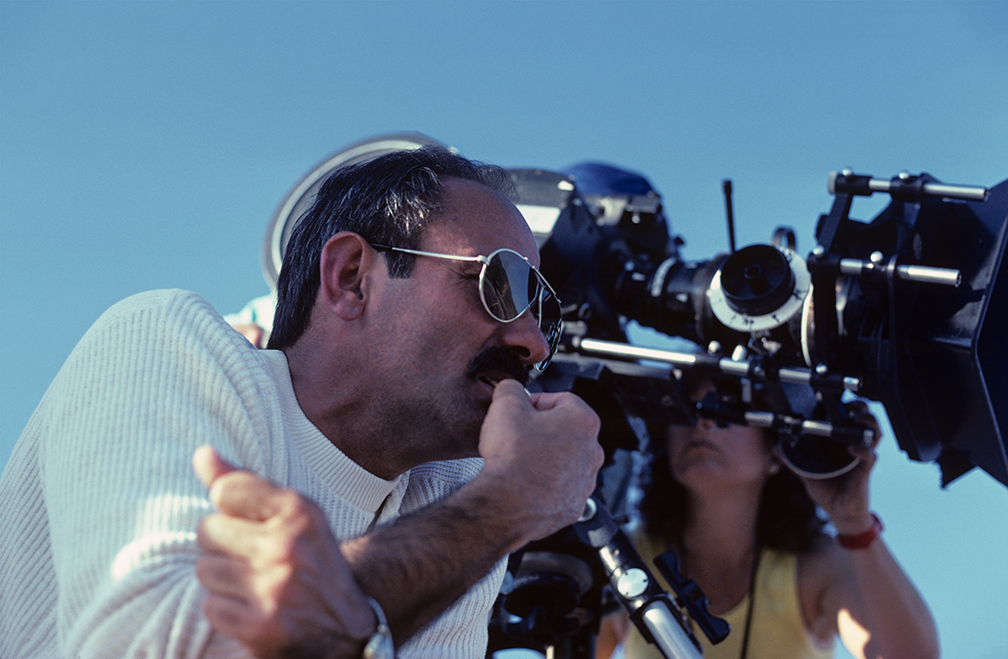
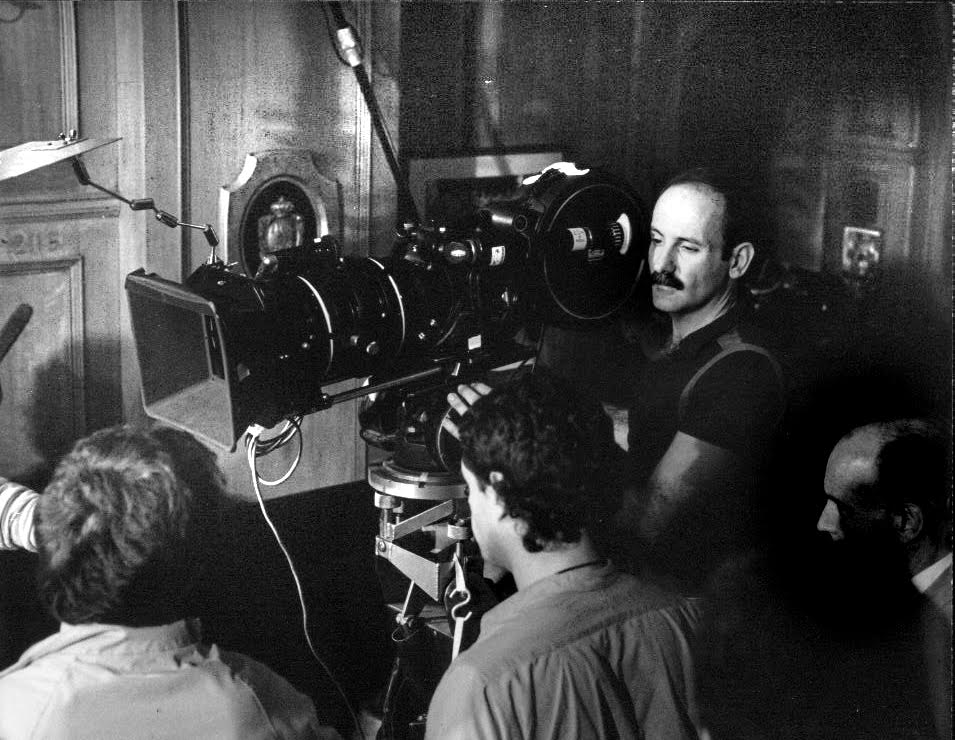
Tom DeSimone behind a camera
Image Credit: Tom DeSimone


This is the follow up to our previous blog about Tom DeSimone, a major figure in the formation of the adult industry in the 1970s and one of the earliest directors of gay hardcore films during the establishment of the genre. He directed many well-produced and influential gay porn classics, many of which had an emphasis on narrative, character, and relationships, including Dust Unto Dust (1970), Catching Up (1975), The Idol (1979), and the 1974 documentary on gay porn history, Erotikus: History of the Gay Movie.
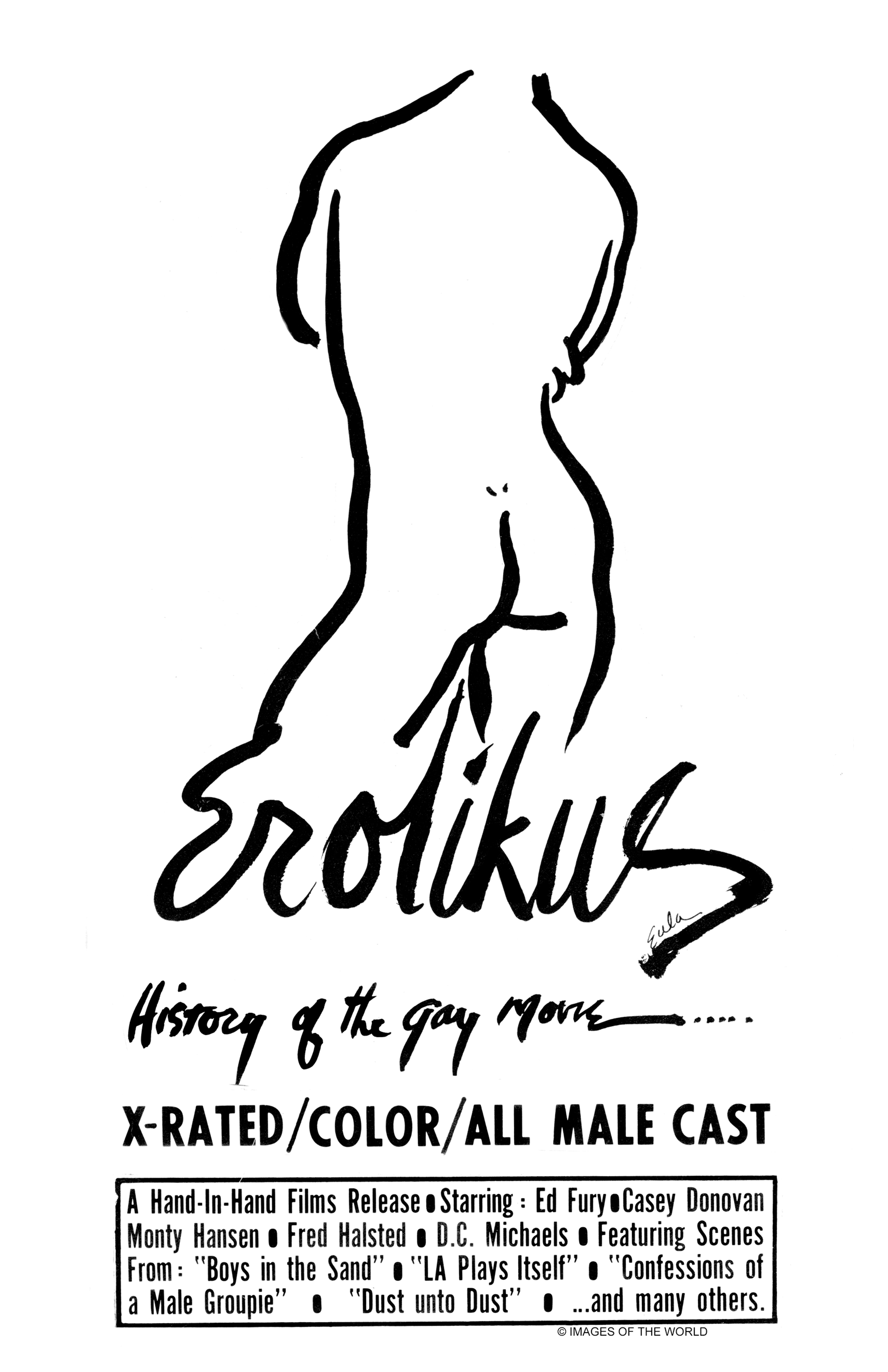
Vintage poster for Erotikus


DeSimone's skillful filmmaking in porn led him into an extensive career working in mainstream film and television, which he elaborated upon in this continuation of our interview.

Please read part one for an interview with Tom about his filmmaking background and porn career! And see the bottom of this blog for Tom DeSimone's filmography and links to his movies.

Bijou: What was it like being one of the rare crossover filmmakers between hardcore gay films and mainstream fare?

DeSimone: I was a very well-known writer, producer, and director of gay porn at the same time that both Casey [Donovan] and Wakefield Poole [director and star of Boys in the Sand, 1971] were in the business. I was quite prolific, having made over 80 hardcore features. I wasn't what you would call “obscure” since my films were readily reviewed in all the gay newspapers and magazines and, in some cases, even in Variety, the Hollywood Bible. I was interviewed numerous times in gay periodicals, as well. You could definitely say I was “out there.” And yet I easily made the crossover into mainstream movies and television and, in most cases, my past was known, yet it didn't seem to matter. I worked with Linda Blair, Maude Adams, Jill St. John, Richard Roundtree, Dennis Christopher, Patty McCormick, Susan Oliver, and Barbara Luna, among others. The bottom line was the work, the ability to bring in a feature film that made the grade.

While I respect the work done by many of my peers in those heady porn years, there's a vast difference between stringing a series of erotic loops together under a unifying theme and turning out a traditional feature film. In some instances, the reviews of my films often compared them to Hollywood films. I was known for coaxing believable performances out of guys with no acting training whatsoever. I did all my own editing and made sure I scored the films with appropriate background music. In some cases, I also did the camerawork to be sure that I was putting up on the screen what I wanted my vision to be. I studied the Hollywood classics for years and I also had a Master's Degree from UCLA film school. My being gay had nothing to do with my work. It had always been my ambition to work in mainstream films and making porn was just a stepping stone for me, a chance to practice my art until the big break came.

Ironically, it was my porn films that opened that door. A producer, who just happened to be gay, rented a porno one night and he and his lover settled down to watch it. He was so impressed with the film that he tracked me down and then introduced me to two other producers – both straight, by the way – and it was those two who financed my first legit Hollywood film. When screening my film with them, I was curious if the sex scenes would be a turn off for them, but they weren't phased in the least. What they were looking for was to see if I had what it takes to bring in a feature or not. And that was the beginning of a long and exciting career. Six feature films and one-hundred-sixty television shows later, I'm retired now and take great pride in looking back at it all.

Hollywood was, and still is, filled with gay writers, producers, and directors... they recognize talent when they see it and they reward it accordingly. Sometimes people think we [porn makers] were all just amateurs with a brownie camera in a cheap motel room, grinding out trash. Today's audiences need to know that there were real artists working back then... myself, Jack Deveau, Peter de Rome, Jerry Douglas, Wakefield Poole, etc. We opened the doors... and some of us even stepped through to the other side.

I had always had my eye on working in the Hollywood system from the time I was about ten years old. Making porn was just a means to that end. It allowed me to practice my craft at my own pace and to learn on the job, so to speak. It actually helped me when I finally did get my break because I had learned, by then, to shoot fast and from the hip, as the saying goes. Producers always liked the fact that I didn't waste time on the set and 99% of the time my films and TV shows came in on time and on budget.

Bijou: Which was your first Hollywood film, the one that you got a deal to work on by way of a Hollywood producer being a fan of your porn films? What was that initial shift into working in Hollywood like?

DeSimone: That film was Chatterbox [1977], which was actually a sex comedy. I was introduced to a producer at a New Year's Eve party by a friend who was a writer and successful. He was always a fan of my films and wanted to help me get my foot in the door. He introduced me, the producer and I chatted, he asked to see something, I arranged a screening of The Idol, he loved it, and that was the start. I had an old script lying around that I had intended to shoot, a straight porn movie called Lips about a girl with a talking vagina. He flipped for it but didn't want to do anything hardcore, naturally. So Lips became Chatterbox and my career out of porn was born.
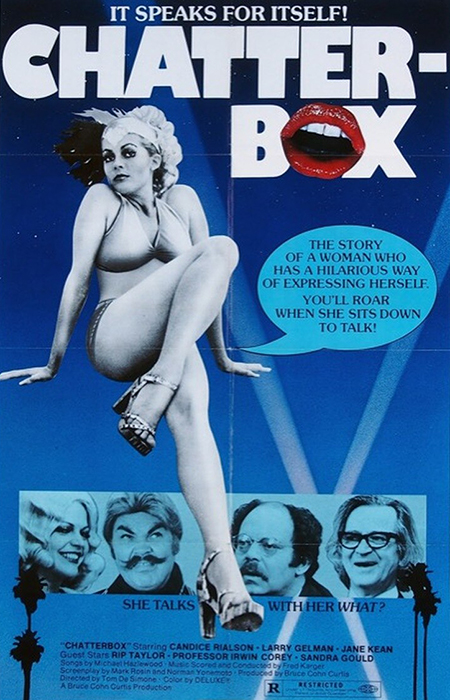
 

Chatterbox poster


Bijou: Tell us about working on porn sets versus mainstream Hollywood sets.

DeSimone: The transition was awkward at first, because making my porn films was a small affair. Me, the cameraman, and the sound man and one assistant who did what we needed on the set. On my first film, Chatterbox, I was astounded to show up on the set and have 100 or more people all busy working and depending ON ME to get things moving and get things done. I knew how to make a film, but had to learn how to relegate duties to others. I was used to moving equipment around and wrapping cables, etc. It was a big surprise (and a lovely one) at the end of the first day of shooting – the assistant director came up to me and said, “Your car is ready.” I had no idea what he meant. I was picking up cables and wrapping them and he said, “What are you doing?” I said, “Finishing up.” He just looked at me and said, “NO... You're the director. You don't do that. The driver is here to take you home.” After that, it was all a joy!

Bijou: Onto a couple of specific mainstream titles, what was it like working with punk musician Wendy O. Williams in your 1986 women in prison genre satire, Reform School Girls?

DeSimone: Wendy was unique and a mystery. She was very quiet, kept mostly to herself, ate in her trailer most of the time, and didn't socialize or mingle on the set with others, not even me until she had to. She had very strong opinions of what HER FANS would want to see her do, so many times we had to hash things out before doing a scene. She had a manager/Svengali sort of man, who was also her life partner. His name was Rod. He actually created WENDY O.WILLIAMS. That wasn't her real name and he fashioned her entire persona, her look, and her style and she looked to him for everything. Many times while shooting, I had to confer with him about what she would or wouldn't do in the film. Eventually we became friendlier and I was even invited by them to visit in New York, where they lived and worked in a huge loft. It was quite an experience seeing them in their own world. Unfortunately, he eventually took a position in upstate New York to teach at some university and took her along. It was my understanding that they had married. Sadly, being a faculty wife in a small academic community didn't make it for her and one morning she went out into the woods with a rifle and shot herself. Sad ending to a tumultuous life.

(Read more about Tom's work on Reform School Girls in this interview.)
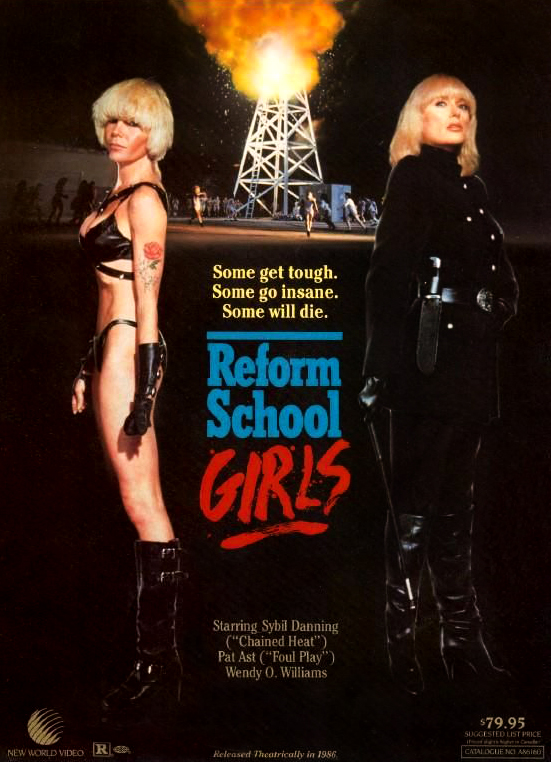
 

Reform School Girls poster


Bijou: What was it like working with The Exorcist's Linda Blair in your 1981 cult horror film, Hell Night?

DeSimone: Linda was a gem. We hit it off immediately and remained friends for several years after the film wrapped. She was hesitant at first about doing another horror film after doing a couple of Exorcist films, but we convinced her that her character wouldn't end up being a victim but, instead, would be the one who saves the day. She was always professional and has a great sense of humor, which made the work a lot easier. The entire film was shot at night, so working was difficult and, at times, really a struggle in the cold nights outdoors. We shot over the Thanksgiving holiday and even Christmas. When we took a break from shooting for Christmas, she arranged a big party for the entire company, actors and crew, and had it catered and everyone was invited to her home. I thought that was pretty special of her, since most actors would have wanted to take the time away from everything and just relax. We stayed in touch for several years after the shoot, but now only on occasion do we cross paths.

(Read an interview with Tom about the making of Hell Night here.)
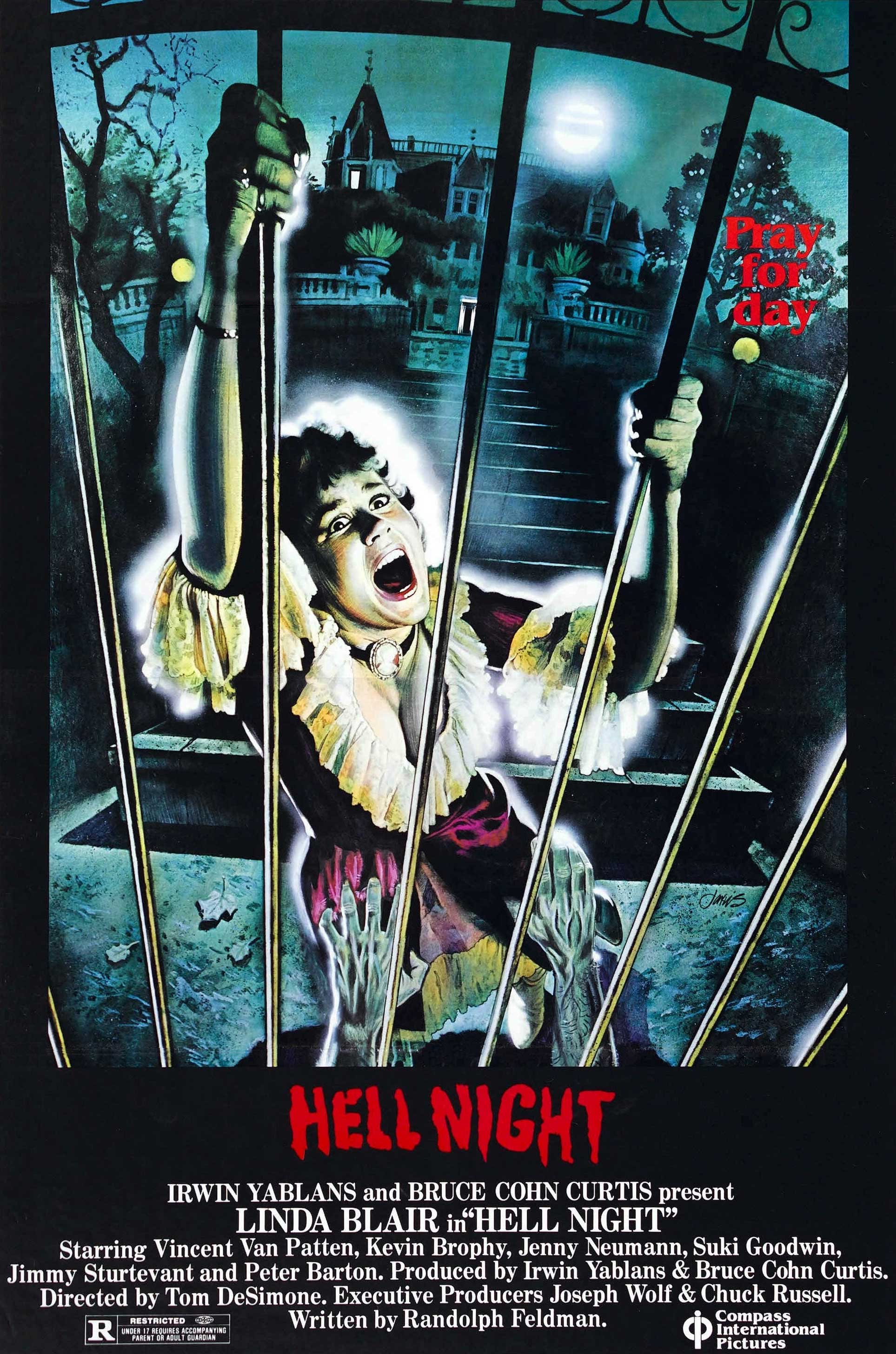
 

Hell Night poster


Thank you again to Tom DeSimone for generously discussing his career!

Tom DeSimone's Partial Directorial Filmography:
(From IMDb and Gay Erotic Video Index)
Links to movies available through Bijou Video

The Collection (as Lancer Brooks) – 1969
One - 1970
Dust Unto Dust (as Lancer Brooks) – 1970
Peter the Peeker – 1971
Lust in the Afternoon - 1971
Gay Tarzan – 1971
Confessions of a Male Groupie – 1971
Black and Blue - 1971
The Gypsy's Ball - 1972
Prison Girls – 1972
Chained (as Lancer Brooks) – 1973
Swap Meat (as Lancer Brooks) – 1973
Sons of Satan (as Lancer Brooks) – 1973
Black Heat (as Lancer Brooks) – 1973
Games Without Rules (as L. Brooks) – 1974
Erotikus: A History of the Gay Movie (as L. Brooks) – 1974
Station to Station (as L. Brooks) – 1974
Everything Goes (aka Anything Goes) (as L. Brooks) – 1974
Duffy's Tavern (as Lancer Brooks) – 1974
Blue Movie Auditions (aka How to Make a Homo Movie) - 1974
Assault (as Lancer Brooks) – 1975
Sur - 1975
Good Hot Stuff – 1975
Aphrodisiacs in the Male Animal (1975)
Catching Up – 1975
Chatterbox! - 1977
Hot Truckin' (as Lancer Brooks) – 1978
The Harder They Fall (aka The Frenchman and the Lovers) – 1977
Gettin' Down (as Lancer Brooks) – 1978
The Idol – 1979
Bad, Bad Boys (aka Bad Boys) (as Lancer Brooks) – 1979
Hawaiian Eyes (aka Gay Guide to Hawaii) – 1979
Private Collection – 1980
Heavy Equipment (as Lancer Brooks) – 1980
Wet Shorts – 1980
The Dirty Picture Show (as De Simone) – 1980
Flesh and Fantasy 1 – 1980
Dirty Books - 1981
Hell Night – 1981
The Concrete Jungle – 1982
Skin Deep (as Lancer Brooks) – 1982
Bi-Coastal (as Lancer Brooks) – 1985
Bi-bi Love (as Lancer Brooks) – 11986
Nightcrawler: A Leathersex Fantasy - 1986
Reform School Girls – 1986
Angel III: The Final Chapter – 1988
Freddy's Nightmares (TV Series, 4 episodes) – 1988/1989
Super Force (TV Series, 6 episodes) – 1991/1992
Dark Justice (TV Series, 18 episodes) – 1991 - 1993
Swamp Thing (TV Series, 3 episodes) – 1992/1993
Acapulco Bay (TV series) – 1995
The Big Easy (TV Series, 4 episodes) – 1996/1997
Coming Distractions (as Lancer Brooks) – 1997
Pensacola: Wings of Gold (TV Series, 1 episode) – 1998
She Spies (TV Series, 1 episode) – 2002
  4205 Hits

Interview with Director Tom DeSimone: Part 1 - The Early Years & Porn Filmmaking

posted by guest blogger Miriam Webster


Tom DeSimone behind a camera
Image Credit: Tom DeSimone


Mainstream film/television and porn director Tom DeSimone (also credited as Lancer Brooks) was one of the major figures who helped to form the adult industry in the 1970s, during the birth of hardcore pornography as a film genre. Initially shooting films for Shan Sayles of the Park Theatre in the L.A. area, DeSimone made some of the earliest gay porn films within the burgeoning industry, including the very first plotted, feature-length gay porn film, The Collection (1969). DeSimone's porn films typically centered around stories and he made technically high-quality productions - well-made narrative movies with developed characters and performers cast to suit their roles - that showed care for the craft.

Over the span of his porn filmmaking career, which also included sexploitation and bisexual films, DeSimone worked with many important contributors to the industry, including performers Gordon Grant, Al Parker, Jack Wrangler, Roger, Michael Christopher, David Ashfield, J.W King, and Fred Halsted, and filmmakers Nick Elliot, Jason Sato, William Higgins, and Jack Deveau. Deveau's New York-based studio, Hand in Hand Films, distributed several of DeSimone's films (Catching Up [1975], The Idol [1979], and others) and DeSimone also worked behind the scenes with Hand in Hand as the cameraman for three of their releases directed by Deveau (Ballet Down the Highway, Wanted: Billy the Kid, and Good Hot Stuff, all from 1975). (DeSimone extensively discusses his career in the newly released book, Good Hot Stuff, about Hand in Hand and Deveau.) DeSimone also made the historically notable film, Erotikus: History of the Gay Movie (1974), which is part documentary and part porn and which was released as a porn film and played in porn theaters.

DeSimone was one of a small number of individuals from the porn industry who successfully moved into working in mainstream film and television. (See the correction in our previous Casey Donovan blog, which left out mentions of those who did cross over into mainstream work.) This included Hell Night (1981) starring Linda Blair, Reform School Girls (1986) starring punk musician Wendy O. Williams, and extensive television work. (See the bottom of this blog for Tom DeSimone's filmography and links to his movies.)

DeSimone recently answered some questions about his career, which we are excited to share in this week's blog, the first of two installments, this one focusing on his introduction to filmmaking and directing porn films.

Bijou: What are some of your favorite films?

DeSimone: I can't really pick one favorite film out of the thousands I've seen and hundreds I love. On the list are Duel in the Sun, The Letter, 8 ½, The Little Foxes, The Rose Tattoo, Atonement, Pennies from Heaven, Incochine... so you see, I have a lot of favorites. A “favorite” is any film I can watch over and over and never tire of and also one in which I continue to find more and more elements of pleasure each time I view it. Among this list, The Letter is probably my most watched film and it never gets boring and I never cease to discover something new each time.

Bijou: Did you make short films while in school for film? What were those like?

DeSimone: At UCLA, where I got my master's degree, I made three short films. One of them, Wooden Lullaby, won best director at the Cine Film Festival in Washington D.C. Another, The Game, won me a scholarship to complete my studies in graduate school. Both films were screened for the public in the Annual Student Film Programs at UCLA. My film, The Game, got me an interview with Columbia Pictures at the time... but nothing came of that beyond the meeting.

Bijou: What were your goals and philosophy towards making your porn films (especially as one of the people who helped to form hardcore as a genre)? Did those persist or did they change over time as you continued to work in film?

DeSimone: Going into it, I didn't really have a philosophy. That came later. I got started because after film school there just wasn't an easy way to break into the Hollywood firmament. Film students back then weren't being sought after as they are now. I was tired of waiting tables and taking actors' portraits for their resumes.

At that time, adult film theaters were just starting to come out in the open. But they were all straight porn. No one was openly screening gay stuff. Then came the Park Theater near downtown L.A. They were showing “gay loops.” A loop, in the business then, was a short film, no plot or acting but just quickies featuring nudity and not much else... there was NO sexual activity, just implied, like holding hands, walking on the beach, or hugging at sunset... or looking longingly into each other's eyes while reclining – all sorts of innocent attempts to convey gay relationships or gay attraction. And NEVER erect!

Someone suggested to me that I might make a few bucks if I tried something. I contacted the Park Theater, got the name of the owner, and got myself an interview. Long story short, he told me to go shoot something and come back and see him and he'd decide if he was interested in me as a filmmaker. I did a short “loop” and loaded it with sexual activity... nothing hard core but definitely sexual love making... all shot discreetly, of course. I screened it for him and he hired me on the spot, built me a studio with cutting rooms, a sound stage, and anything I needed to turn out features for his theaters. That was the start of feature films for the gay market. That film was The Collection... followed by many more small, insignificant ones to fill the screen across the country at his theaters.

It wasn't until I started out on my own that I started to think about what I wanted to say or do with my films since, by now, I had created a career out of it all and was becoming known. (Or, at least, Lancer Brooks was.)

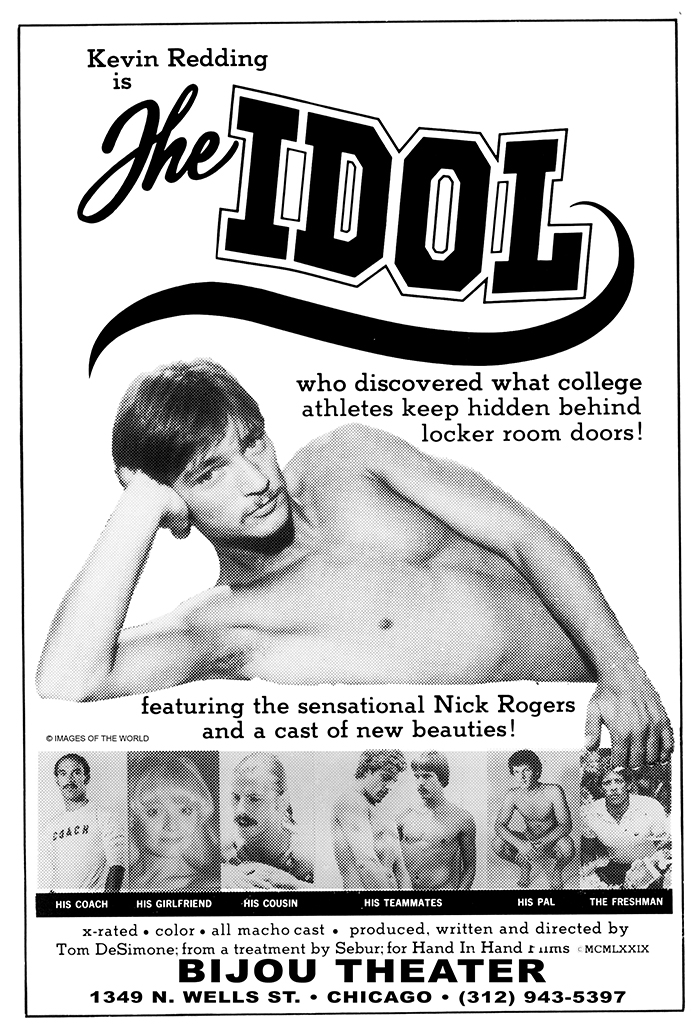
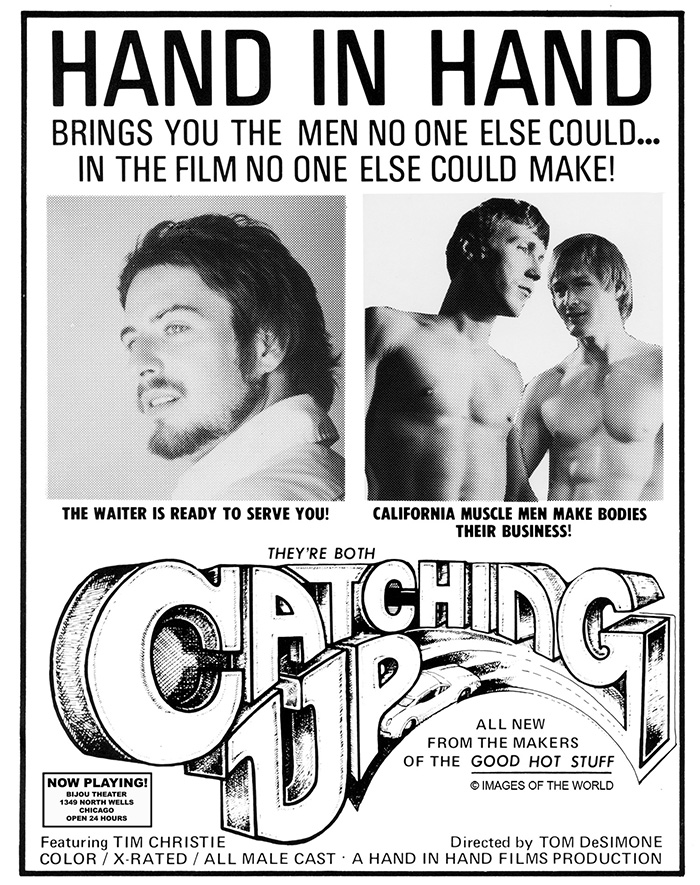
I soon discovered that films about “relationships” were most successful. So The Idol, Skin Deep, Catching Up, and also The Harder They Fall were huge successes. (The Harder They Fall was also released under a different title, The Frenchman and the Lovers.) I was interested in exploring gays in love or at least relationships. My stories pretty much gravitated to those situations. I was tired of all the films that started with the pizza boy delivering and ending up on the couch. That's not to say I didn't make a few of those, too. But when I really wanted to do something creative and when I got juiced up to do something, it always seemed to go to the relationship stories.

The Idol poster
Catching Up poster


Bob Blount and Eric Clement in The Harder They Fall aka The Frenchman and the Lovers
Bob Blount & Eric Clement in The Frenchman and the Lovers


Bijou: Who was your producer (also credited as a performer in The Collection), Max Blue, from early in your career?

DeSimone: Max Blue was a pseudonym for my partner at the time, Nick Grippo. We often just used silly names on our films because in those days no one was using their real names for legal protection since it was still against the law to make these films. We were always hiding underground. He just pulled that one out of the air since there was a popular film playing then called The Blue Max and he liked it. I chose an even sillier name, Lancer Brooks (just totally made up), but fate took over. When we were meeting with the distributor who peddled our films to theaters, he said to be sure to use the same names we did on our previous one, because they liked our work and he could barter for more money if he told them it was from the same team... so we checked what we had used on our last feature and it turned out to be those two names.

Bijou: Did you shoot other films of Jack Deveau's besides the grouping from 1975: Ballet Down the Highway, Wanted: Billy the Kid, and Good Hot Stuff? Did you do much other film work in New York around that time or were you mostly working in L.A.?

DeSimone: After I did Erotikus and was shopping for a theater in New York, I met Jack. He was operating the 55th St. Playhouse at the time and was running the very successful Boys in the Sand, so he was looking for something to follow it up since he knew it couldn't run forever and he needed product to keep the theater operating. We met, he looked at the film, and was interested in us working together on several projects. Jack was pretty inexperienced in filmmaking but wanted to get into the production side. He figured I could bring something to Hand in Hand. I spent a summer in New York working with him on several projects, then returned to L.A. and did The Idol for his company to release. We remained very good friends up until he passed way due to cancer. He was a great party guy – loved to party hard and long, into the New York underground scene, a lot of drugs and sex and a terrific guy to know... if you had the stamina!

Bijou: Did you know Penelope Spheeris (director of The Decline of Western Civilization and Wayne's World) around the time of Confessions of a Male Groupie (1971)? A couple who are the focus of two of her early short films (I Don't Know and Hats Off to Hollywood) appear in the party scene in Groupie. I was curious about the community of people who make up the cast of that film – I read somewhere that they were a community or group of friends you were affiliated with.

DeSimone: I met Penelope only once at a film festival in L.A. We spoke briefly about the emergence of underground films but we never were involved beyond that meeting. The two people you mention just happened to be in the party. I didn't know them personally.

That big party scene was the reason I made that film. I ran with a pretty eclectic crowd back then and many of the actors who appeared in my films were drawn from that crowd. Many others, who didn't really want to appear having sex in a movie, also wanted to be “in one of my films,” so I decided to make a film featuring all of the crazies I knew and loved. So The Groupie came about – and when I announced I wanted them to all appear in that scene, all hell broke loose and you can see in the film what we were all about. I should mention that, unfortunately - or not, I was on acid while we were filming that scene (most of us were), so I didn't cover as much as I wanted, but what I got was enough to throw together what's up on the screen.
 

Confessions of a Male Groupie party scene
Party scene from Confessions of a Male Groupie


Bijou: It's interesting to learn how many friends you worked with in your movies.

DeSimone: I rarely socialized with the models in my films if they weren't already part of my group. For a number of reasons I preferred not to get too involved in their lives and vice versa. If I used friends, they were already friends and in my social group. In Hot Truckin', the redheaded boy at the end – the one in the threeway – was my partner at the time. He was SO hot for Gordon [Grant], I agreed to let him be the trick they lured into the truck. Everyone was happy, particularly my friend, Bob.

My reasons for being separate, if I could, with the models was only because I didn't care to have them know too much about my life or where I lived, etc. I was strictly interested in them as models/actors. For me it was strictly a business situation. Very few outside my inner group even knew what I did or who Lancer Brooks was.
 

Bob Snowdan in Hot Truckin'


Gordon Grant in Hot Truckin'


Bijou: I guess Groupie was a rare exception, as your film utilizing members of your friend group, in that case.

DeSimone: Yes, Groupie was an exception... but as I mentioned, I made it specifically to make a film and use many of my friends. Sweet Lady Mary was a dear friend, Elaine. The rock group, The Electric Banana, was another trio of buddies who fantasized about being a rock group, so I made them into one for the film. All the players were close friends who had wanted to be in a picture, so I concocted one so that I could use them. The party scene was the culmination of all the gang we ran with in West Hollywood at that time. Of course, there were several in the party scene who just showed up to be in the film. Sadly, 90% of them are gone now. The plague taking most, unfortunately. We had no idea then that what we were experiencing would have such consequences... who did? The cute redhead, Bob, was also a victim years later.
 

Elaine aka Myona Phetish in Confessions of a Male Groupie


The Electric Banana, fictional rock band in Confessions of a Male Groupie


Bijou: How did you get such strong performances out of your porn actors who had no acting experiences?

DeSimone: Getting performances was always a challenge. I always blocked out all the action in my films in advance and also broke down the script, scene by scene, even indicating where the dialogue would be in close up, two shots, or masters. That way I could get what I needed to edit the film and the performances in a cohesive work. I knew these guys would never be able to carry an entire scene in a master shot (a mistake many filmmakers made back then). So I would film short sections, working with them on just those few lines at a time, then cover the scene with the other actor or actors in the scene, and it would all play together nicely. If one of them screwed up or was lousy, it was simple to shoot several takes of a close up until it was good, rather than shoot the entire sequence over and over. I was a master at editing and it was fun cutting together a performance from very little. Many times the actors would be amazed (and impressed) when they came to the screening to see the film.
 

Filming The Idol
Filming The Idol
Filming Kevin Redding & Nick Rodgers in The Idol


Bijou: Which is your favorite of your porn films?

DeSimone: I guess I could say Catching Up, Skin Deep, and The Idol. These, to me, have good plots, good acting, and really decent production values for porn.

Read part two of this interview, focusing on on Tom DeSimone's mainstream film/television career!
 

Tom DeSimone
Image Credit: Tom DeSimone


Tom DeSimone's Partial Directorial Filmography:
(From IMDb and Gay Erotic Video Index)
Links to movies available through Bijou Video

The Collection (as Lancer Brooks) – 1969
One - 1970
Dust Unto Dust (as Lancer Brooks) – 1970
Peter the Peeker – 1971
Lust in the Afternoon - 1971
Gay Tarzan – 1971
Confessions of a Male Groupie – 1971
Black and Blue - 1971
The Gypsy's Ball - 1972
Prison Girls – 1972
Chained (as Lancer Brooks) – 1973
Swap Meat (as Lancer Brooks) – 1973
Sons of Satan (as Lancer Brooks) – 1973
Black Heat (as Lancer Brooks) – 1973
Games Without Rules (as L. Brooks) – 1974
Erotikus: A History of the Gay Movie (as L. Brooks) – 1974
Station to Station (as L. Brooks) – 1974
Everything Goes (aka Anything Goes) (as L. Brooks) – 1974
Duffy's Tavern (as Lancer Brooks) – 1974
Blue Movie Auditions (aka How to Make a Homo Movie) - 1974
Assault (as Lancer Brooks) – 1975
Sur - 1975
Good Hot Stuff – 1975
Aphrodisiacs in the Male Animal (1975)
Catching Up – 1975
Chatterbox! - 1977
Hot Truckin' (as Lancer Brooks) – 1978
The Harder They Fall (aka The Frenchman and the Lovers) – 1977
Gettin' Down (as Lancer Brooks) – 1978
The Idol – 1979
Bad, Bad Boys (aka Bad Boys) (as Lancer Brooks) – 1979
Hawaiian Eyes (aka Gay Guide to Hawaii) – 1979
Private Collection – 1980
Heavy Equipment (as Lancer Brooks) – 1980
Wet Shorts – 1980
The Dirty Picture Show (as De Simone) – 1980
Flesh and Fantasy 1 – 1980
Dirty Books - 1981
Hell Night – 1981
The Concrete Jungle – 1982
Skin Deep (as Lancer Brooks) – 1982
Bi-Coastal (as Lancer Brooks) – 1985
Bi-bi Love (as Lancer Brooks) – 11986
Nightcrawler: A Leathersex Fantasy - 1986
Reform School Girls – 1986
Angel III: The Final Chapter – 1988
Freddy's Nightmares (TV Series, 4 episodes) – 1988/1989
Super Force (TV Series, 6 episodes) – 1991/1992
Dark Justice (TV Series, 18 episodes) – 1991 - 1993
Swamp Thing (TV Series, 3 episodes) – 1992/1993
Acapulco Bay (TV series) – 1995
The Big Easy (TV Series, 4 episodes) – 1996/1997
Coming Distractions (as Lancer Brooks) – 1997
Pensacola: Wings of Gold (TV Series, 1 episode) – 1998
She Spies (TV Series, 1 episode) – 2002
  7436 Hits

Chris Rage, Arch Brown, & Frank Ross: Hand in Hand to Live Video

By M. Webster

Frank Ross taking a photo and Chirstopher Rage and Arch Brown, from behind, watching dancers perform on the set of The Night Before
Frank Ross snapping photos (L) while Chris Rage & Arch Brown (R) watch dancers on the set of Arch's The Night Before (1973)


This photo from Arch Brown's 1973 production The Night Before captures a seemingly ordinary convergence on a film set. But the collection of individuals present together in the frame illustrates the intimate, intertwined, collaborative community who helped develop, then redefine East Coast gay porn film/video during the industry's first two decades. Captured during the second year of operation of influential studio Hand in Hand Films, this image depicts the initial connection point of three individuals whose mutually influential careers would continue crossing and joining paths, culminating years later at one of their own studios: legendary fetish video artist Christopher Rage, groundbreaking ultra-early gay porn filmmaker Arch Brown, and man of many hats of the classic gay porn world Frank Ross. The lineage they and their many other collaborators represent spans multiple critical periods and changes, which are reflected in their work: the beginning of the hardcore porn film industry, the socio-political shift from early LGBTQ liberation days to the AIDS crisis, and the technological shift from theatrically distributed film to home video.

Arch Brown was "one of the first above-ground underground filmmakers" according to Christopher Rage (aka Tray Christopher). His erotic filmmaking predated the birth of the hardcore porn film industry; he directed loops for venues like the Eros Theatre starting around 1968, before the shift to hardcore had truly (openly) begun. His movies stood out from the start because of their technical polish and inventiveness. He maintained a playful and trippy style throughout his porn film career, with a penchant for depicting everyday NYC encounters: average guys strolling and cruising on the streets and sites of New York, bumping into their next erotic adventure. 

As Rage described in one of his final interviews, he met Arch after hooking up with a guy who had starred in one of Arch's movies. At a cast screening, Rage (at the time working as an escort and erotic novelist) asked Arch about the logistics of making porn films ("I'm a natural producer type.") and was offered a role in Arch's next production, which he accepted. This was One and Two and... (aka Fantasy Island, circa 1972), Rage's entry into the motion picture porn world. Rage was mentored in filmmaking by Arch during this period of the emerging commercial scene, working with him on set on future productions. He studied his highly efficient, low-waste style: “I would shoot 5:1… I learned how to put together a movie fast."

Vintage newspaper ad for Arch Brown's One and Two and, showing at The David Cinma
Vintage newspaper ad for Arch Brown's One and Two and... (1972)


It was through Arch that Rage met Jack Deveau and Bob Alvarez at Hand in Hand Films, one of the most important early NYC gay porn studios, whose experimental and narrative releases were particularly grand in scope for the ‘70s gay porn world. Arch’s only picture with Hand in Hand, The Night Before, was about to begin production, and Rage wound up choreographing a fantasy dance number for the film (pictured at the top). Jack and Rage hit it off immediately, becoming close friends. This also marked the start of Rage's long working relationship with the studio. He continued to do promotion for Hand in Hand, wrote copy for many of their ads, recorded voice-overs for several films, and - most substantially - co-wrote and starred in the studio's most ambitious project, 1974's Drive, playing, in drag, the lead character/anti-hero, Arachne.


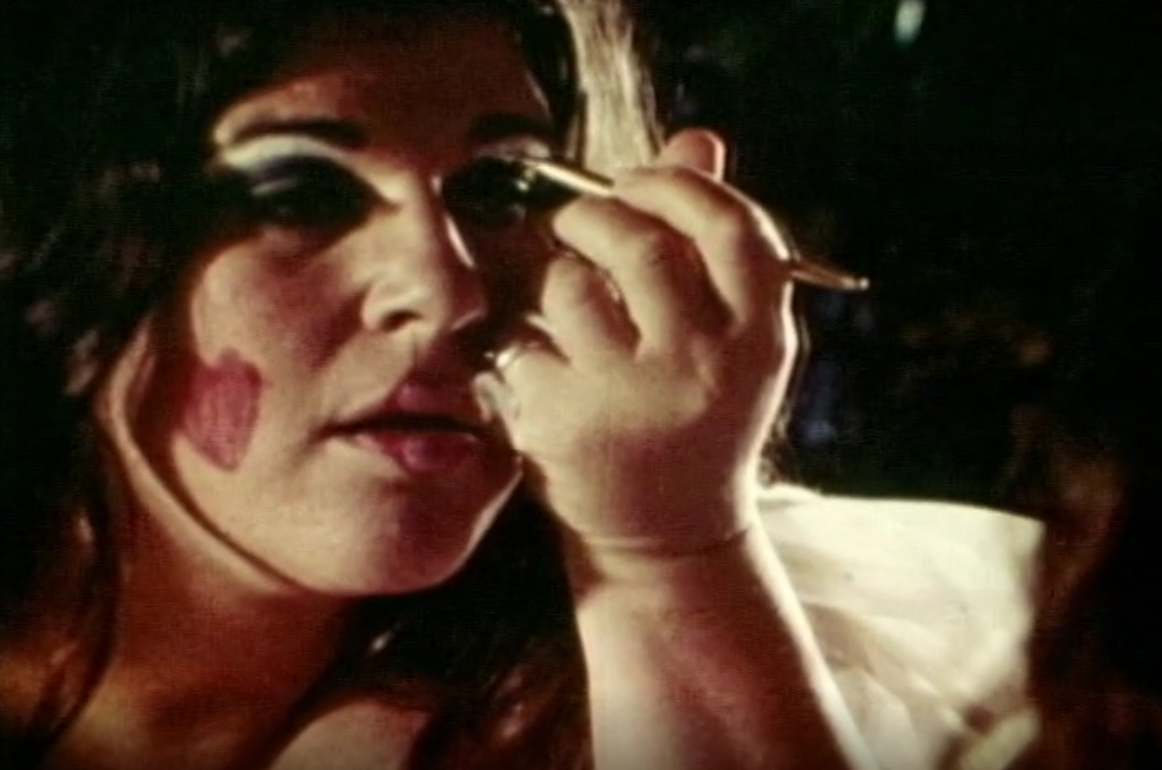
Christopher Rage as Arachne (and getting into makeup) in Drive (1974); Rage in his more familiar look, with model Danie Connors in Street Kids (1983)


More on set photos while shooting The Night Before's choreographed dance sequence: Rage rehearsing with dancers Tim Clark and Jeffrey Etting, while Arch Brown, Frank Ross, Jack Deveau, and another man observe
More from The Night Before's dance sequence shoot: Rage rehearsing with dancers Tim Clark & Jeffrey Etting, while Deveau, Ross, Brown, & another man observe; Bottom right: Chris Rage with hair!


The Night Before also served as Frank Ross’ debut working in adult cinema. Cast for his one and only performing role as one of the leads (credited as Michael Kade), this film was a broad connecting point for Ross, introducing him to both Brown and Rage, as well as to Hand in Hand. He became studio's still photographer and production assistant for most of their remaining movies (probably having taken a number of the photos in this blog and elsewhere on our site!). Ross described Hand in Hand as an excellent school for filmmaking: "Jack was a willing teacher if he thought you had a passion for filmmaking, and it was under his tutelage that I learned so much about the craft of filmmaking. Nobody on the crew had any one specific job. We all wore many hats, from general assistants to lighting, propping, set decoration, sound recording, and slating scenes. It was an excellent school for learning filmmaking from its ground up.” Ross also introduced the studio to his composer friend, David Earnest, who would go on to score many Hand in Hand productions; Earnest would also do soundtrack work well beyond with Arch Brown, further into Arch's career...


The main cast members in The Night Before, poster image of the dancers, and Frank Ross aka Michael Kade in his only performing role
The Night Before: main cast (L); poster image (center); Frank Ross in his only performing role (R)


Cast and crew on Hand in Hand sets: Mark White, Roger, Jack Deveau, and Kees Chapman while filming Sex Magic (top L); performer/crew regular Sydney Soons, aka Mark Woodward, slating by A Night at the Adonis star Chris Michaels (top R); Hand in Hand co-foudner, with Jack and Bob, Jaap Penraat filming Soons/Woodward and Kirk Luna in Drive (bottom L); sound man Rolf Pardula and production assistant Jim Delegatti while filming Hot House (bottom R)
Hand in Hand sets: Mark White, Roger, Jack Deveau, & Kees Chapman while filming Sex Magic (top L); Sydney Soons aka Mark Woodward slating by A Night at the Adonis star Chris Michaels (top R); Jaap Penraat, Hand in Hand co-founder with Jack & Bob, filming Soons/Woodward & Kirk Luna in Drive (bottom L); sound man Rolf Pardula & production assistant Jim Delegatti on the Hot House set (bottom R)


This early cinematic era of the 1970s captured the exuberance of the sexual liberation and LGBTQ liberation movements: freewheeling sexuality, cruising, and public landmarks of sex and gathering. Hand in Hand's output illustrates several threads common of East Coast work of the period: experimental film and theater roots, narrative emphasis and clever scripting, heavy focus on public/communal settings, rougher and more mature men than typical of the West Coast porn scene, and interest in the psychological dimensions of sexuality, rarely shying away from emotional complexity or kinky sexual material. This early period was one of experimentation, exploring the possibilities of the genre before its conventions crystalized. What could cinematic sex look like and be? And as Ross noted, the scenes on each coast , at that time, were distinct and tight-knit. "The New York gay porn community was very small and very loyal to each other,” with many points of overlap between the various studios, makers, and cast and crew members.

The technological rupture of the affordable home video camera fundamentally altered porn movie-making and the distribution model. In 1980, Rage borrowed an early video camera, and by 1981, he had debuted his first productions, Superstars 1 and Solojerk. Initially unsuccessful, he edited them together, the same year, into The Best of the Superstars for distribution via Joe Gage’s Gagetapes line with HIS Video. Best of… sold well and provided the funds for Rage to make further work, as well as to found his mail order business and production studio, Live Video Inc., making him one of the forerunners in the shot-on-video market. This quicker, cheaper format allowed for niche productions that the costly film theatrical model could not support, enabling Rage to exclusively self-distribute his more intense, transgressive, and fetishistic movies (including S/M, fisting, and watersports focuses) for a smaller, dedicated market.


Newspaper ads for Christopher Rage-directed Live Video productions My Masters and Bizarre
Newspaper ads for Christopher Rage-directed Live Video productions My Masters (1986) & Bizarre (1991)


The aesthetic Rage developed moved away from the cinematic tradition of Hand in Hand and '70s films and to a style very in sync with early video art: raw, gritty, intimate, and confessional. Shoots were simple and unpremeditated, often consisting only of Rage and the performer(s), plus maybe an assistant or two, and letting whatever the cast wanted to display reveal itself to the camera. The focus moved from public spaces and the gay community at large to private and interior. Rage summoned the subterranean desires and primal sexual compulsions of his performers, displaying them to the home viewer in candid direct address, disorienting montage, unusual and extreme bodily acts, and uneasy juxtaposition of image and sound (all was set to his own original musical compositions and haunting, layered soundscapes). Rage's darker, obsessive tone had been there from the start (clear in his Hand in Hand work on Drive), but deepened in his directorial pieces, driven by his need to make honest, personal, and provocative work. “I was always up to something. I wanted to corrupt society one way or another by saying, "Try this... Look at this... Did you ever consider this?... C'mon, don’t you want to see this... Aren't you amazed that people do this?... Maybe you don't want to do it yourself, but wouldn't you like to see it?”

Frank Ross, through the '70s onward, maintained a remarkably broad and sustained presence in the NYC gay porn sphere (also extending for a period into the West Coast) throughout his extremely lengthy career, moving beyond his work for Hand in Hand to serve in countless roles with a wide array of affiliates and studios. Ross seemingly worked with just about everybody in some capacity. If one were to map out the network of figures in vintage gay porn, Ross is certainly one of the nodes with the greatest number of connections; his list of associates is too vast to fully enumerate (encompassing figures including Steve Scott, Al Parker, Jack Wrangler, Toby Ross, and our own blog writer, Josh Eliot, to name just a few). 

The late '70s through the '80s saw a dense matrix of overlap among the trio and other key players. Rage's only shot-on-film directorial work, 1982's Sleaze, featured photography and editing by Arch Brown. This was one of Rage's handful of movies to be distributed by P.M. Productions, another prolific NYC studio in the '70s/'80s. P.M. also released a large number of Arch's films (including Pier Groups, Harley's Angels, Dynamite, Muscle Bound) - often with soundtracks by David Earnest, and occasionally with Rage's name popping up as photographer/editor. Ross directed extensively for the studio Satellite during the '80s, where he worked repeatedly with iconic performer Joe Simmons; Simmons' porn career began with Chris Rage (in They All Came, 1984, for P.M. Productions) and he remained a mainstay in Rage’s Live Video Inc productions. Arch and Rage collaborated frequently under the Live Video Inc. banner, with Arch doing additional photography for Rage's Wildside (1984), Tramps (1985), and more. J.D. Slater, another of Rage's most frequent stars, appeared in Brown's lone directorial piece for LVI, Rough Idea (1985), as well as in a second 1985 movie for Spike Video, Bring Your Own Man (stacked with a cast of Rage regulars). For both movies, Rage was behind the scenes doing production/photography/music. (A further extension: Hand in Hand's final film, the 1985's In Heat, features a performance by Slater.)


Vintage P.M. Productions flyer advertising seven of Arch Brown's movies for their studio, with caption: The First All-Male Filmmaker in New York
P.M. Productions ad for seven of Arch Brown's movies: 'The First All-Male Filmmaker in New York!'


Joe Simmons in promo material for Rage/Live Video's Bad Ass (1987) and The Best of Joe Simmons (1990); Simmons in Frank Ross/Satellite's Made in the Shade (1985)
Joe Simmons in promo material for Rage/Live Video's Bad Ass (1987) & The Best of Joe Simmons (1990); Simmons in Frank Ross/Satellite's Made in the Shade (1985)


J.D. Slater trio of 1985 productions: Chris Rage's Tramps and Arch Brown's Rough Idea (top ads), plus Hand in Hand's In Heat (in a segment directed by Bob Alvarez)
A 1985 J.D. Slater trio: Chris Rage's Tramps & Arch Brown's Rough Idea (top ads), plus Hand in Hand's In Heat (in a segment directed by Bob Alvarez)


The AIDS crisis brought a new, heavier resonance to Rage’s work, which was always an emotionally honest reflection of what was going on in his life and mind - especially following his own 1987 HIV diagnosis. After learning this news and a taking short break from filmmaking, Rage returned but was having difficulty completing his movies. He brought his friend Frank Ross on board to help him finish his 1989 production Three Little Pigs. Ross: “I was to be assistant director, but was there were more for emotional support. Tray [Chris] wasn't feeling strong enough to get the project done and needed a collaborator.” From then onward, Ross’ presence at LVI increased in importance. The two worked together on a few more pieces as Rage’s health declined, and Rage asked Ross to begin directing for LVI, which he did beginning with Scum, released the same year as Rage’s death: 1991.


Ad for Frank Ross' 1991 Live Video production Scum (top); Chris Rage's obituary from a May 1991 gay paper
Ad for Frank Ross' 1991 Live Video release Scum (top); Chris Rage's obituary from a May 1991 paper


Ross remained with Live Video Inc. after Rage's passing, directing more videos through them and becoming the studio’s vice-president for a period of time. After eventually leaving LVI, Ross founded his own studio, 3rd World Video, which operated from the mid/late ‘90s to 2020 (Ross passed away in 2021). Ross credits Rage with introducing him to transgressive, boundary-pushing fetish and S/M material, and Ross brought this to 3rd World Video, an explicit extension of the LVI ethos. Ross: “I tried to continue the legacy of Christopher Rage, who always attempted to break barriers sexually and bring to the screen the reality and popularity of extreme fetishes which no one else would consider or produce... I happily became a porn pariah and enjoyed shocking the world in any way I could.” 

The sustained connection between Brown, Rage, and Ross is one example of a powerful lineage of the kind you’ll find when sifting through the credits and histories of classic porn. Compared to today, the amount of people working in the industry in its initial decades was tiny, so the overlapping and interconnectedness was more apparent. Tracing this one thread: Brown was a foundational figure from the start of the industry and mentored Rage; Ross met Brown and Rage at Hand in Hand where Rage and Ross continued to learn their craft; their three careers intersected again over the years in various places and ways, and with other repeat collaborators; Rage established his own influential studio, where he worked with Brown and Ross; and Ross sustained Rage's studio after Rage's death, then continued that legacy at his own studio until just a few years ago. 

Bijou just remastered and re-released Christopher Rage's Tramps, which you can now find on DVD and Streaming! And keep an eye out in future months for Arch Brown's Rough Idea and other Live Video Inc. productions.


Cover for Bijou's new remastered re-release of Christopher Rage's Tramps, with stills from the movie
Cover & stills from Bijou's newly available re-release of Chris Rage's Tramps (1985)


Sources:

-Manshots, April 1991 (Interview with Christopher Rage)

-Good Hot Stuff: The Life and Times of Gay Film Pioneer Jack Deveau (Interview with Frank Ross)

-Gay Erotic Video Index (filmographies; vintage ads)


*Note: Corrected this draft with accurate credits for Brown's 1985 videos Rough Idea and Bring Your Own Man. Both were scored by Christopher Rage, not David Earnest, as previously listed.


  1664 Hits

The Last Picture Show

By Will Seagers

Hi folks! Will here. Once again, I'm having fun with the title. It's the very essence of a double entendre! However, in true cliffhanger tradition you will just have to wait until my New Year's Eve edition to see what's up!

Anyway, In the Beginning I started my affair with men and the camera at a very early age... Me and "Mr. Claus” at about age three or four. It's also a good liaison into wishing all of you great readers a very Happy Holiday season.


Baby Will Seagers with Santa

Season's Greetings from the chap on Santa's lap!


Zooming along in my life... I'm before the lens in a rather magical shot in my pre-porn days with a photographer that I met on the beach at the Jersey shore. As I remember correctly, there was a rather torrid post shoot "shoot" with him and his lover. After all, one does need an outlet after getting all worked up for that photography session!


Will Seagers posing with hand outstretched

Matt/Will in the pre-porn stages... but getting ready.


In the next few shots, I am in my twenties before the whole porn thing began. Here at age twenty-one with my quintessential 70's hot combed coif. Also shown are some pictures of legit modeling for a hair mag, then a lovely pearl-clad lady in Viva Magazine in 1974. The latter two shots were byproducts of literally being discovered on the streets of N.Y.C.! This magic was repeated later in the decade.


Will Seagers at age 21

Perfectly coiffed from the Eastern Airlines days.

 
Will posing on a Men's hair magazine cover and with a woman in Viva Magazine

Just regular modeling.


Oh, the Southwest and the beauty of its deserts! While living in a Phoenix suburb, I developed a friendship with a budding amateur photographer who had me pose with his beautiful dog in a desert scene just outside of Tucson in 1975. Little did I know that I would be returning to the Southwest for more photography and ultimately to build a house and settle down!


Will in the desert

Developing a love for the Southwest desert.


Well, we're off! I entered the Dark Side of modeling (just kidding) in the latter part of 1975 right after moving back to the East Coast. Believe it or not, this was another case of being discovered right on the street - Christopher Street, Greenwich Village - by the folks of a newly formed studio, Man's Image.


Will posing on the piers for Man's Image and on the cover of the first issue of Playguy Magazine

We're off! The career begins.


In 1976, I seemed to become the pass around boy in the New York porn biz! From Man's Image, I was passed to my dear friend Lou Thomas (formerly a partner of Colt Studios), who formed his own Target Studio moniker. Having a knowledge of the Southwest, I suggested the site for the Ramrod "Cowboy" shoots pictured in this blog. Also, he partnered me with Bruno in a memorable and very sensual poolside escapade on Fire Island.


Target Studio images - Ramrod photos and Will with Bruno

Target Studio Ramrod and Bruno & Will promo shots.


Then, I was passed on to Jack Deveau of Hand in Hand Films, where I was cast two more "sexs-travaganzas," Dune Buddies and Fire Island Fever - which, as you can surmise, took place on that same magical isle. This was all in the year 1976 - my first year working on Fire Island - after which I moved to San Francisco because of a work offer from Chuck Holmes (of Falcon Studios fame)!


Will on the poster for Dune Buddies and a Michael's Thing cover promoting Fire Island Fever

1978/1979 Hand in Hand Films productions shot on Fire Island.


1976 thru 1980 was non-stop and high gear for me in this business. Appearing with Al Parker in Weekend Lockup was one of the first of a cavalcade of films I made while living in San Francisco. My looks were still holding. So, I decided to dig in and take advantage of the many film and print offers. I worked side jobs to keep afloat between films. I ran a small and popular gay gym, The Pump Room, for several years. One had to stay in shape to keep the offers coming! LOL.


Will in two Falcon productions

Will in Weekend Lockup and more for Falcon.

 
Will with two other men in a promotional image for The Pump Room

Pump Room publicity shot.


Then Lady Luck stepped in. Through a very dear friend (and great fuck buddy) I was recommended to the Gage Brothers to be cast in the last of their trilogy of films - L.A. Tool & Die! Wow... this was the big time. (And, I even got to use some acting skills!) It turned out to be a monster hit with a cult like following. It was after this film that I started to think about slowing down and slowly finish off my porn career. I thought it was better to go out with a bang... right?


L.A. Tool & Die images - vintage poster and Drummer/The Voice covers featuring Will Seagers and Richard Locke

With co-star Richard Locke of Joe Gage's L.A. Tool & Die (1979).


Well, this was not in the cards for me. Luckily my genetics and slow aging process gave me the opportunity to make several more notable films leading up to my last films circa 1988. Although, I respect (and am turned on by sexy older guys), I didn't feel it was the right fit for me. So, this year marked my denouement in the film biz.


Al Parker and Will Seagers in Steve Scott's Wanted and Will Seagers with co-stars in J. Brian's Flashbacks

Al Parker and Will Seagers in Steve Scott's Wanted (1980) and Will Seagers with co-stars in J. Brian's Flashbacks (1981).

 
Former location of San Francisco's The Muscle System

Promo pic for Pegasus 2: Hot to Trot (1987) and with co-stars Scott O'Hara and Cory Monroe in The Massage Boys (1988).


Life certainly wasn't over! And, much to my surprise and pleasure, I found myself in my 40s and 50s still being desirable and attractive to many. I was 45 when I was discovered on the dance floor of The Roxy (a rather famous NYC dance club) by my spouse of almost 29 years! I brought him to the Southwest where he fell in love with its charm and magical vistas, as well. We happily dwell together in the house we built to celebrate our love and commitment.


Will Seagers on his 40th and 50th birthday

40th birthday / 50th birthday... post-production years.


So this brings me to a partial end of my saga. It was a great era and a great run working with some of the best in the business. And, most of all, it has been a treat to perform and be enjoyed by all of you... the readers of this blog. To you I say Thank You!.. but, not quite farewell!


Will Seagers posing, pants down, with sign that says End


Bio of Will Seagers:

Will Seagers (also credited as Matt Harper), within his multifaceted careers and participation in numerous gay communities across the country in the '70s and '80s and beyond, worked as a print model, film performer, and DJ, just to name a few. He made iconic appearances in releases from Falcon, Hand in Hand, Joe Gage, Target (Bullet), J. Brian, Steve Scott, and more, including in lead roles in major classics like Gage's L.A. Tool & Die (1979) and Scott's Wanted (1980). He brought strong screen presence and exceptional acting to his roles and was scene partners with many fellow legends of classic porn.

Will Seagers, present day image

Will Seagers, recent photo


You can read Will Seagers' previous blogs for Bijou here:

Welcome Matt/Will | What's For Dessert? | On and Off the Set of L.A. Tool & Die | Wanted, Weekend Lockup and Weekends in Hermosa Beach | Honeymoon in the Palms | Birds of a Feather | The Stereo Maven of Castro Street | The Pass Around Boy | The Ecstasy and the Agony | Fitness and Fantasy | Chasing the Boys and Chasing the Sun | Becoming Invisible | The Reverse Story of Dorian Gray | Pin Money | One Organ Leads to Another! | The Wheels of Steel | Feast and Famine | An Alphabet Soup of Powders and Pills | Merry Christmas (and Getting Re-Organized) | Now and Then | DEEP INSIDE THE CASTRO: The Badlands | DEEP INSIDE THE CASTRO: Moby Dick Bar | DEEP INSIDE THE CASTRO: "Just Another Stroll Down the Castro!" | Diving Into SoMa/Folsom: Hamburger Mary's | Diving Into SoMa/Folsom: Long Live the Stud! | Diving Into SoMa/Folsom: Club Life..."Hit me with your Rhythm Stick!” | A "Split Ticket": SoMa/Folsom and The Haight! | Staying Vanilla in a Flavorful Culture | A Little Secret |  Recollections of the 1977 S.F. Gay Pride Parade | Life's a Beach | Flora & Fauna | Once Is Just Not Enough! | A Love of Cultures – A Knack for Languages! | For the Birds | It's About Time! | The Perfect Storm | Hello Chicago/Adieu Fire Island Pines! | Sex in the Woods! | My Life at the Gym

  2021 Hits

Out of Print

By Josh Eliot

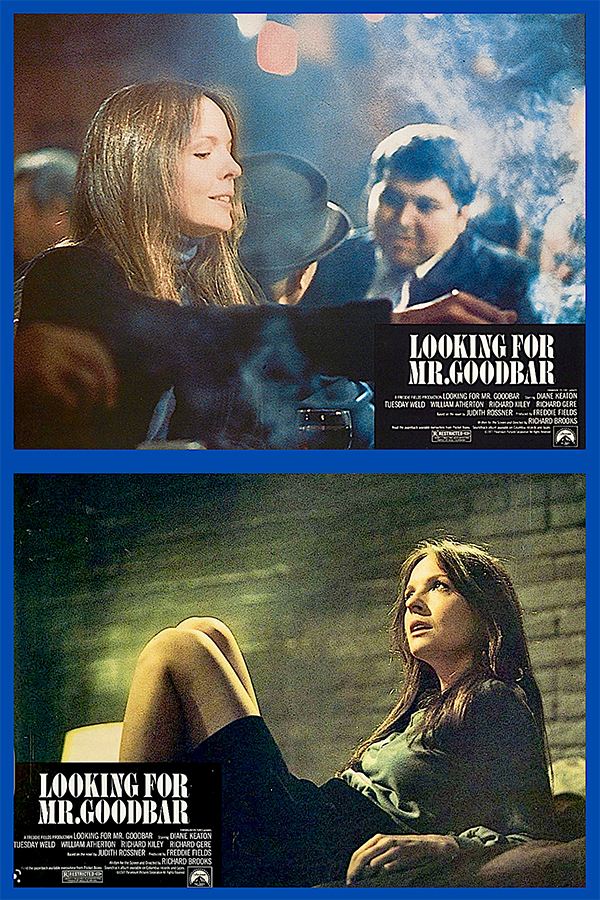
As I grow older, I get more nostalgic about experiences from my past. It’s natural to feel this way when we see things that bring back great memories and helped form who we are. Sometimes it’s seeing a movie. When I was 15 years old, in 1977, I talked my parents into taking me to see Diane Keaton in Looking For Mr. Goodbar. A decision I’m sure my parents regretted once the subject of the movie became crystal clear. I’m sure they thought that since Tuesday Weld was also in the movie, it would be pretty tame. Not! The film started with a haunting song montage including “Don’t Ask to Stay Until Tomorrow” by Marlena Shaw and it really set the tone. The movie was a tough and gritty expose on the bar fly, one night stand dating scene in New York. I’m sure mostly anyone who is reading this blog has seen this movie at some point in their life and came away from it moved or shaken. For decades, I and hundreds of others, tried to access this movie on DVD. It was originally released on VHS and LaserDisc, but evidently by the time negotiations came around for a DVD release it was dead in the water. Various chat rooms over the last decades point to the legal issues and costly fees involving the music rights. It seems to have simply vanished. It went “out of print.”

When I saw this movie at 15, I was thrilled to see the male hustler character played perfectly by Richard Gere. The moment he danced around in his jockstrap while holding a glow in the dark knife both tantalized and terrified me. I think this might have been the first “male nudity” I ever saw in a film, unfortunately for my mother sitting right next to me. The movie’s soundtrack was filled with great tunes like “Don’t Leave Me This Way” by Thelma Houston, “Prelude To Love,” “Try Me, I Know We Can Make It” and “Could It Be Magic” by Donna Summer and “Love Hangover” by Diana Ross. The music worked so brilliantly with the raw, realistic story, making the whole experience feel 100% real. Diane Keaton, famously known to be shy about her body and always dressing in long sleeves and a buttoned collar, had several nude scenes in the movie. She won the Academy Award the very same year for Annie Hall and you can bet your ass this role in Goodbar helped seal that win. What a film, but yeah, unfortunately I could not watch it and relive all those great memories and feelings because it was simply out of print.

Looking for Mr. Goodbar lobby cards

Looking for Mr. Goodbar lobby cards

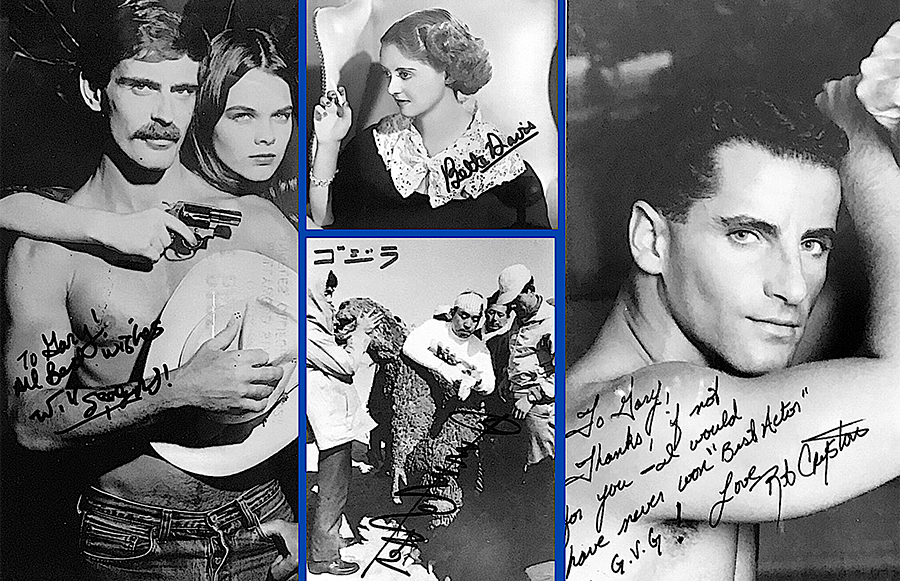
The feeling of never seeing a movie again that you loved watching or loved working on must have been how the cast and crew felt back in the early days of porn. Before VHS, DVD and Blu-ray, the movies would show in an adult cinema then pretty much disappear. Maybe they would come back again to play as a second feature for a new release. But with the explosion of VHS on the X-rated market, suddenly all the new adult productions had a life beyond the new release stage. They would be widely available for purchase and viewings forever. That was exactly what we assumed when we were making the gay and bi porn movies back in the 1980s. There are a lot of collectors who have vast libraries both VHS and DVD. I have those collector tendencies too. I just added a new “instant favorite” autographed photo of Will Seagers to my collection. He signed a black-and-white shot from LA Tool & Die. I gave it a place of honor on my office wall just under the signed photo of Bette Davis.

Some of Josh's signed photos: Will Seagers, Bette Davis, Haruo Nakajima (Godzilla), Rob Cryston

Some of Josh's signed photos: Will Seagers, Bette Davis, Haruo Nakajima (Godzilla), Rob Cryston

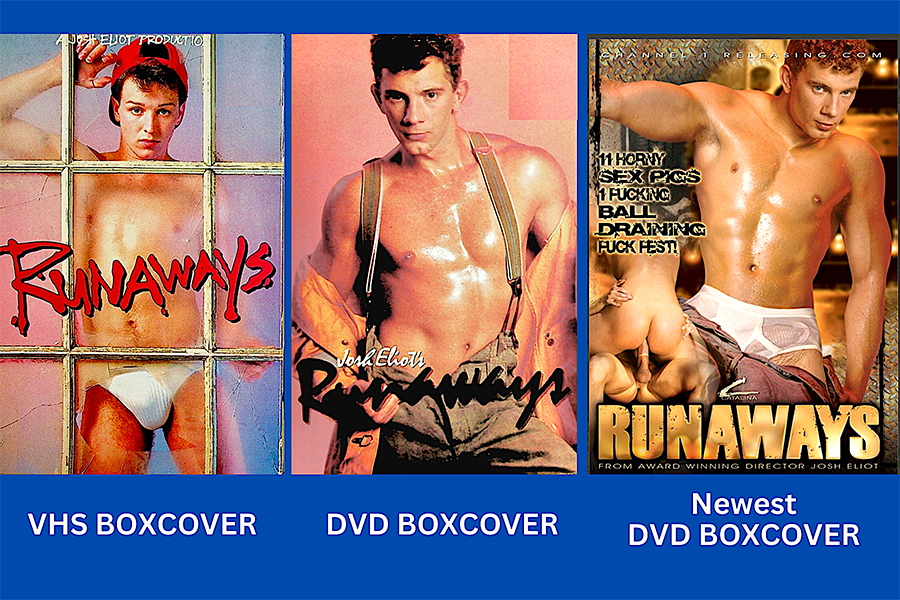
I like to post trailers, clips and teasers from my library of movies for Catalina Video on YouTube and Instagram. It’s like a virtual collection, and I like the idea of letting them have some sort of permanent place in history on those channels. It seems that a new generation of worldwide gay and straight viewers really responds positively and has an appreciation for nostalgic porn clips. I thought it might be cool to post a newly cut trailer of the first movie I ever made, called Runaways, back in 1989. I used to have the VHS, which showed a young, sad-eyed twink looking through a dusty, cracked nine pane window on the box cover. Then on the DVD cover, they swapped the twink for a much hotter shot of Jake Corbin. Somewhere along the way, I loaned out that DVD and never got it back so I started searching for it online. I found the movie available on several websites with a fabulous new cover but, much to my dismay, the DVD version said “out of print” - leaving only the digital version available for download or single scene viewing. I thought, this must be a one-off. Maybe the owners of the Catalina Library sold out and will re-release it down the line? I purchased the download, cut my trailer and posted it on my Instagram and YouTube. Then it happened again with another title I was looking for and I started wondering what was going on. Why aren’t these titles available? Suddenly, I received a mailing for a major sale on most if not all of the William Higgins classics like Pizza Boy, Hot Rods, The Young and the Hung, Preppy Summer to name a few, with the title of the sale saying: “Get Them Now Before They Are OUT OF PRINT Forever.” There were also Dirk Yates and Catalina Video sections as well.

Runaways box covers over the years

Runaways box covers over the years

A little piece of my heart broke at that moment. What we always thought would be around and available on some sort of tape or disc or “newly invented format” was not to be. It became very clear to me that there would be no future restoration of these movies, there would be no re-release of these movies, there would be no “tangible,” hold-it-in-your-hand version of these movies any longer. I would have been content leaving this earth thinking that some “physical form” - complete with original movie artwork of the Catalina Library featuring John Travis, Scott Masters, Chet Thomas, Chi Chi LaRue, myself and others - would always be available. But evidently that is not to be. I get the digital thing, but it doesn’t mean I have to embrace it. I already had huge respect for the way BijouWorld treasures their films, directors and customers. The restoration costs they absorb to make their library of films the best they can be for future generations to enjoy and collect in a physical and digital form speaks volumes about their integrity. Even though the Catalina library of movies we made will not get the same “white glove” polished treatment Bijou offers to its library, I am more than content to know that the movies I looked up to and shaped me as an adult video director are being preserved.

I feel the need to have a “Happy Ending.” Everyone loves a happy ending don’t they? On October 23, 2020, the DVD version of Looking For Mr. Goodbar was finally released through LA Entertainment, an Australia-based company. Something nobody saw coming, and which a lot of collectors are anxious to own.


Bio of Josh Eliot:

At the age of 25 in 1987, Josh Eliot was hired by Catalina Video by John Travis (Brentwood Video) and Scott Masters (Nova Video). Travis trained Eliot on his style of videography and mentored him on the art of directing. Josh directed his first movie, Runaways, in 1987. By 2009 when Josh parted ways with Catalina Video, he'd produced and directed hundreds of features and won numerous awards for Best Screenplay, Videography, Editing, and Directing. He was entered into the GayVN Hall of fame in 2002.


You can read Josh Eliot's previous blogs for Bijou here:

Coming Out of my WET SHORTS | FRANK ROSS, The Boss | Our CALIGULA Moment | That BUTTHOLE Just Winked at Me! | DREAMLAND: The Other Place | A Salty Fuck in Saugatuck | Somebody, Call a FLUFFER! | The Late Great JOHN TRAVIS, My POWERTOOL Mentor | (Un)Easy Riders | 7 Years with Colt Model MARK RUTTER | Super NOVA | Whatever Happened to NEELY O’HARA? | Is That AL PARKER In Your Photo? | DOWN BY LAW: My $1,000,000 Mistake | We Waited 8hrs for a Cum Shot... Is That a World Record? | Don't Wear "Short Shorts" on the #38 Geary to LANDS END | How Straight Are You Really? | BEHIND THE (not so) GREEN DOOR | The BOOM BOOM Room | CATCHING UP with Tom DeSimone | Everybody’s FREE to FEEL GOOD | SCANDAL at the Coral Sands Motel | DEEP INSIDE THE CASTRO: The Castro Theatre | DEEP INSIDE THE CASTRO: The Midnight Sun | RSVP: 2 Weeks Working on a Gay Cruise Ship | VOYAGER of the Damned | I'M NOT A LESBIAN DIRECTOR | Diving Into SoMa/Folsom: THE FOLSOM STREET FAIR | Diving into SoMa/Folsom: A TALE OF TWO STUDS | BALL BROTH | My 1992 “Porn Set” Diary

  2443 Hits
GO to Top