BijouBlog

Interesting and provocative thoughts on gay history, gay sexual history, gay porn, and gay popular culture.

How Straight Are You, Really?

By Josh Eliot


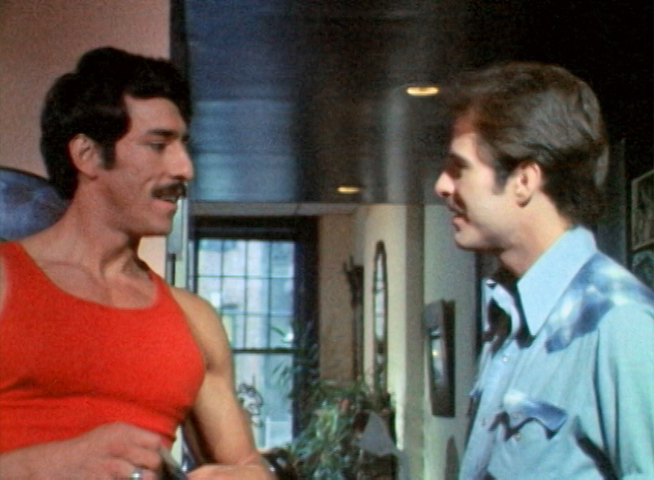
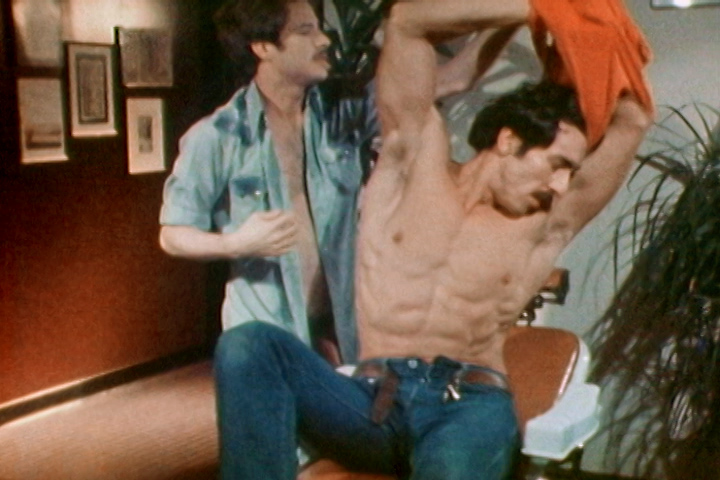
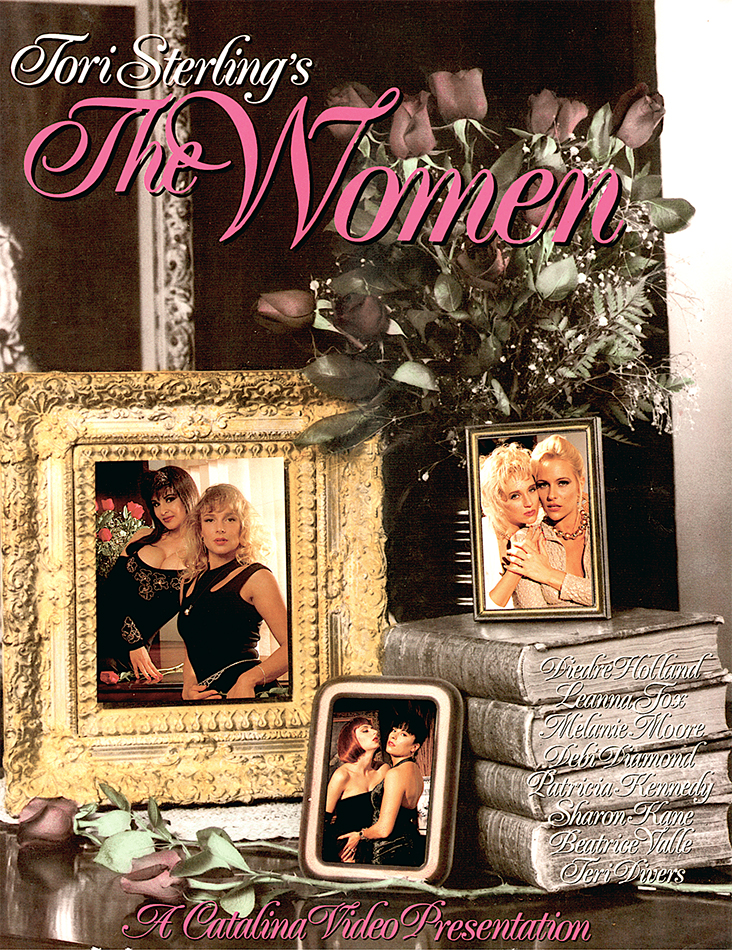
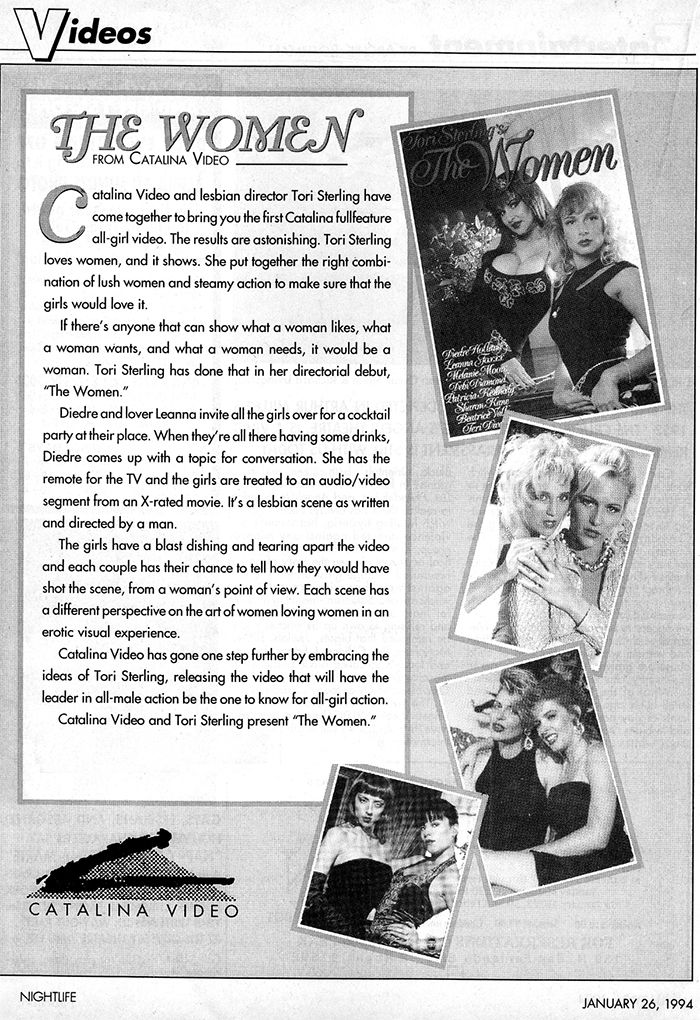
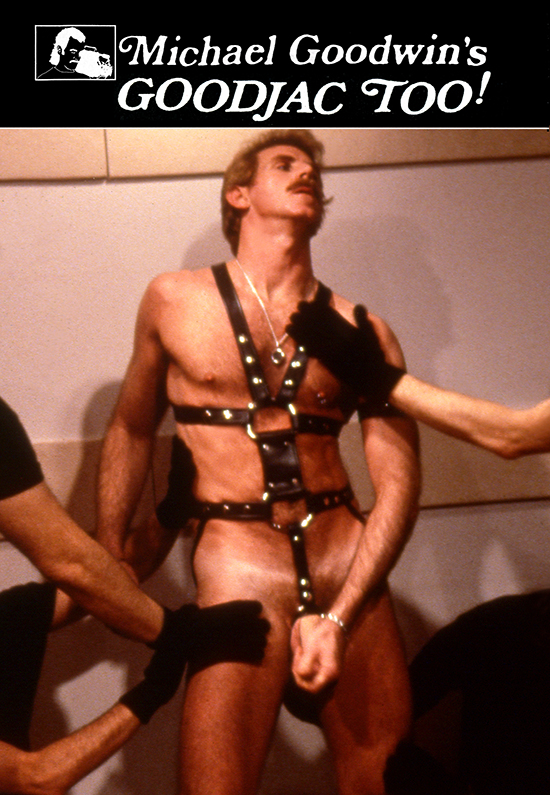
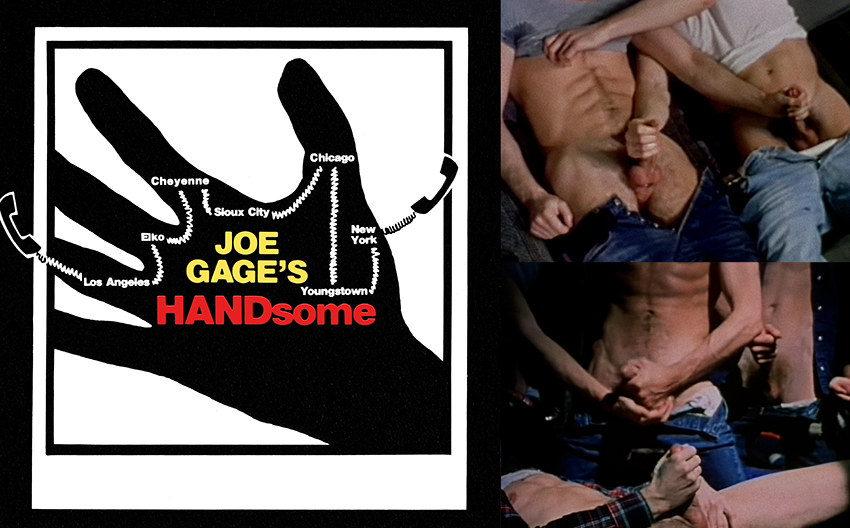
Early on in my career with Catalina Video, we had a pretty regular list of repeat actors we used in the movies we were shooting. As I mentioned before, a number of those actors were gay for pay or bisexual. I was 25 when I started with Catalina and before actually meeting these models, which included Johnny Davenport, Eric Manchester, Mike Gregory, Derek Jensen and Chad Knight, my friends and I would always scoff at the fact when someone said they were bisexual. It’s was just how the world reacted to the word bisexual at the time. We would roll our eyes on the set when the models had to watch straight porn to get hard in between shots. We thought that they were doing it for appearances' sake but they were really getting hard looking at the guys. You know, the way silly ass 20 somethings thought back then. In our minds it was always “cut and dry” - you were straight or you were gay, there was no in between. They were performing a gay sex scene so of course they were gay, right? Luckily life experience has shown us all to have a different perspective on things. Bisexuality is alive and well in the world.


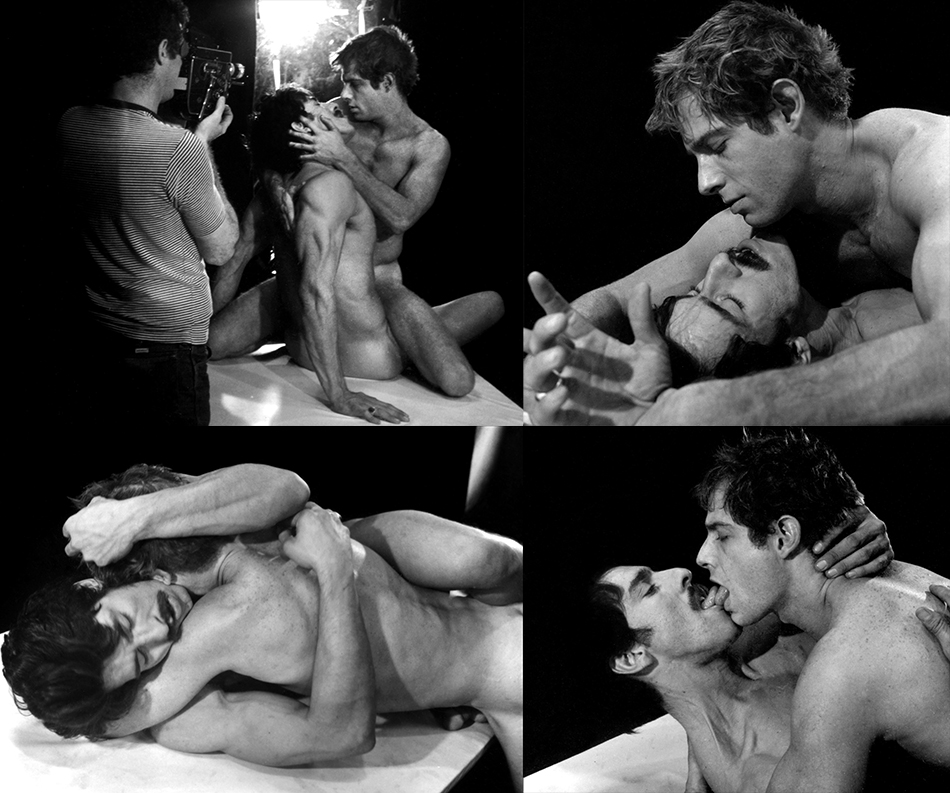
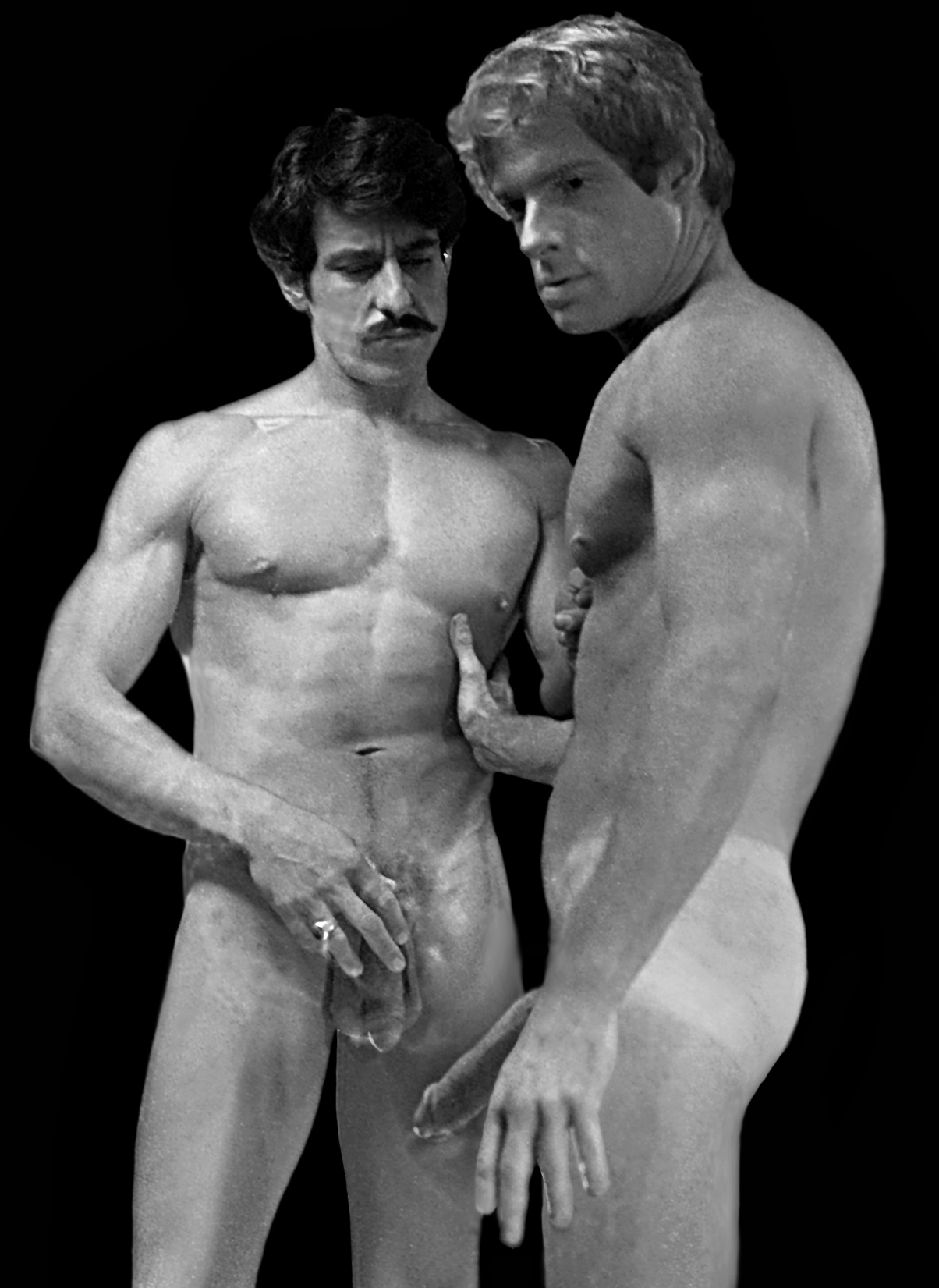
Kurt Bauer and Mike Gregory

Kurt Bauer & Mike Gregory


I became aware of a director named Paul Norman, a pioneer in the industry who some would call “The King of Bi-Sexual Movies.” He made The Big Switch and Passion By Fire in 1986, turning the industry on its head, and Bi and Beyond in 1987. I worked with Kurt Bauer from my first day on the set and many times afterwards in the movies Top Man, My Best Buddy, and The Big One, and he even did a non-sexual walk on in my directorial debut Runaways. Kurt also so happened to grace the cover of Bi and Beyond, which Catalina was distributing at the time, and it happened to be in our pile of tapes for models to watch while jerking their dicks to get hard. I borrowed it from the studio one day and took it home to watch. This was my first time watching a bisexual feature. The movie also featured Mike Gregory who I had literally just finished shooting for a movie called The Young Cadets. Watching Kurt and Mike performing with girls added another layer of understanding for me, opening my cynical mind to the fact that the world was not so black and white as one might think.


Some of Paul Norman's bisexual movies

Some of Paul Norman's bisexual movies


Unfortunately, an open mind was not something the straight porn industry was experiencing when it came to the idea of bisexual features. I felt like any connection to the gay world was just not something the industry would embrace, on any level, at that time in history. I think Paul Norman brought a sense of legitimacy to them, but they were not having any of it. At the yearly adult video conventions in Las Vegas, the gay and bisexual companies were literally in a completely different room or building! It was hard to get straight porn actors to even consider performing in a straight scene for a bi movie for fear they would be shunned. Paul and his fiancé Tori Wells became the toast of the town after she became a mega-star in the 1989 movie from director Andrew Blake called Night Trips. Blake shot it entirely on 35mm film, while most others were shooting on video. If you’ve never seen it and appreciate straight porno, it’s a “must.” Winner of the AVN Award for Best Film, Cinematography and Editing, it is truly the most stylish adult film I have ever seen. Tori Wells led a star studded cast including: Porsche Lynn, Victoria Paris, Randy Spears and Peter North. Did her mega stardom help move forward the acceptance of Bi movies, directed by her fiancé, within the industry? I’m not sure, but I feel like it opened the door.


Night Trips and Paul Norman and Tori Wells

Night Trips and Paul Norman & Tori Wells


Two actors that were able to go from gay movies to decades-long careers in straight movies under the radar without any push back from the industry were Jamie Gillis and Jack Wrangler. Back then, things weren’t streamed or online so it was easy to sweep the fact they performed in gay movies under the carpet. One of Jamie Gillis’ best roles was in Boynapped, re-released by Bijou - a Hand in Hand classic directed by Spencer Logan. Jack Wrangler (Gemini, Hot House, Heavy Equipment), well we all know his success story, and Bijou has tons of content featuring his hot-ass-self! Gay for pay? Or bisexual? I’m truly stumped. Another star that comes to mind is Matt Ramsey, made iconic from the desktop scene in The Bigger the Better with Rick Donovan, who went from gay movies to straight movies under the name Peter North. Luckily, by the time I met Peter North, the industry had come to its senses about bisexual movies and Peter was on my set shooting a straight scene with Leanna Foxxx for my Bi-Dolls series. I asked if I could credit him as Matt Ramsey instead of Peter North, but he respectfully declined, we came a long way getting him to act in the movie, but that might have been pushing it.

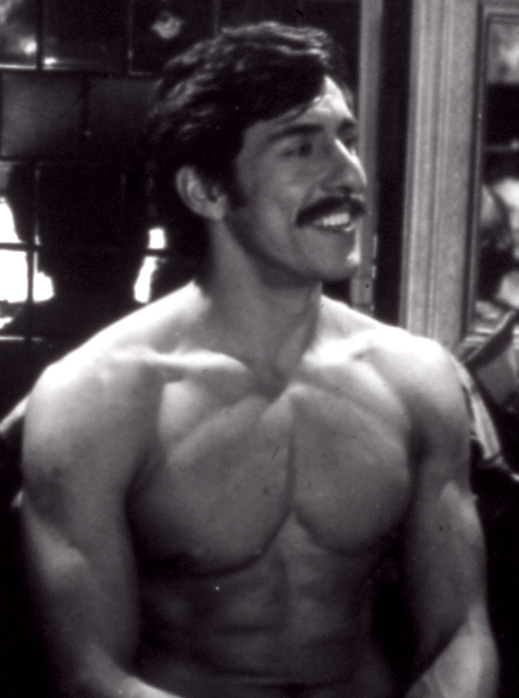
Then there is Paul Barresi (alleged lover of John Travolta and porn icon). Now, that hot number is in a league all onto himself! YOWZA! I saw him in person once, wearing super tight black slacks, at a movie cinema in West Hollywood some hot chick. I was with Catalina editor Chet Thomas and he pointed him out to me while we were in line... Gay for pay or bisexual? Who the hell cares!!! All Chet and I could focus on was that hot hairy chest and tight ass on him! I’m sure there are dozens more examples I could give of guys who were or could have been gay for pay or bisexual, but quite honestly I can’t stop thinking about Paul Barresi right now, I think I need to go stream Men of the Midway.


Paul Barresi in Men of the Midway and more

Paul Barresi in Men of the Midway and more


Correction: Bi-Coastal, previously cited as a Paul Norman movie, was a 1985 movie by director Tom DeSimone. We at Bijou apologize for the mix-up. We do make mistakes and are happy when they are pointed out so we can correct them so that we can make sure that the history is properly recorded.

Bio of Josh Eliot:

At the age of 25 in 1987, Josh Eliot was hired by Catalina Video by John Travis (Brentwood Video) and Scott Masters (Nova Video). Travis trained Eliot on his style of videography and mentored him on the art of directing. Josh directed his first movie, Runaways, in 1987. By 2009 when Josh parted ways with Catalina Video, he'd produced and directed hundreds of features and won numerous awards for Best Screenplay, Videography, Editing, and Directing. He was entered into the GayVN Hall of fame in 2002. 


You can read Josh Eliot's previous blogs for Bijou here:

Coming out of my WET SHORTS
FRANK ROSS, The Boss
Our CALIGULA Moment

That BUTTHOLE Just Winked at Me!
DREAMLAND: The Other Place
A Salty Fuck in Saugatuck
Somebody, Call a FLUFFER!
The Late Great JOHN TRAVIS, My POWERTOOL Mentor
(Un)Easy Riders
7 Years with Colt Model MARK RUTTER
Super NOVA
Whatever Happened to NEELY O’HARA?
Is That AL PARKER In Your Photo?
DOWN BY LAW: My $1,000,000 Mistake
We Waited 8hrs for a Cum Shot... Is That a World Record?
Don't Wear "Short Shorts" on the #38 Geary to LANDS END

  3332 Hits

One Organ Leads to Another! Part 1

By Will Seagers


Will playing the organ

Me playing my sister's wedding


Besides the love of men and their physical attributes, I have also loved another organ... the Theater Organ! It is also quite a coincidence that both loves started around the same time... at age 13.

Naturally, right as I started my teens my hormones were in overdrive. I remember having a hard-on for most of the day... starting with the "Morning Wood!" Most of the time in school I walked through the hallways with my books in front of me to hide the raging truth! Lol. So, I guess this was a good thing for later on in life as that became an asset!

Meanwhile, at age 13, I awoke one Sunday morning to the sight of a large truck parked in front of our house in West Deal, N.J. On the sides of it was proudly painted "Hammond Organ of Asbury Park." At this age I would have been taking piano lessons on and off for the past six years. Immediately, something told me that my mother and father had purchased an organ. My father was prone to impulse buys... but, this took it to a whole other level!

So, after the rap on the front door I let in the two delivery gentlemen who started to prepare their route through the front and into the living room. In one corner of the living room already sat a beautiful Mason & Hamlin Baby Grand that my father and I both played. Directly across from it in the other corner was to sit a beautiful Hammond A-102... the French Provincial self-contained version of the famous Hammond B-3! (The cabinet choice gave evidence that my mother was involved in the selection. Everything in the house was French Provincial. Hey, it was the 60s!)

As the deliverymen were finishing up, my parents arrived on the scene to find me picking away at both keyboards (manuals) and the pedalboard! I took to it like a duck to water. I never looked back at the piano seriously again. My parents seemed pleased at my "adjustment!"

The 60s and 70s were strong decades for the home organ industry. By the 80s it was a thing of the past and so were many of the manufacturers. I remained determined and connected to the instrument. Unfortunately, my family did not enjoy the prosperity that they had in the early 60s and the organ was sold. :( !

Fast forward to the late 70s and my move to San Francisco. Although my first partner and I lived in a very modest one-bedroom apartment in the South of Market neighborhood, I managed to shoehorn a sizable Conn 651 3 manual theater model into the tiny living room right across from my DJ mixing console that I built and shoehorned into that same living room. (I rehearsed all of this by living in a small apartment in The Village in NYC!) The abovementioned Conn organ had always been on my wish list. I purchased it with some "Pin Money" from a porn movie that I had made.


Friends in San Francisco apartment with organ The My Conn 651 “shoehorned” into our 10th St. Apt. in SOMA


Conn 651 in apartment

The Conn 651 in my first solo apt. in the Castro (1990)


So, I kept that organ until I left S.F. in 1991. I sold it back to the priest from whom I bought it originally! I was sad to see it go. It was really the first of my dreams to come true. I moved to the East Coast from S.F. and a smaller version of that Conn was to follow shortly... a Conn Theaterette.

Most astonishingly and unexpectedly, I got a job in a music store selling pianos and organs shortly after I arrived on the East Coast. Knowing the basic elements of music allowed me to teach beginners on these keyboard products. I stayed with the company for four years until I got the itch to live in South Beach, Florida! The Theaterette was sold to a dear friend that still has it!

Customer Bill with his organ One of the organs I sold and its proud owner! Bill and I became long time friends.
 
Will playing Bill's organ

Here I am at Bill's organ giving an after dinner concert!


Fast forward again. This time it is 2000. After meeting my current Husband in NYC and living together in his apartment until 1999, I bought a Lowrey Spinet for our first house in Santa Fe. A second (but 3 manual) Conn Theaterette became available and I scooped it up! The two sat side by side in a larger living room. It wasn't too long after that I found another full-sized console Conn 651 - this time with a Leslie speaker!


Two organs

Two Conn Theater organs, one in the living room and “mini me” in the den!

To be continued...


Bio of Will Seagers:

Will Seagers (also credited as Matt Harper), within his multifaceted career and participation in numerous gay communities across the country in the '70s and '80s and beyond, worked as a print model and film performer. He made iconic appearances in releases from Falcon, Hand in Hand, Joe Gage, Target (Bullet), J. Brian, Steve Scott, and more, including in lead roles in major classics like Gage's L.A. Tool & Die (1979) and Scott's Wanted (1980). He brought strong screen presence and exceptional acting to his roles and was scene partners with many fellow legends of classic porn.


Will Seagers, present day image


You can read Will Seagers' previous blogs for Bijou here:
Welcome Matt/Will
What's For Dessert?
On and Off the Set of L.A. Tool & Die
Wanted, Weekend Lockup and Weekends in Hermosa Beach
Honeymoon in the Palms
Birds of a Feather
The Stereo Maven of Castro Street
The Pass Around Boy
The Ecstasy and the Agony
Fitness and Fantasy: The Early Gyms
Chasing the Boys and Chasing the Sun: My Story of Sun Worship and Where It Got Me
Becoming Invisible
The Reverse Story of Dorian Gray
Pin Money


  2176 Hits
Tags:

The Backstory of Peter de Rome's THE DESTROYING ANGEL Revisited

 Posted by guest blogger Miriam Webster

Vintage poster for The Destroying Angel

For today, I wanted to resurrect an old blog I wrote on my personal favorite movie in Bijou's catalog (and one of favorite movies in general), the 1976 Hand in Hand Films classic The Destroying Angel, which insightfully and provocatively examines one man's internal conflict over his sexuality and his place in the Catholic church. The film follows a man on sabbatical from his priestly studies who becomes - in this case, literally - fragmented into two selves in his inability to reconcile his sexual desires with his call to the cloth, while having a series of bizarre sexual experiences under the influence of psychedelics.

The Destroying Angel images

"It started with the thought that gay films had been made in various forms, but that they hadn't yet tackled the horror genre," starts celebrated gay porn auteur Peter de Rome's backstory write-up on his truly unusual 1976 horror/porn hybrid, The Destroying Angel - an entertaining, disturbing, and hallucinatory film about Catholicism, sexuality, doppelgangers, and psychoactive mushrooms. "Almost at the same time came the idea to write a story about twins - one that had been lurking in the back of my mind for a long time."

Peter de Rome and Jack Deveau on the set of The Destroying Angel
Peter de Rome and producer/cinematographer Jack Deveau on the set of The Destroying Angel

British filmmaker Peter de Rome, who passed away in 2014, was the subject of the 2016 documentary, Peter de Rome: Grandfather of Gay Porn. His work, which is both avant-garde and explicitly gay and erotic, has been widely critically recognized and written about in recent years. Working independenly on shorts in the late '60s/'70s and then with Hand in Hand in New York City in the early days of hardcore, de Rome's body of work consists of many short films and two features (1974's fascinating Adam and Yves, shot in Paris and featuring the last known footage of Greta Garbo, along with The Destroying Angel).

Vintage Adam and Yves poster

Eight of his shorts made between the years 1969 and 1972 (notably, the well-known Underground, which depicts a real sex scene shot on an active NY subway train) make up the collection The Erotic Films of Peter de Rome, released by Hand in Hand Films as the follow-up to their innagural film, Left-Handed. (For more of the studio's history, read our interview with editor/co-founder Robert Alvarez, our blog on Hand in Hand, and the 2019 book Good Hot Stuff: The Life and Times of Gay Film Pioneer Jack Deveau.) Hand in Hand also released de Rome's two features and included a few more of his short films in their compilations In Heat and Private Collection.

The Erotic Films of Peter de Rome poster

De Rome was an atypical pornographic filmmaker, largely because he had little interest in the straight-forward depiction of sex or the conventions of pornography, prefering to focus on exploring a broad, suggestive, and multi-dimensional look at sexuality through his filmmaking. "My feeling is for eroticism. And that, for me, is 'leading up to the sex.' Once you're at the sex stage it can quickly get terribly boring," he told HIM Magazine. "For me, a lot of the arousal is in the mind and the imagination. That is what really turns me on. Most of my ideas, therefore, are concerned with how we get there."

Peter de Rome directing Destroying Angel stars Tim Kent and Philip Darden

In an interview with In Touch Magazine, de Rome elaborated, "I think that we've barely scratched the surface of pornography in filmmaking, and that it has become a sort of mandatory thing in sex films to show a positive view of sex and all of sex is supposed to be the ultimate, the pinnacle of excitement, and life simply isn't like that. It seems to me that sometime we've got to get honest about sex and admit to ourselves that very few sexual encounters do work out agreeably or are completely successful. And that's one of the reasons that I did the first scene in Destroying Angel as a 'down'; it was meant to be an unsuccessful sex trip. I have a very simple if not simplistic attitude toward sex films, and that is that sex is just as much a part of life as living, eating, breathing, sleeping - it's just another function of life and I don't see why it can't be depicted dramatically just as those other funcitons are and as honestly, too. And I think we have to show every aspect of sex in films before we can really say we are making sex films."

Bill Eld in a Destroying Angel publicity photo
Star Bill Eld in a Destroying Angel publicity photo

Hand in Hand's press sheet on The Destroying Angel discusses the elaborateness and complexity of the production. It was shot in ten days, with twenty-two scenes in nineteen different locations "from Montauk Point to The Spike [a NYC gay bar] to Christopher Street to Brooklyn to an eighteenth century cemebery in a forgotten spot in rural New Jersey." The Spike sequence includes a barely-discernable cameo from Peter Berlin in the background. Though he's hard to spot in the film, itself, there are a few clear behind the scenes photographs of him on set.

Peter Berlin in The Spike during The Destroying Angel's filming

The press sheet also mentions that post-production took a considerable time to complete - about a year - and cites some of the filmmaking challenges present during production, primarily finding a double for the lead (Kent) with an identical body but larger cock, and shooting and constructing the doppelganger threeway scene through camera and editing tricks.

Slating, recording sound, and Peter de Rome with Tim Kent and his body double

Hand in Hand make-up artist prepping Tim Kent, his body double, Philip Darden, and Bill Eld
Hand in Hand make-up artist Gene Kelton prepping Kent, his body double, Darden & Eld

In Peter de Rome's backstory write-up from our files, 'Genesis of The Destroying Angel,' he goes further into the film's origin story:
 

By chance, I happened to read John Allegro's fascinating study, The Sacred Mushroom and the Cross, that seeks to equate Jesus Christ with a mushroom, the Amanita Muscaria. This, in turn, led me to R.G. Wasson's Soma: Divine Mushroom of Immortality, which traces the same mushroom to the Soma plant in the ancient Rigveda of India. The whole incredible story seemed to me to be a natural for erotic treatment. But how to blend the two ideas together?

I sat down at the typewriter and looked up at the painting hanging on the wall before me. It could have been a portrait of myself, except for the way he was clothed and the caption underneath: Edgar Allan Poe. Was this a sign? Maybe, but inspiration eluded me. So I went back to his stories and, sure enough, there was the answer.

Peter de Rome in front of a portrait of his look-alike, Edgar Allen Poe
Peter de Rome in front of a portrait of his look-alike, Edgar Allan Poe

"William Wilson" provided just the sort of structure I was looking for with one important change: the twins became one troubled young man and his alter ego. A few scenes in the film are direct parallels to the story, but mostly only the structure is retained.

And then, because of the religious aspect of the mushroom story, it seemed logical to make the principle character a young priest, sorely tempted beyond his means to resist.

Destroying Angel stills featuring Tim Kent as the priest

The urination scene derives from the hypothesis that the sacred plant called the Soma in the Vedic culture was, in fact, a hallucinogenic mushroom, a plant with miraculous inebriating virtue, enjoyed both by the peoples of the Valley of the Indus and the cattle they tended. The juice of the Soma had a similar intoxicating effect on the animals, and is excreted still in its purest form in the urine, only to be ingested once more by the peasants. This way they could stay high for days!


[This likelihood of this urine-drinking claim of Wasson's has been debated, but it seems to have caught de Rome's piss-fetishistic interest (piss-drinking also makes a tiny appearance in Adam & Yves).]

The hallucinatory piss orgy from The Destroying Angel

Orgy scene cast
Orgy scene cast

De Rome's write-up concludes:
 

Small wonder that the sun became a compelling metaphor for the gleaming red-topped mushroom, and the urine its golden rays.

Destroying Angel still featuring a mushroom, knife, and cross necklace

The Destroying Angel has a heavy focus on religious themes, and this was hardly first time de Rome tackled these in his films. Adam and Yves features a masturbation sequence (starring muscular Bill Eld, who also plays a prominent role in The Destroying Angel) in an 11th century French chapel, and two films in The Erotic Films of Peter de Rome (The Second Coming and Prometheus) also come to mind. Prometheus, a sort of reinterpretation of the Greek myth, focuses on a man who is brutally used by a group of strangers ushered into a room by a figure resembling Christ. The Second Coming starts off as a lark, as two men (one played by Peter de Rome, himself) travel across Europe, collecting clues that lead them from city to city. One of them winds up in an old village, where he wanders into a cathedral. A group of men are huddled together inside, looking at what initially appears to be a large crucifix on the wall in front of them. However, the figure on the cross moves - it is not Christ, but a live nude man mounted there, who ejaculates, hands free, all over his own torso.

Image from Prometheus

Peter de Rome and Bill Eld on The Destroying Angel's set

The Destroying Angel - a film that is simultaneously complex and campy, hot and disturbing - was de Rome's final feature, as he was, at this point in his career, growing uninterested in the increasingly graphic sexuality being demanded in pornographic films by producers and audiences. This film (referred to as "a mess but a masterpiece" by Rupert Smith) spends a larger portion of its running time on sex scenes than does Adam and Yves or most of the rest of de Rome's work, but this is not to say that it abandons de Rome's preference for erotic imagination and the underpinning motivations and forces behind sexual acts. Its sex scenes are very unlike most others, growing organically out of the lead character's inner states, becoming increasingly surreal and deconstructed over the course of the film, and serving as the means of relaying the film's themes and character development; they are integral to the movie, not diversions from the plot. And The Destroying Angel fully fuses the genres it is tackling - its sex scenes are horror scenes, making it one of porn's best and most effectively creepy horror entries.

Images from The Destroying Angel's doppelganger threeway

The sexuality depicted in the film is complicated, conflicted, compulsive; the priest character's internal struggle - rooted in religion and made terrifyingly manifest by way of hallucinogens - the source. Psychological and emotional concerns are primary within the sex scenes, which serve as the narrative, helping to make the full runtime of the film engaging as a piece of cinema (particularly as brought to life through its compelling performances, Jack Deveau's expressive camerawork, Robert Alvarez's trippy, frenetic editing, and the evocative music selections). Porn certainly needn't operate on all of these levels in order to be interesting, hot, or significant, but the multi-layered, experimental, and cinematic work of Peter de Rome is a unique and compelling type of pornographic filmmaking.

Illustration from Peter de Rome's Destroying Angel script
Illustration from the cover of Peter de Rome's Destroying Angel screenplay

Learn more about the backstory of this classic (including other interpretations of the film's meaning) in the Ask Any Buddy podcast episode on it.

You can watch the trailer for The Destroying Angel at BijouWorld, where you can also read more about its storyline and get the full movie on DVD, or go to our Video on Demand site to stream it! Bijou also carries Peter de Rome's other films released by Hand in Hand on DVD and Streaming.

  3574 Hits

Mad Scenes

Posted by Madam Bubby


Usually a “mad scene” specifically refers to a particular scene from an opera written by bel canto composers of the early 19th century, such as Donizetti and Bellini. A soprano, usually suffering from a romantic love crisis, goes insane, and expresses her insanity, paradoxically, in difficult, complicated coloratura passages that require great vocal control.

The most famous occurs in the opera Lucia di Lammermoor. Lucia, in love with the family enemy Edgardo, is forced to marry someone her brother chooses, Arturo. Lucia kills Arturo on her wedding night. I grew up hearing the gay icon Maria Callas singing this scene on record, and I was mesmerized that she was able to invest the scene with such drama and a dark, complex timbre. Here was no Snow White singing tra la la to the birds. But, interestingly enough, the opera does not end with the mad scene. Lucia dies offstage, and her lover, Edgardo, kills himself. He actually gets a kind of tenor mad scene. But it’s generally the ladies who go mad, which reflects quite blatantly the Victorian view that women, the weaker sex, were more prone to mental disturbance: potential hysterics.


Callas as Lucia

Callas as Lucia


The mad scene by the middle of the last century started moving to the end of movies, crystallizing to some extent in the grand dame guignol movies of the late 1960s and early 1970s. The end of Sunset Boulevard, the famous “I’m ready for my close up, Mr. DeMille,” scene of Norma Desmond, deconstructs the mad scenes of operas, because she thinks she is playing the necrophiliac Salome. One even hears a bit of music from the Strauss opera as she descends the staircase (that prop usually occurs in Lucia mad scenes). In fact, by the time Strauss wrote his opera Salome, one could even say the female protagonists of many operas written by that time were mad for the entire opera (or most of the time).


Noma Desmond at the end of Sunset Boulevard

Norma Desmond at the end of Sunset Boulevard, Source: https://icsfilm.org/essays/the- devil-is-a-woman-sunset-boulevard-norma-desmond-and-actress-noir/


Thus, Baby Jane Hudson in Whatever Happened to Baby Jane? dancing on the beach with ice cream cones and others of her ilk come out of a rich tradition. The director Robert Aldrich really seemed to build his grande dame guignol films toward a final mad scene for the female protagonist, though in his underrated Autumn Leaves shows a male, played by Cliff Robertson, going mad, and he gets several scenes, but the most terrifying one occurs at about midpoint.

But it is also a scene of horrifying domestic violence (he throws a typewriter at his wife, played by Joan Crawford, after slapping her around). Like Edgardo in Lucia, he accuses her of treachery, but she is innocent. In reality, his father slept with his now former wife (she a willing accomplice), and discovering them together precipitated his descent into what, based on the movie, is paranoid schizophrenia.


Joan Crawford and Cliff Robertson in Autumn Leaves

Joan Crawford and Cliff Robertson in Autumn Leaves, Source: http://graham-russell.blogspot.com/2018/10/reflections-on-autumn-leaves-1956.html


Aldrich created another mad scene in The Killing of Sister George, a groundbreaking LGBTQ movie on so many levels, not only for its filming a scene in an actual lesbian bar, but, for the fact that the protagonist, June Buckridge played by Beryl Reid (known as George because of the character she plays in a soap opera, Sister George, a jovial country nurse in an English village) is out and proud as a lesbian. Many critics today tend to place this move in the “self-hating” LGBTQ subgrenre. Yes, George is certainly not the most stable person. She yells a lot, drinks a lot, and certainly, which one could argue isn’t really a character flaw in some of the situations she encounters, shows no compunction about telling some persons off in not the most dainty language.

Her relationship with Alice does not strike one as being the healthiest by today’s standards. I remember watching the scene where George, always jealous, punishes Alice for a supposed flirting (with a man) by making her kneel before her and eat her cigar. For the mid 1960s, this scene was risqué, and I perceived that perhaps there was some element of BDSM play involved, but it also seems to be moving into the realm of emotional abuse. And it’s not Alice as the victim of the “bull dyke” George. Alice is blatantly egging her on, and by pretending to enjoy eating the cigar; yes, she does take back control of the dynamic, knowing she is hurting George by, as George both yells and cries, “ruining” it.

Thus, one can see the characters aren’t camp caricatures. The character George plays gets killed off in the series (hence the title), and the fate of her career and relationship gets wound up in the machinations of the cliched reptilian predatory lesbian, played by Coral Browne.

Spoiler alert: she loses her job and her lover; the Coral Browne character in a scene of underhanded viciousness at George’s farewell party at the television studio suggests she get a job playing the voice of a cow in an animated puppets series for children. A gut-wrenching scene occurs when Alice leaves her. Reid masterfully plays it as both horribly hurt and horribly angry together, the emotion much like that of another spurned operatic character, Santuzza in Cavalleria Rusticana (from the time of whole “mad operas”). Shortly thereafter, George enters the empty studio, smashes the camera equipment, and beings mooing like a cow. She is wordless. No romantic words, no ecstatic high notes like Lucia sings, no cameras for a Norma Desmond close-up.


Beryl Reid as George in The Killing of Sister George

Beryl Reid as George in The Killing of Sister George, Source: https://thelastdrivein.com/category/1960s/the-killing-of- sister-george-1960/


But, is she really mad? Does she really enter another reality like Lucia and Norma Desmond and Baby Jane? She’s not fantasizing about a marriage that never took place, and she’s not retreating into memories of a forever lost stardom. It seems she’s justifiably enraged, but also, given her indomitable character, understanding that she will do that job. She knows she has lost. She knows it’s degrading.

And like many LGBTQ persons, she knows who she is, and because she knows, she can choose, or at least to try and choose, what happens in her life. What’s sad is that she feels like she can only choose her losses. I just wonder if she’s really at the same level of victimization and its sister, in those cases, madness as the Romantic heroines of opera or the characters like Baby Jane who are both torturer and victim in grande dame guignol cinema.

Similarly. the complex dynamic where the madness, or appearance of madness exists perhaps to crystallize at the highest level of tension the torturer/victim binary, appears in a retro gay porn movie, Drive, directed by Jack Deveau (which Bijou carries on DVD and streaming). The mad Arachne plots to kidnap a scientist and eliminate everyone’s sex drive.


Christopher Rage as Arachne in Drive

Christopher Rage as Arachne in Drive


Arachne (Christopher Rage aka Mary Jim Sstunning) certainly camps it up as she attempts to set her diabolical plot in motion. But the movie unveils at the end how the one who desires to castrate is actually ferociously repressing her own sexuality. She is last seen in a dungeon with the men she had imprisoned. Secret agent Clark liberates the prisoners, and Arachne is left alone. But this whole mad porn opera contains a moment of somber lucidity. Arachne holds a glass bottle with a severed penis. She knows she is forever trapped in a cycle of endless desire like a spider in a web, consuming its mates but never satiated:

“I hunted at night until it wasn’t enough to hunt only at night, and then I hunted during the day too. I couldn’t stop. I didn’t want to stop. My thoughts were only of hard bodies, rigid with the desire for me — beautiful men swollen with the need for me. They were all around me and I chose the ones who looked most eager.

“Until I saw a man who was so perfect, with a hunger in his eyes that reflected my own hunger — and I knew he was the one. I knew we could feed from each other, claw at each other with a need we didn’t care to understand.

“Drugged with desire for each other’s hot naked skin, tense muscles pushing — and then filling me with his need, white and hot. Crushing me with his strong arms, pressing down on me and into me, until I closed my eyes with the ecstasy and perfection of him, and I screamed for him — and I screamed for me. 

“And I opened my eyes and I was alone.

“And I vowed then that I would bring an end to it all. Man would have to search no more: Arachne would be the answer.”

She knows. She knows who she is, ultimately more frightening than the mad scene at the end, which usually ends in the liberation of death.

  4474 Hits

Pin Money

By Will Seagers


I have always considered my excursion into the porn business as one of sex and pleasure (and some notoriety), and not one of great financial gains. It WAS always a great deal of fun to make porn - whether it be print or film. Most people involved were there to create a medium that was intended to make the viewer have fun!

When I first started, it was in print medium - mags, calendars and the like. Names like Man's Image, Target and Falcon are first to come to mind. Not much money was to be gotten from these adventures. I didn't complain - I figured out rather quickly from my first few shoots what the going rates were for the more notable studios. So, I called it my "Pin Money."


Will Seagers in a Man's Image calendar & on the cover of the first issue of Playguy

Will Seagers in a Man's Image calendar & on the cover of the first issue of Playguy

 
1978 Target calendar & a Target magazine from a shoot for Bullet's Cowpokes

1978 Target calendar & a Target magazine in connection with Bullet's Cowpokes


Now, being that this was not nearly enough money to support myself, (especially living in the fair city of San Francisco), I always kept myself gainfully employed with what I called my regular job, as well. I worked in several gyms and gay clubs in town over the years. In terms of the clubs, I always wanted to play music. So, one of my first outlays with the pin money was for a pair of turntables, a mixer and a modest sound system. All of this was for the purpose of teaching myself how to be a DJ. It started off with making cassette tapes for friends and "getting the word out!" The pin money and odd jobs helped me scrape enough together to buy a fairly recent model FIAT 124 Spider!


Fiat 124 Spider and Will's following car, a Peugeot 504 Fiat 124 Spider and Will's following car, a Peugeot 504
 
Turntable and mixer

Will's first turntable and mixer


I had the unique fortune to be reaching a high point in my porn career at the same time. (Don't think I didn't I didn't use that to my advantage!) So, when I showed up with my demo tape of my music in person... sometimes the tape was never even heard! I played at a couple of noteworthy establishments in San Francisco's Castro District - namely The Badlands, the Phoenix and finally Moby Dick Bar. But, I certainly cannot leave out the night club Dreamland from the list. Two of my friends who were an integral part of that club, Roy Shapiro and Michael Maier, heard my tapes. I was summoned to perform for "Easter Sunday Tea Dance" in 1980. I stayed with that venue for a year or so. (I quickly found out that I was not the kind of DJ that played all through the night and into the morning hours!)

Towards the end of my four-year engagement at the Badlands, I began to tire of bar life and being up all night. A "Regular Job" fell out of the sky through my friend and salesman Harold Banks at Eber electronics. Now in my mid thirties and my porn career starting to slow down a bit, I took on the mantle of "Electronics Maven of Castro Street!" I still played music on Sunday nights at Moby Dick Bar through my connection with my friend and the manager, Michael Goglia. That place was the last where I played records... and my favorite!

So, that accounts for the early years. They were great (if not chaotic!). In 1991, my "Guardian Angel" tapped me on the shoulder telling me it was time for a trip back home (back east) and a reassessment of where I was on life's trail. I loved San Francisco! It was where I found out who I was and what I could become. And, I am glad to have been there for the golden years of that city!


Bio of Will Seagers:

Will Seagers (also credited as Matt Harper), within his multifaceted career and participation in numerous gay communities across the country in the '70s and '80s and beyond, worked as a print model and film performer. He made iconic appearances in releases from Falcon, Hand in Hand, Joe Gage, Target (Bullet), J. Brian, Steve Scott, and more, including in lead roles in major classics like Gage's L.A. Tool & Die (1979) and Scott's Wanted (1980). He brought strong screen presence and exceptional acting to his roles and was scene partners with many fellow legends of classic porn.


Will Seagers, present day image


You can read Will Seagers' previous blogs for Bijou here:
Welcome Matt/Will
What's For Dessert?
On and Off the Set of L.A. Tool & Die
Wanted, Weekend Lockup and Weekends in Hermosa Beach
Honeymoon in the Palms
Birds of a Feather
The Stereo Maven of Castro Street
The Pass Around Boy
The Ecstasy and the Agony
Fitness and Fantasy: The Early Gyms
Chasing the Boys and Chasing the Sun: My Story of Sun Worship and Where It Got Me
Becoming Invisible
The Reverse Story of Dorian Gray


  2293 Hits
GO to Top