BijouBlog

Interesting and provocative thoughts on gay history, gay sexual history, gay porn, and gay popular culture.

"I love a Parade!" Recollections of the 1977 S.F. Gay Pride Parade

By Will Seagers

Hi folks! Will here. Today's blog will be a bit of a departure from the last few in that it will be primarily a "Photo Essay" courtesy of my trusty Pentax K-1000. Although considered a beginner's 35mm SLR, it was good quality and easy to use! From the mid-70s 'till the mid-80s, when it was replaced with a Nikon SLR. Yes! I used some of that "pin money" from my porn adventures to buy lots of nice toys! LOL.

Although this was not the first S.F. Pride parade, it was my first. I had only been in town since September of 1976. And, during the weeks leading up to this event, I became increasingly excited to see it. My partner Tommy as well as many of our friends went on and on about how festive it was going to be and all of the beautiful people that were going to attend. So, I immediately got out my Pentax and made sure it was in perfect working order.


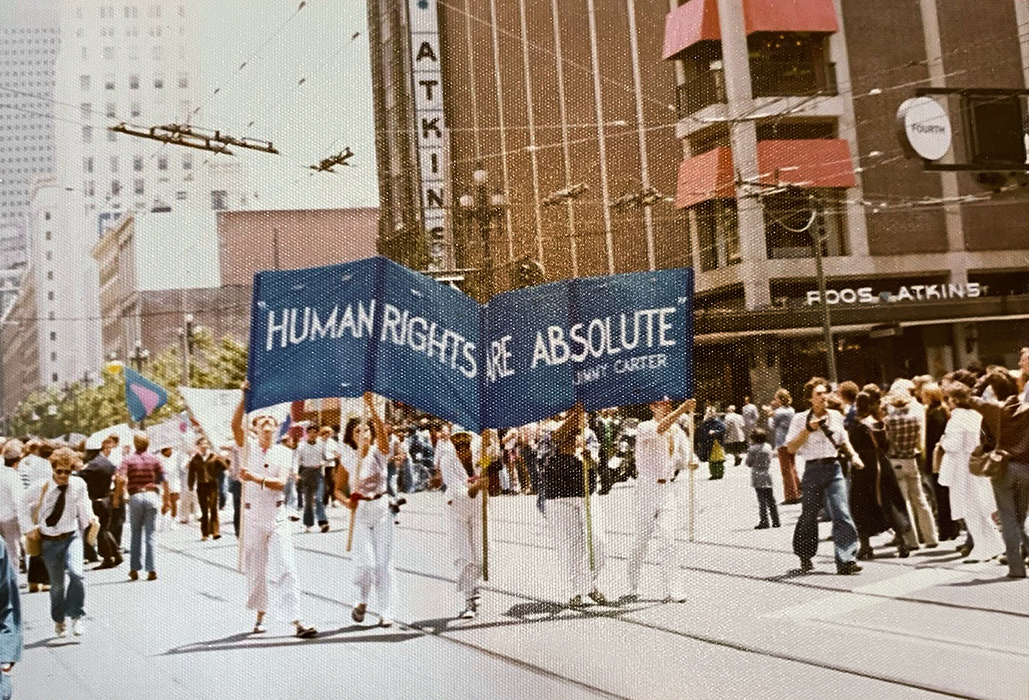
Sign reading Human rights are absolute
Pride parade and all of its political beginnings.

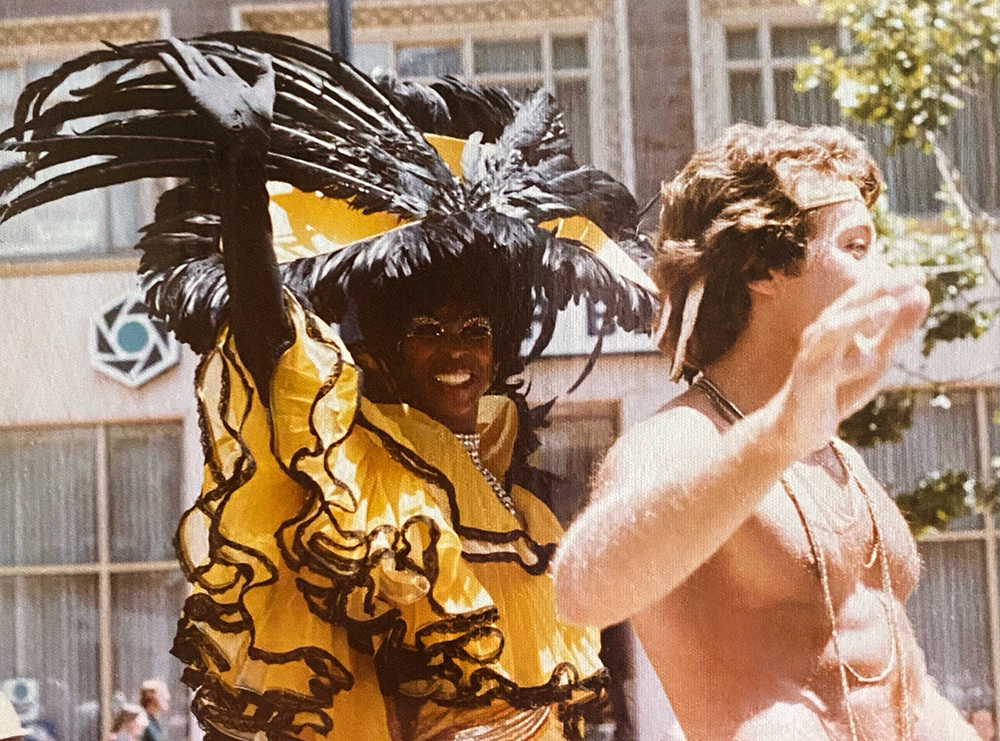
Ornate yellow dress

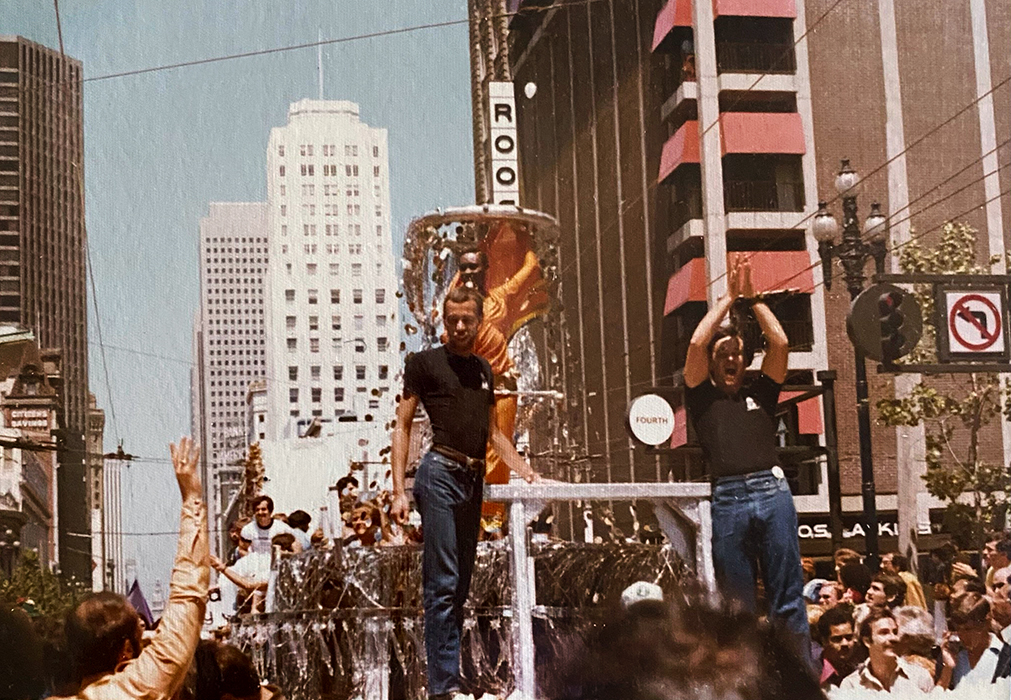
The glee and beauty exposed at the parade!
 

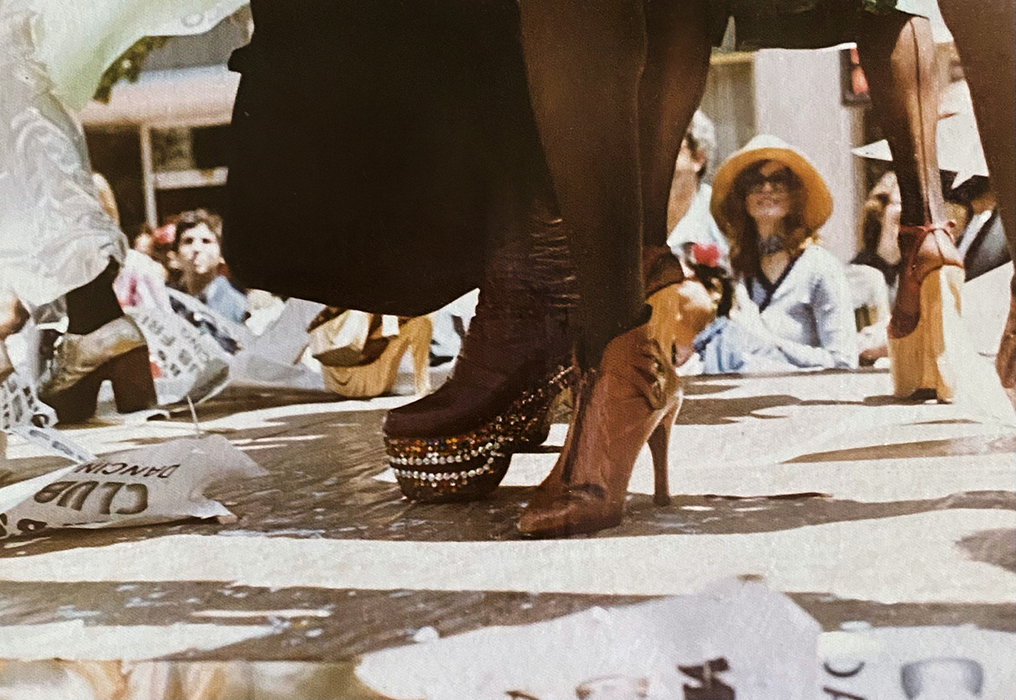
Footwear close-up
Fashionable footwear on the floats.

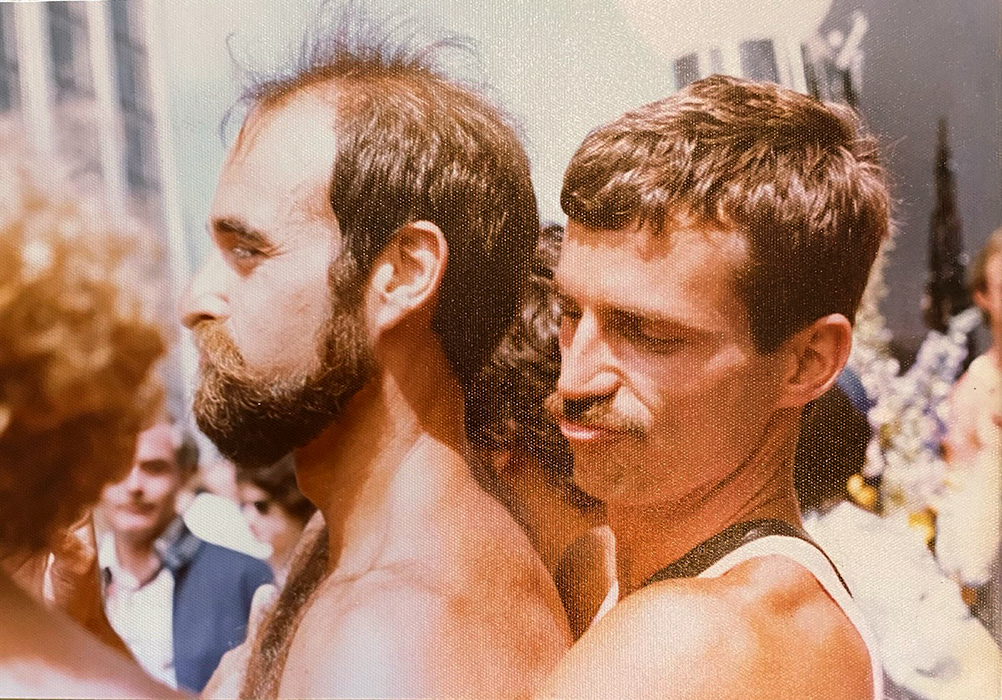
Roger and Tommy watching parade
Roger Magan (left) and Tommy (right) both high as a kite! Roger was instrumental in my move to SF. And, Tommy was there when I arrived!

Tom Junnell on Oil Can Harry's float
A dear buddy and laser mouth cut up – DJ Tom Junnell from Oil Can Harry's disco.

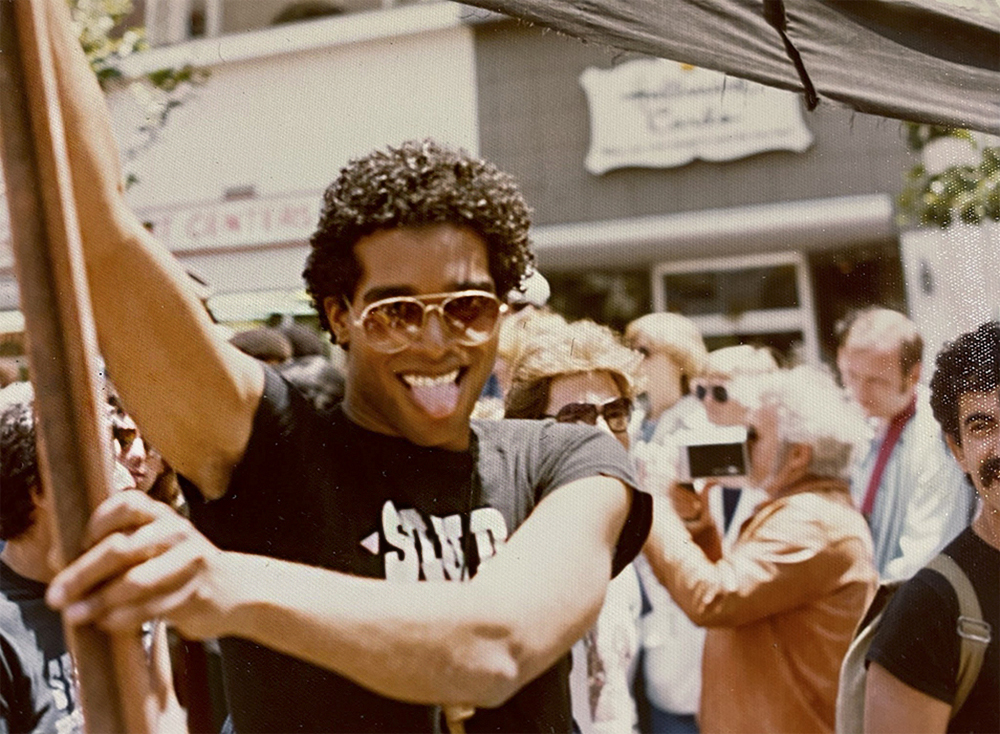
Crysler wearing a Stud shirt
Tommy's bestie Crysler wearing an original Stud t-shirt.

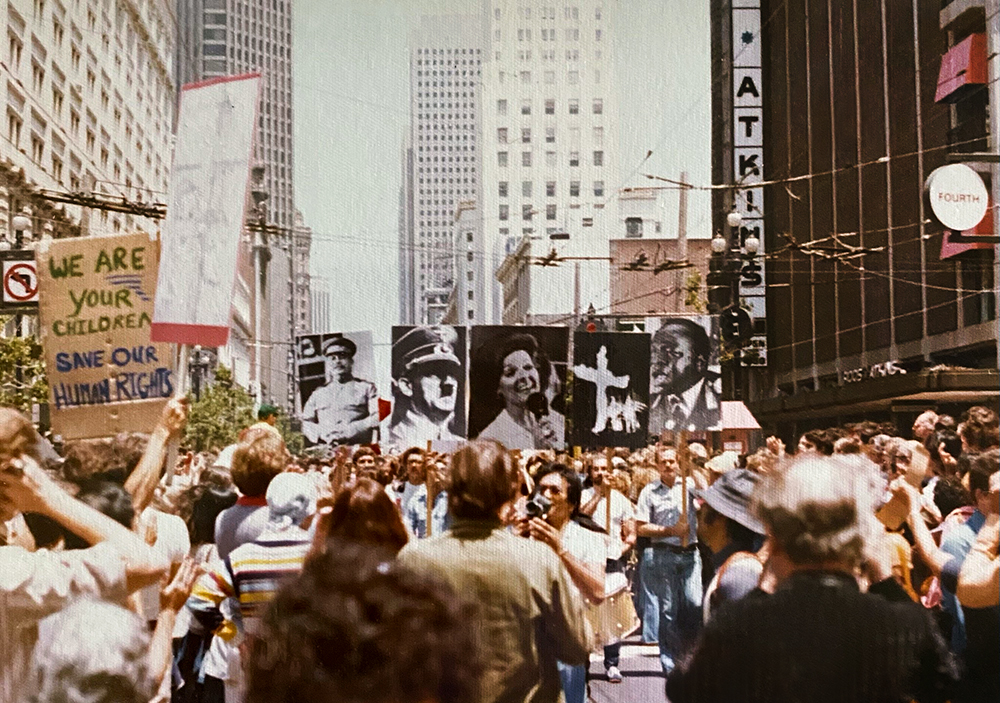
Anita Bryant protest sign equated with hate symbols
The very political theme of this year's parade equating Anita Bryant and Hitler.

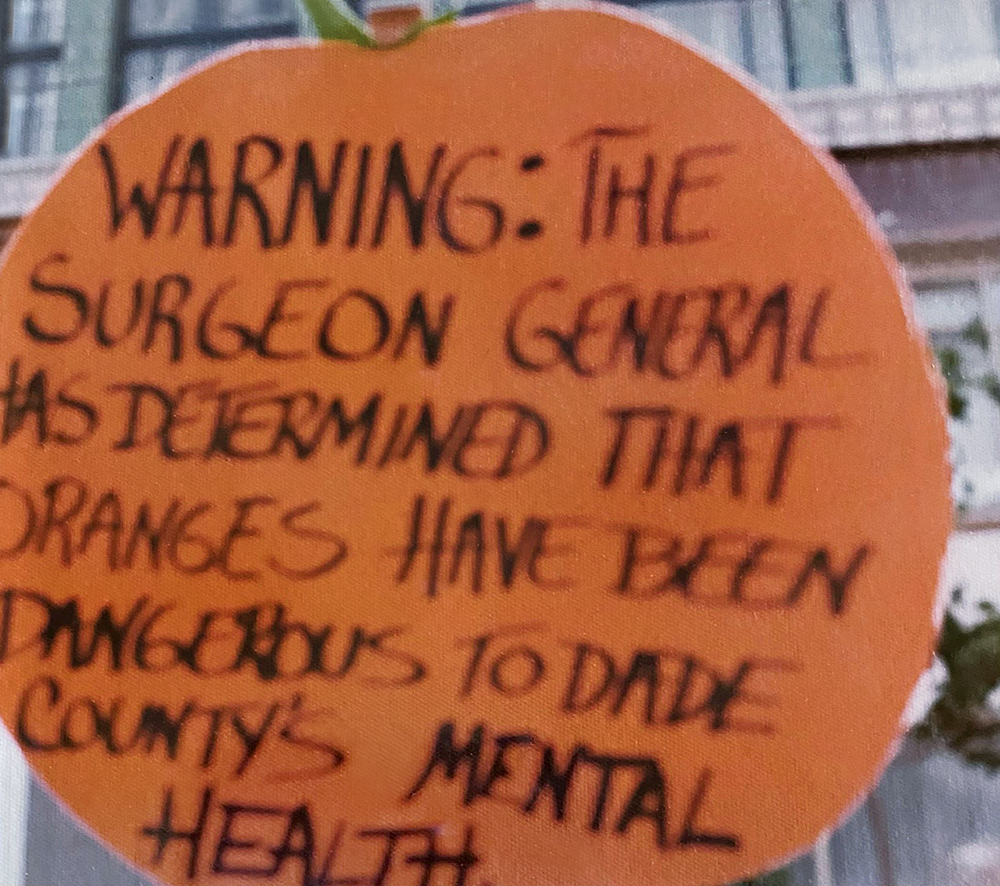
Orange-shaped sign protesting Anita Bryant
The “Orange Lady” Anita Bryant was getting more pie in her face!


June in San Francisco is one of the most stellar months, weather-wise. The sky could not be any bluer nor the Sun any brighter. With the temps climbing into the mid-70s, it was shirts-off weather for sure. And, that is exactly what happened - with both men and women! Although it took a decade or two for S.F. to reach the Sodom and Gomorrah heights of the Folsom Street Fairs, this parade for its time was pretty "edgy!"

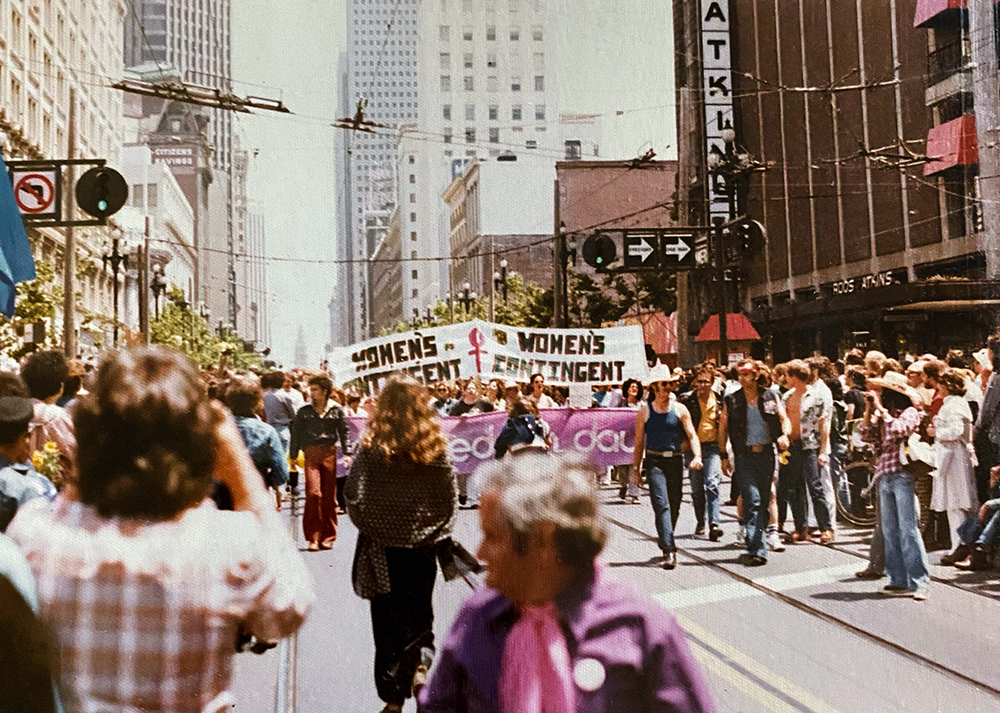
Tommy and I had a leg up on a lot of the parade revelers in that we lived a mere two blocks from Market Street - the parade route. We decided to walk a few blocks downtown where the crowds were really piling up. I climbed atop a (Walk/Don't Walk) traffic signal for my photo perch. I guess I was up about 8' – 10'... a perfect vista. Although I got a lot of choice photos, I did miss out on taking pics of Harvey Milk and Mayor Moscone who both attended. As this was the era of Gay Empowerment both fiscally and politically, it was great to have our heroes with us!

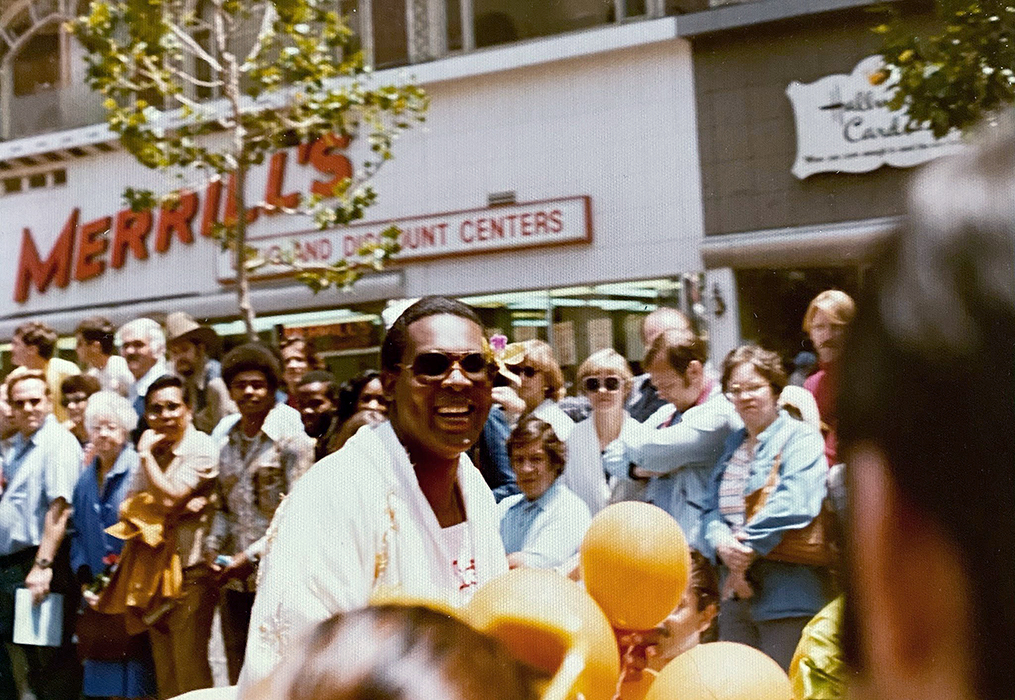
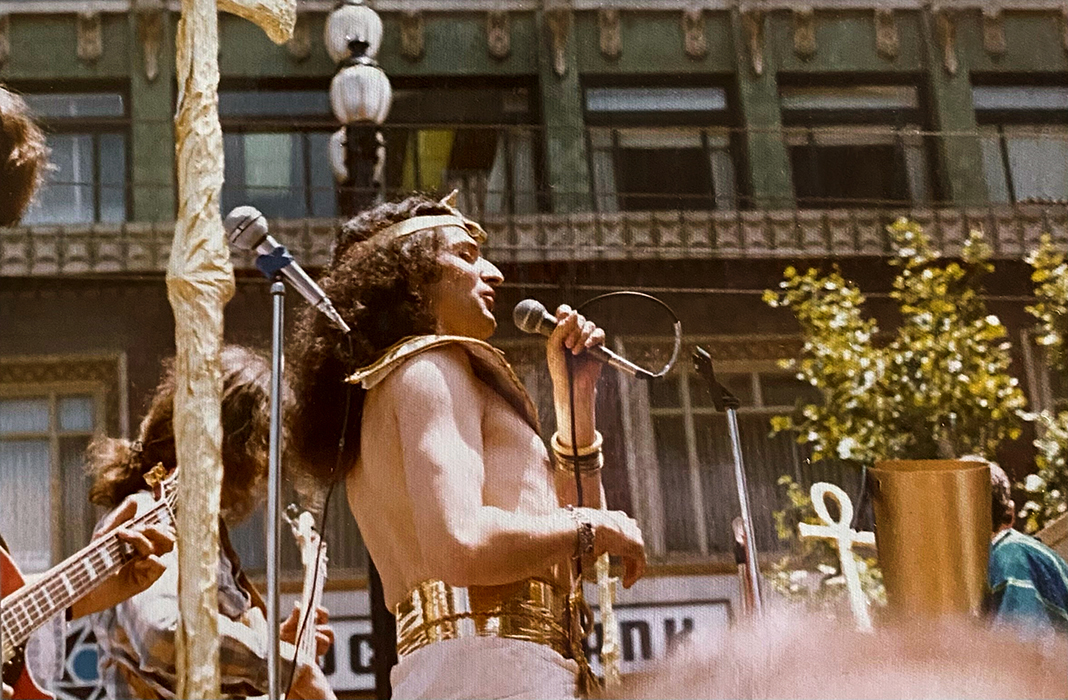
One star that did not escape my lens was Sylvester. At this time he was quite a rising musical talent. Originally, he performed in neighborhood venues. But, that soon morphed into national and international attention! As I mentioned in a former blog about The Castro, Syl and I became friends. He came into the bar where I spun records (The Badlands) to say hello and drop off new releases (that I was delighted to play - on the spot!).


Sylvester at the 1977 parade
Sylvester at the 1977 SF pride parade.

Shot down Market St. with Women's Contingent in background
A long shot of Market St. (the parade route) and the many revelers!

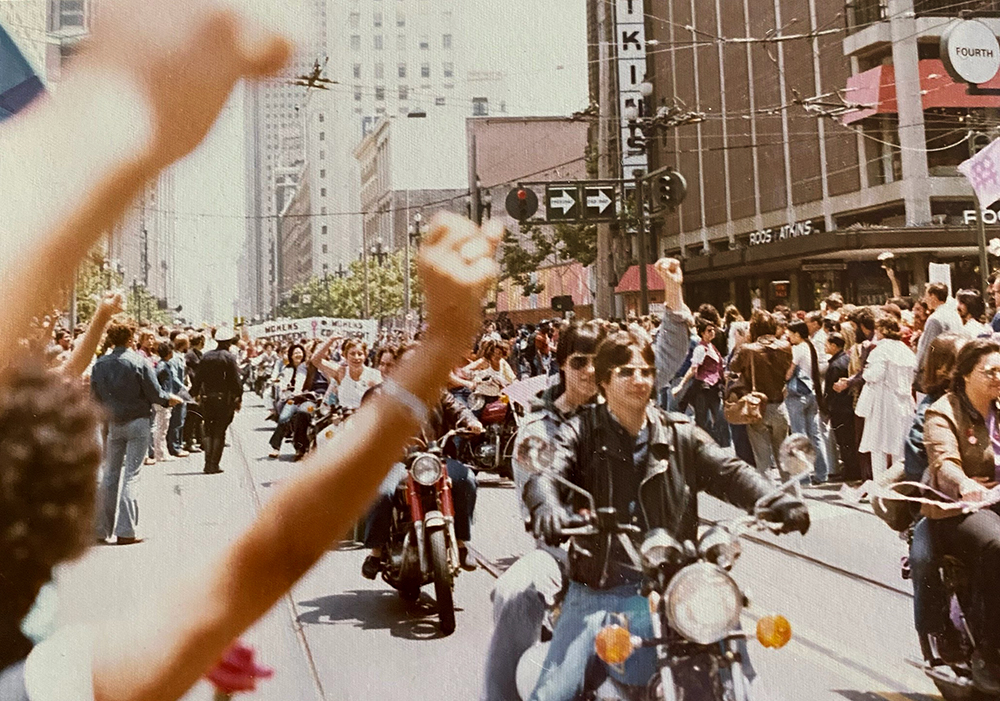
Dykes on Bikes
The ever popular women's contiengent from Oakland, “Dykes on Bikes!”

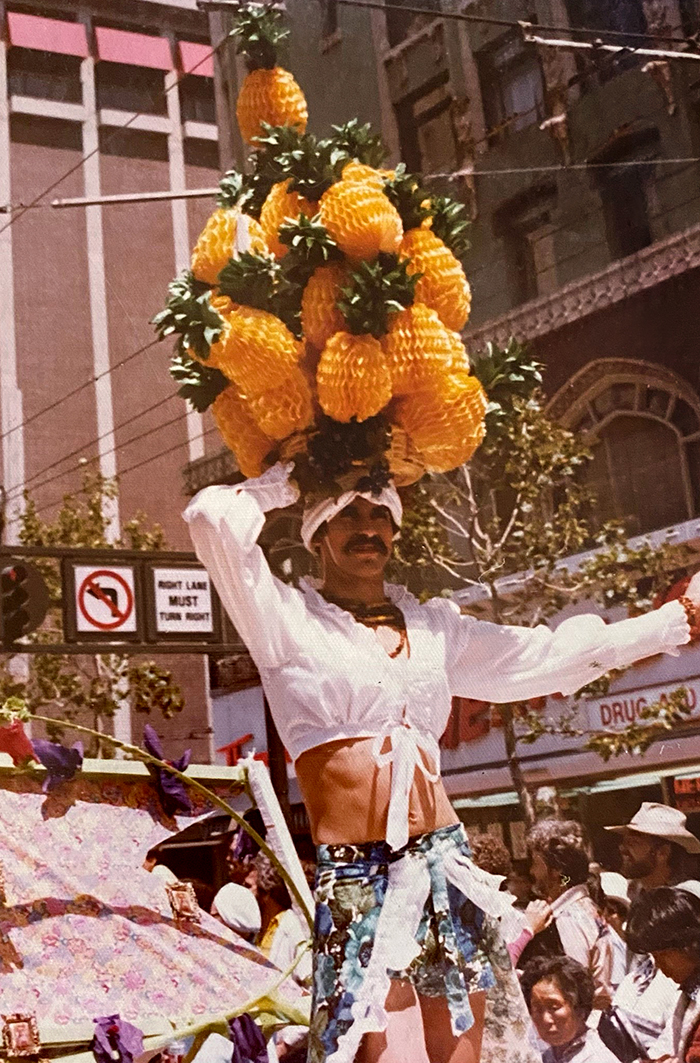
Carmen Miranda drag
Carmen Miranda – move over!

Musicians performing on float
On this sea of floats talent abounded.

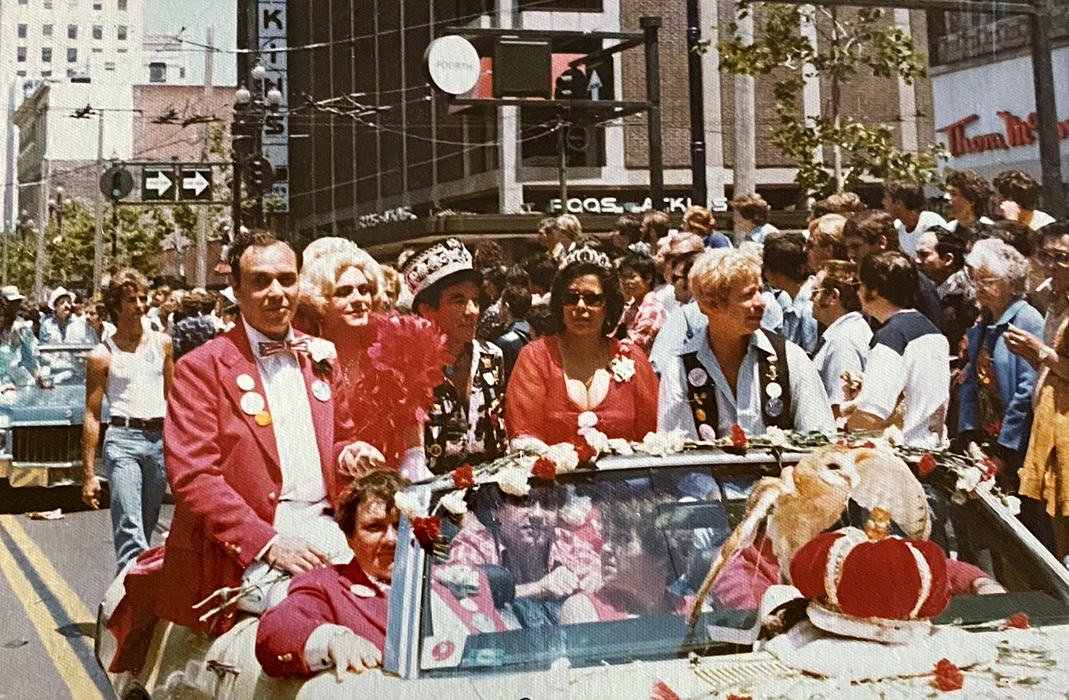
Drag royalty
San Francisco's royalty of the day in all of their splendor.

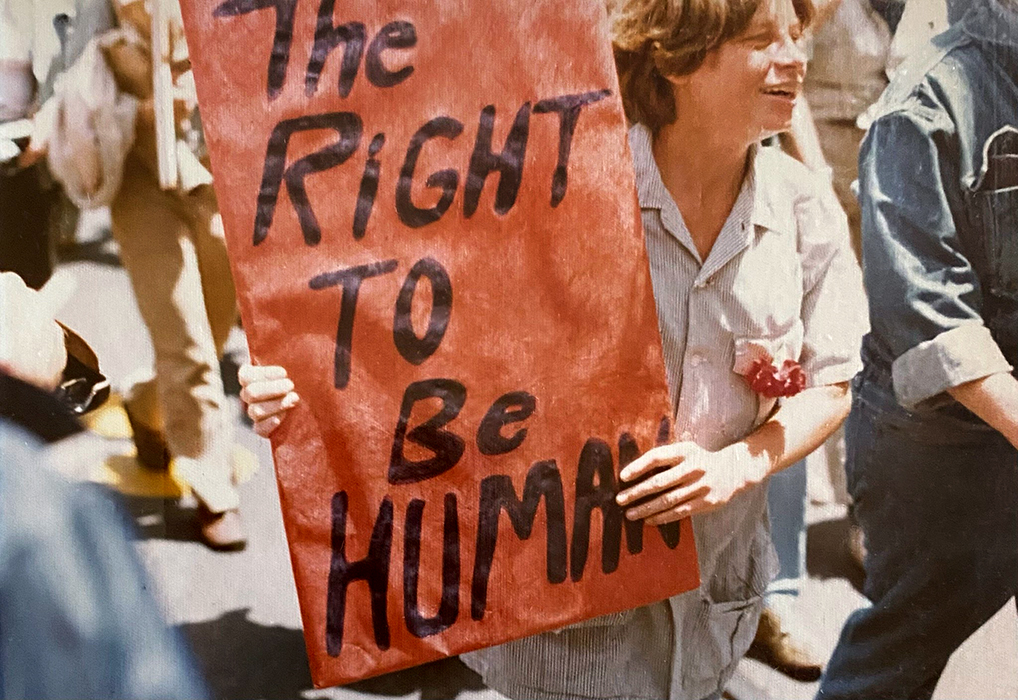
Sign reading The Right to be Human
Voicing our rights!

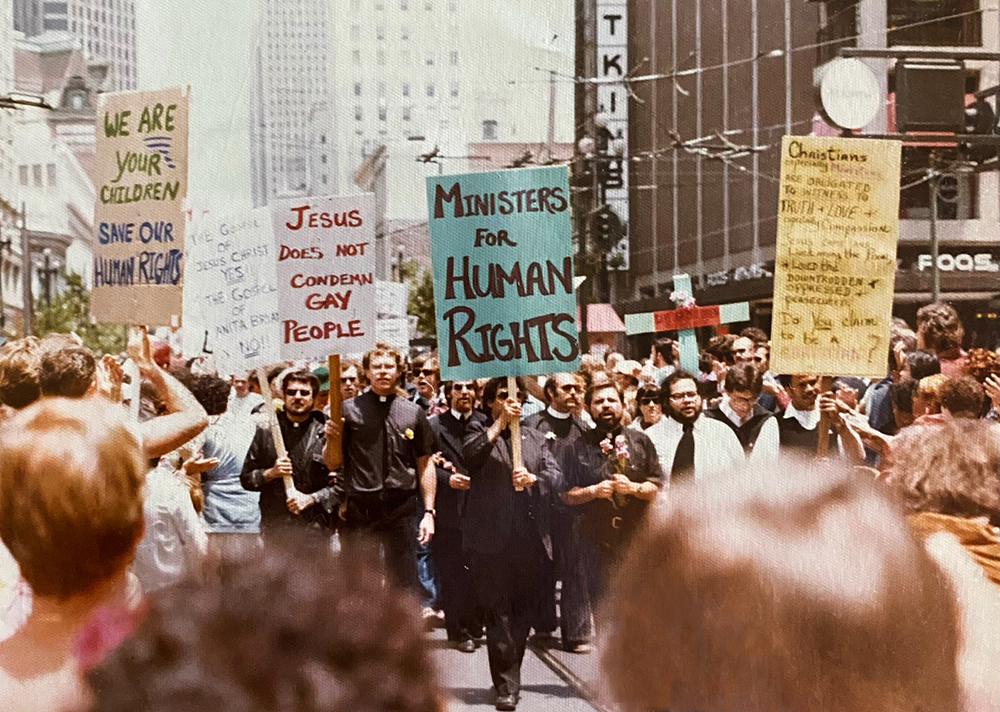
Sign readign Ministers for human rights
Again!

So many wonderful names and faces were in this crowd! Many became life-long friends. The experience was dazzling and it became an annual affair for me. It has been great to recreate this time capsule. I hope you enjoy! Will.

Thank you to Will Seagers for use of his photos.


Bio of Will Seagers:

Will Seagers (also credited as Matt Harper), within his multifaceted careers and participation in numerous gay communities across the country in the '70s and '80s and beyond, worked as a print model, film performer, and DJ, just to name a few. He made iconic appearances in releases from Falcon, Hand in Hand, Joe Gage, Target (Bullet), J. Brian, Steve Scott, and more, including in lead roles in major classics like Gage's L.A. Tool & Die (1979) and Scott's Wanted (1980). He brought strong screen presence and exceptional acting to his roles and was scene partners with many fellow legends of classic porn.

Will Seagers, present day image

Will Seagers, recent photo


You can read Will Seagers' previous blogs for Bijou here:

Welcome Matt/Will | What's For Dessert? | On and Off the Set of L.A. Tool & Die | Wanted, Weekend Lockup and Weekends in Hermosa Beach | Honeymoon in the Palms | Birds of a Feather | The Stereo Maven of Castro Street | The Pass Around Boy | The Ecstasy and the Agony | Fitness and Fantasy | Chasing the Boys and Chasing the Sun | Becoming Invisible | The Reverse Story of Dorian Gray | Pin Money | One Organ Leads to Another! | The Wheels of Steel | Feast and Famine | An Alphabet Soup of Powders and Pills | Merry Christmas (and Getting Re-Organized) | Now and Then | DEEP INSIDE THE CASTRO: The Badlands | DEEP INSIDE THE CASTRO: Moby Dick Bar | DEEP INSIDE THE CASTRO: "Just Another Stroll Down the Castro!" | Diving Into SoMa/Folsom: Hamburger Mary's | Diving Into SoMa/Folsom: Long Live the Stud! | Diving Into SoMa/Folsom: Club Life..."Hit me with your Rhythm Stick!” | A "Split Ticket": SoMa/Folsom and The Haight!Staying Vanilla in a Flavorful Culture | A Little Secret

  1503 Hits

The Backstory of Peter de Rome's THE DESTROYING ANGEL Revisited

 Posted by guest blogger Miriam Webster

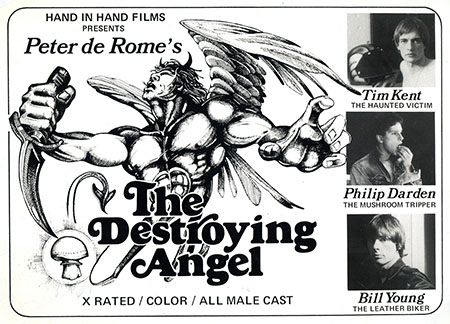
Vintage poster for The Destroying Angel

For today, I wanted to resurrect an old blog I wrote on my personal favorite movie in Bijou's catalog (and one of favorite movies in general), the 1976 Hand in Hand Films classic The Destroying Angel, which insightfully and provocatively examines one man's internal conflict over his sexuality and his place in the Catholic church. The film follows a man on sabbatical from his priestly studies who becomes - in this case, literally - fragmented into two selves in his inability to reconcile his sexual desires with his call to the cloth, while having a series of bizarre sexual experiences under the influence of psychedelics.

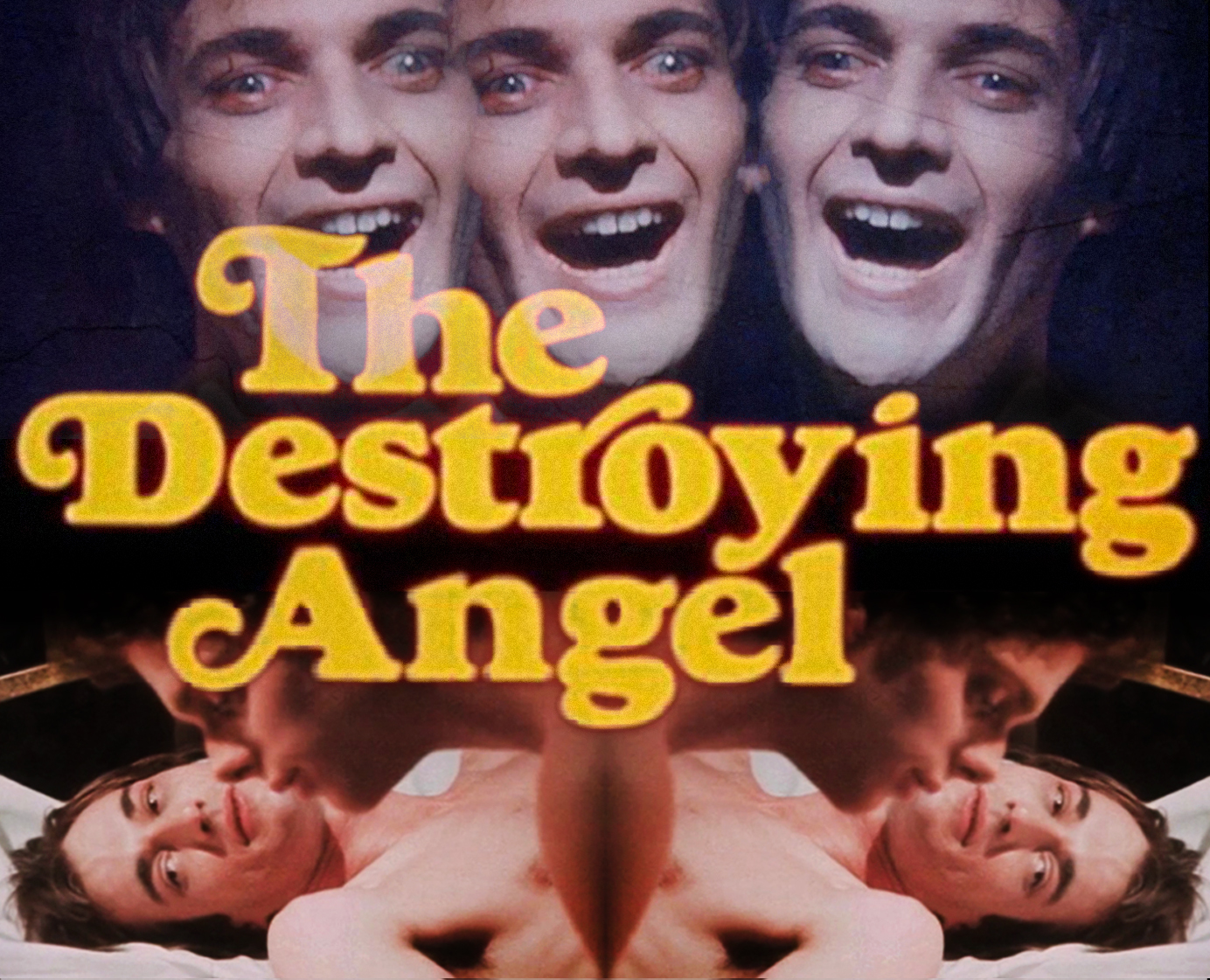
The Destroying Angel images

"It started with the thought that gay films had been made in various forms, but that they hadn't yet tackled the horror genre," starts celebrated gay porn auteur Peter de Rome's backstory write-up on his truly unusual 1976 horror/porn hybrid, The Destroying Angel - an entertaining, disturbing, and hallucinatory film about Catholicism, sexuality, doppelgangers, and psychoactive mushrooms. "Almost at the same time came the idea to write a story about twins - one that had been lurking in the back of my mind for a long time."

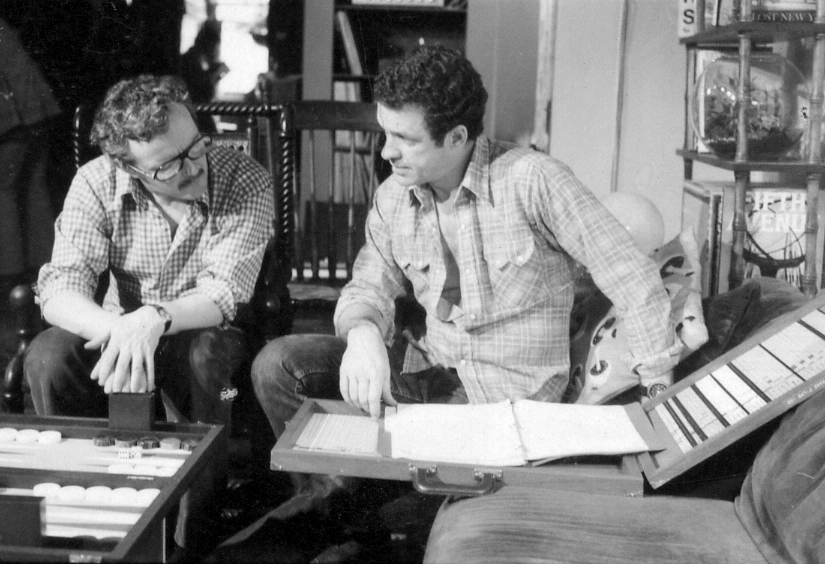
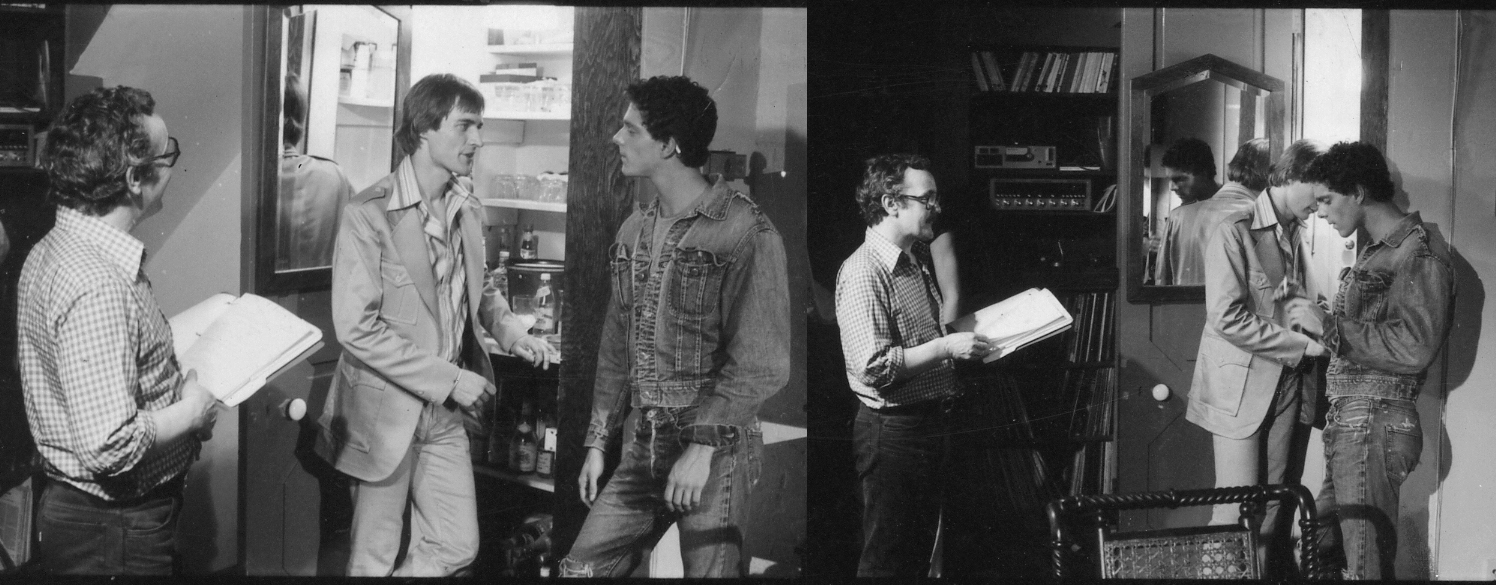
Peter de Rome and Jack Deveau on the set of The Destroying Angel
Peter de Rome and producer/cinematographer Jack Deveau on the set of The Destroying Angel

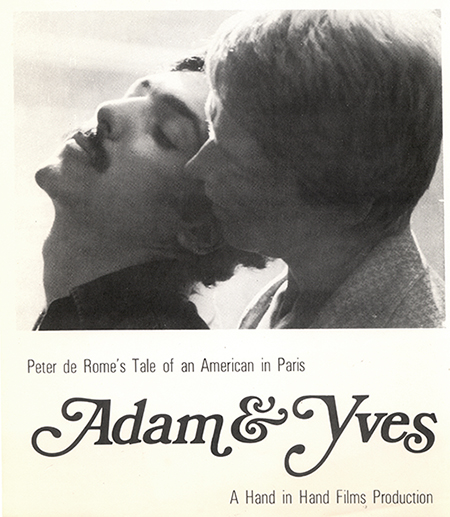
British filmmaker Peter de Rome, who passed away in 2014, was the subject of the 2016 documentary, Peter de Rome: Grandfather of Gay Porn. His work, which is both avant-garde and explicitly gay and erotic, has been widely critically recognized and written about in recent years. Working independenly on shorts in the late '60s/'70s and then with Hand in Hand in New York City in the early days of hardcore, de Rome's body of work consists of many short films and two features (1974's fascinating Adam and Yves, shot in Paris and featuring the last known footage of Greta Garbo, along with The Destroying Angel).

Vintage Adam and Yves poster

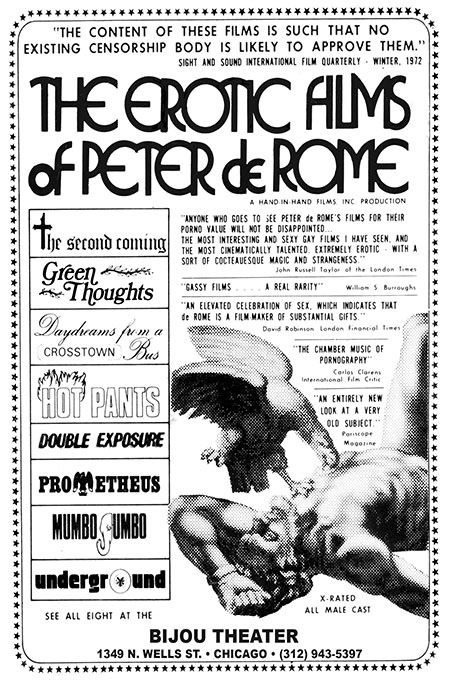
Eight of his shorts made between the years 1969 and 1972 (notably, the well-known Underground, which depicts a real sex scene shot on an active NY subway train) make up the collection The Erotic Films of Peter de Rome, released by Hand in Hand Films as the follow-up to their innagural film, Left-Handed. (For more of the studio's history, read our interview with editor/co-founder Robert Alvarez, our blog on Hand in Hand, and the 2019 book Good Hot Stuff: The Life and Times of Gay Film Pioneer Jack Deveau.) Hand in Hand also released de Rome's two features and included a few more of his short films in their compilations In Heat and Private Collection.

The Erotic Films of Peter de Rome poster

De Rome was an atypical pornographic filmmaker, largely because he had little interest in the straight-forward depiction of sex or the conventions of pornography, prefering to focus on exploring a broad, suggestive, and multi-dimensional look at sexuality through his filmmaking. "My feeling is for eroticism. And that, for me, is 'leading up to the sex.' Once you're at the sex stage it can quickly get terribly boring," he told HIM Magazine. "For me, a lot of the arousal is in the mind and the imagination. That is what really turns me on. Most of my ideas, therefore, are concerned with how we get there."

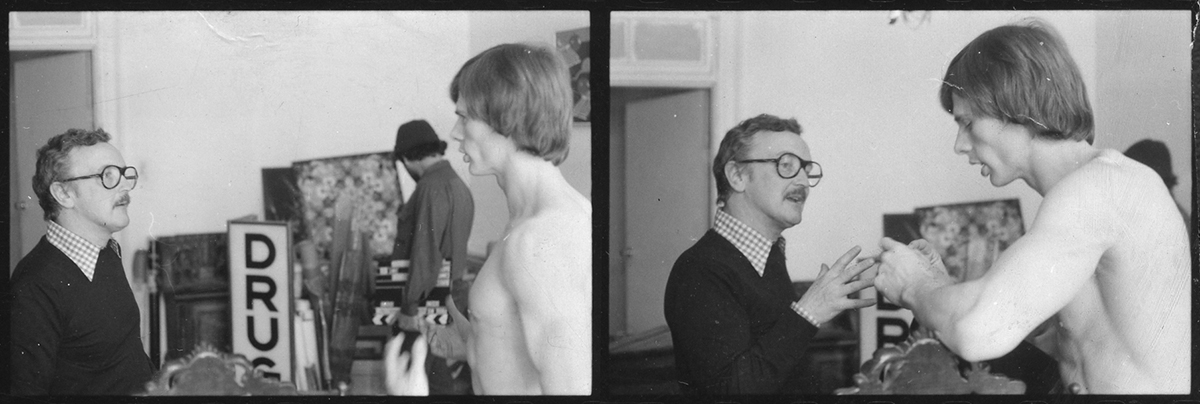
Peter de Rome directing Destroying Angel stars Tim Kent and Philip Darden

In an interview with In Touch Magazine, de Rome elaborated, "I think that we've barely scratched the surface of pornography in filmmaking, and that it has become a sort of mandatory thing in sex films to show a positive view of sex and all of sex is supposed to be the ultimate, the pinnacle of excitement, and life simply isn't like that. It seems to me that sometime we've got to get honest about sex and admit to ourselves that very few sexual encounters do work out agreeably or are completely successful. And that's one of the reasons that I did the first scene in Destroying Angel as a 'down'; it was meant to be an unsuccessful sex trip. I have a very simple if not simplistic attitude toward sex films, and that is that sex is just as much a part of life as living, eating, breathing, sleeping - it's just another function of life and I don't see why it can't be depicted dramatically just as those other funcitons are and as honestly, too. And I think we have to show every aspect of sex in films before we can really say we are making sex films."

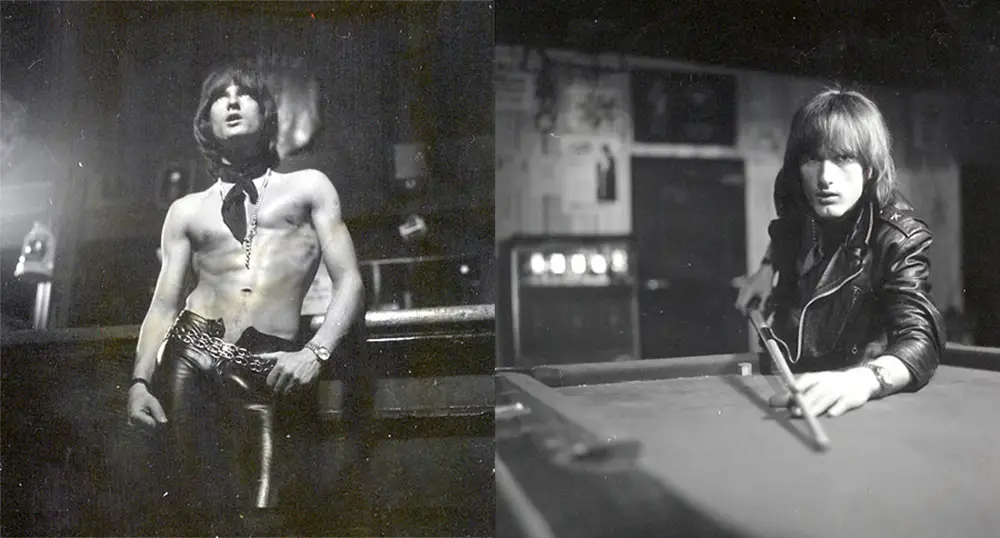
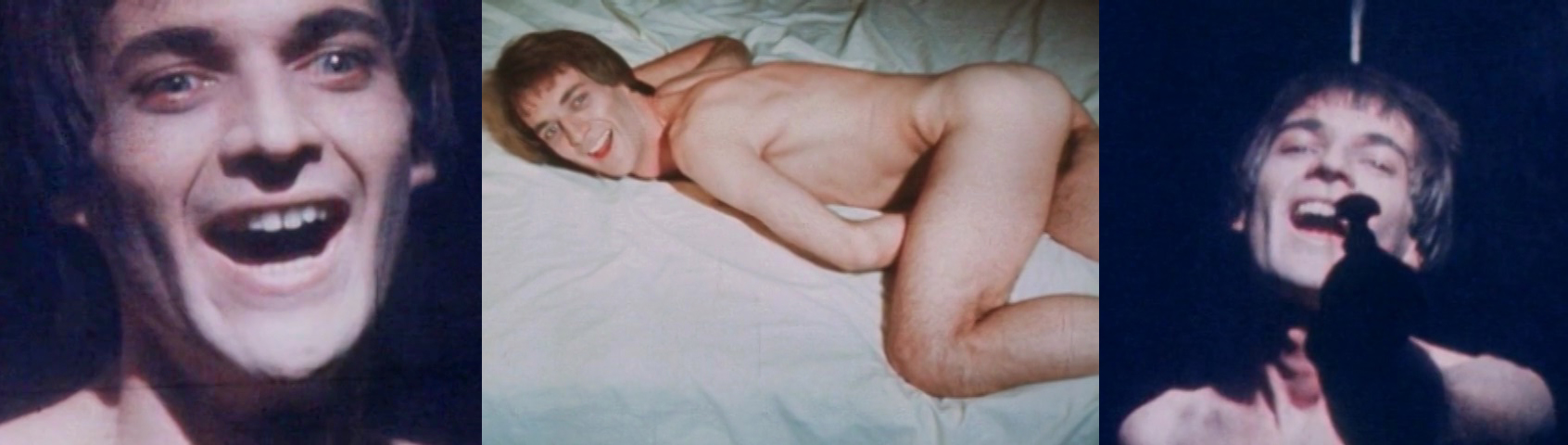
Bill Eld in a Destroying Angel publicity photo
Star Bill Eld in a Destroying Angel publicity photo

Hand in Hand's press sheet on The Destroying Angel discusses the elaborateness and complexity of the production. It was shot in ten days, with twenty-two scenes in nineteen different locations "from Montauk Point to The Spike [a NYC gay bar] to Christopher Street to Brooklyn to an eighteenth century cemebery in a forgotten spot in rural New Jersey." The Spike sequence includes a barely-discernable cameo from Peter Berlin in the background. Though he's hard to spot in the film, itself, there are a few clear behind the scenes photographs of him on set.

Peter Berlin in The Spike during The Destroying Angel's filming

The press sheet also mentions that post-production took a considerable time to complete - about a year - and cites some of the filmmaking challenges present during production, primarily finding a double for the lead (Kent) with an identical body but larger cock, and shooting and constructing the doppelganger threeway scene through camera and editing tricks.

Slating, recording sound, and Peter de Rome with Tim Kent and his body double

Hand in Hand make-up artist prepping Tim Kent, his body double, Philip Darden, and Bill Eld
Hand in Hand make-up artist Gene Kelton prepping Kent, his body double, Darden & Eld

In Peter de Rome's backstory write-up from our files, 'Genesis of The Destroying Angel,' he goes further into the film's origin story:
 

By chance, I happened to read John Allegro's fascinating study, The Sacred Mushroom and the Cross, that seeks to equate Jesus Christ with a mushroom, the Amanita Muscaria. This, in turn, led me to R.G. Wasson's Soma: Divine Mushroom of Immortality, which traces the same mushroom to the Soma plant in the ancient Rigveda of India. The whole incredible story seemed to me to be a natural for erotic treatment. But how to blend the two ideas together?

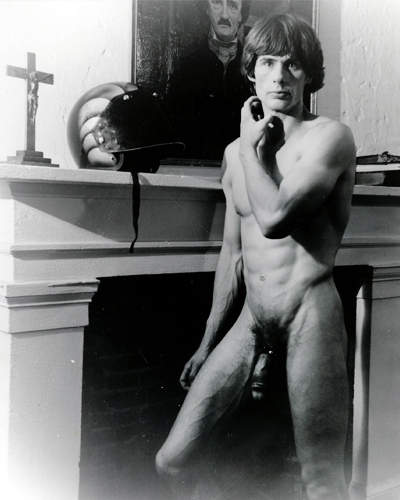
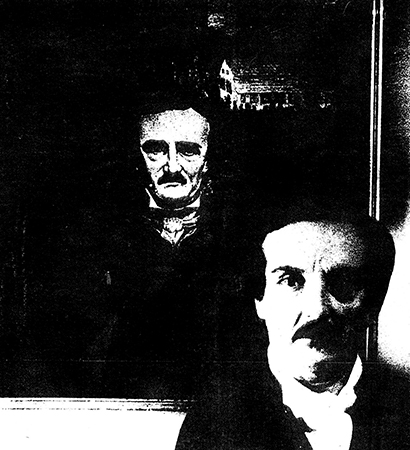
I sat down at the typewriter and looked up at the painting hanging on the wall before me. It could have been a portrait of myself, except for the way he was clothed and the caption underneath: Edgar Allan Poe. Was this a sign? Maybe, but inspiration eluded me. So I went back to his stories and, sure enough, there was the answer.

Peter de Rome in front of a portrait of his look-alike, Edgar Allen Poe
Peter de Rome in front of a portrait of his look-alike, Edgar Allan Poe

"William Wilson" provided just the sort of structure I was looking for with one important change: the twins became one troubled young man and his alter ego. A few scenes in the film are direct parallels to the story, but mostly only the structure is retained.

And then, because of the religious aspect of the mushroom story, it seemed logical to make the principle character a young priest, sorely tempted beyond his means to resist.

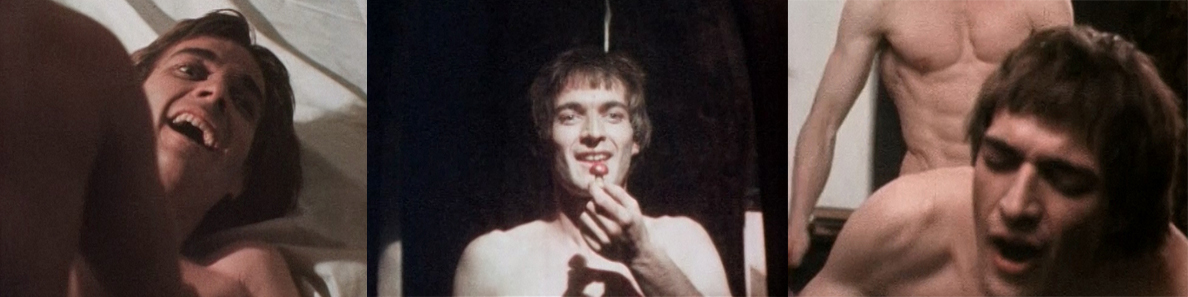
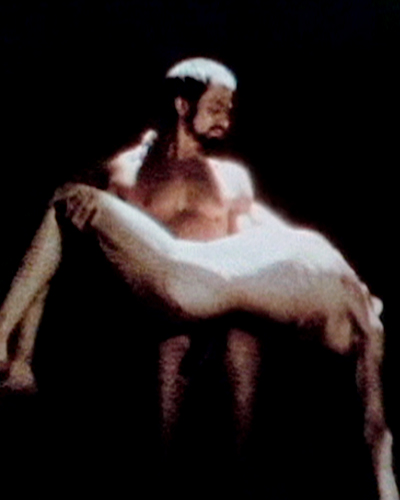
Destroying Angel stills featuring Tim Kent as the priest

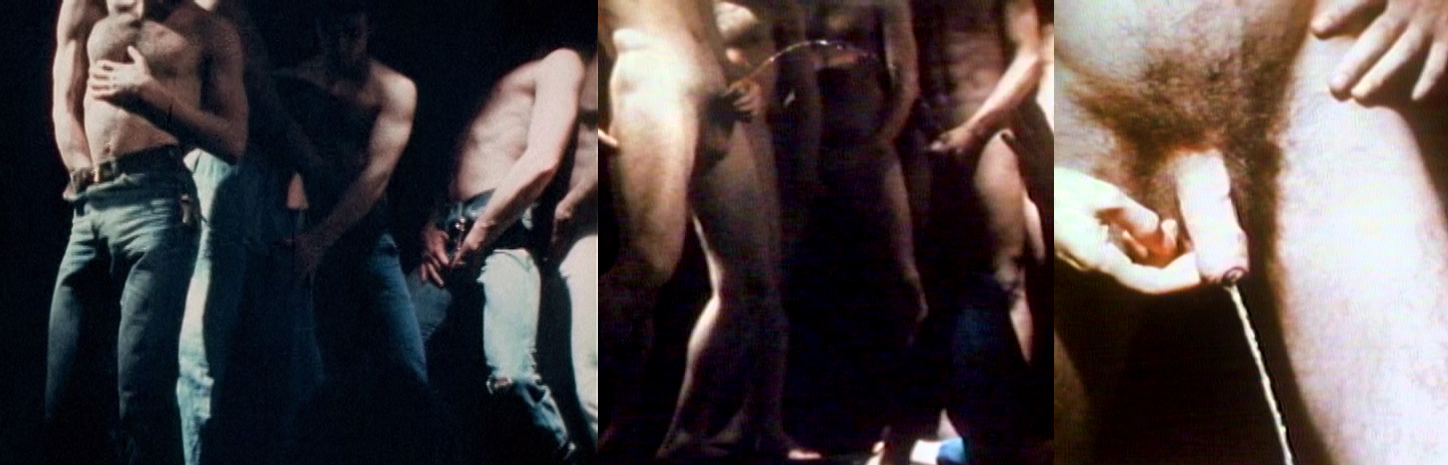
The urination scene derives from the hypothesis that the sacred plant called the Soma in the Vedic culture was, in fact, a hallucinogenic mushroom, a plant with miraculous inebriating virtue, enjoyed both by the peoples of the Valley of the Indus and the cattle they tended. The juice of the Soma had a similar intoxicating effect on the animals, and is excreted still in its purest form in the urine, only to be ingested once more by the peasants. This way they could stay high for days!


[This likelihood of this urine-drinking claim of Wasson's has been debated, but it seems to have caught de Rome's piss-fetishistic interest (piss-drinking also makes a tiny appearance in Adam & Yves).]

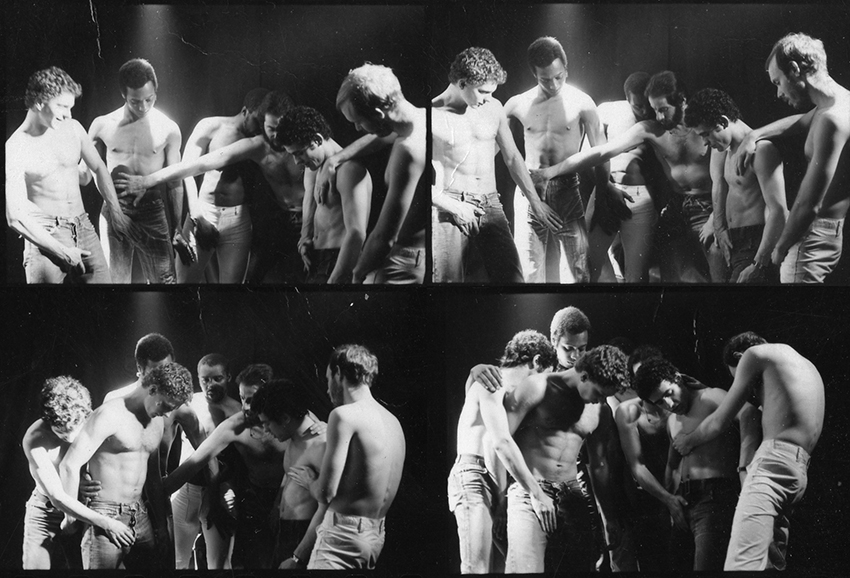
The hallucinatory piss orgy from The Destroying Angel

Orgy scene cast
Orgy scene cast

De Rome's write-up concludes:
 

Small wonder that the sun became a compelling metaphor for the gleaming red-topped mushroom, and the urine its golden rays.

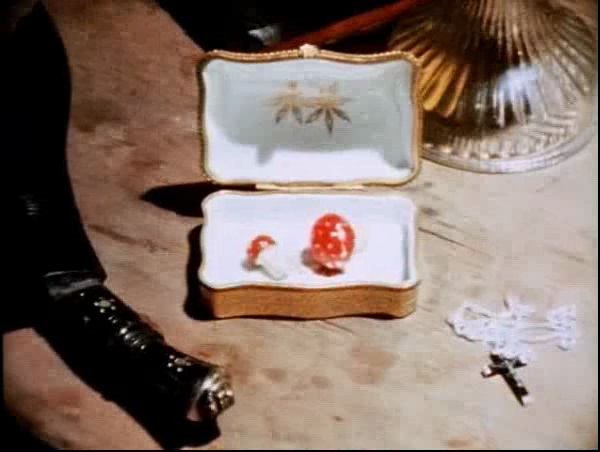
Destroying Angel still featuring a mushroom, knife, and cross necklace

The Destroying Angel has a heavy focus on religious themes, and this was hardly first time de Rome tackled these in his films. Adam and Yves features a masturbation sequence (starring muscular Bill Eld, who also plays a prominent role in The Destroying Angel) in an 11th century French chapel, and two films in The Erotic Films of Peter de Rome (The Second Coming and Prometheus) also come to mind. Prometheus, a sort of reinterpretation of the Greek myth, focuses on a man who is brutally used by a group of strangers ushered into a room by a figure resembling Christ. The Second Coming starts off as a lark, as two men (one played by Peter de Rome, himself) travel across Europe, collecting clues that lead them from city to city. One of them winds up in an old village, where he wanders into a cathedral. A group of men are huddled together inside, looking at what initially appears to be a large crucifix on the wall in front of them. However, the figure on the cross moves - it is not Christ, but a live nude man mounted there, who ejaculates, hands free, all over his own torso.

Image from Prometheus

Peter de Rome and Bill Eld on The Destroying Angel's set

The Destroying Angel - a film that is simultaneously complex and campy, hot and disturbing - was de Rome's final feature, as he was, at this point in his career, growing uninterested in the increasingly graphic sexuality being demanded in pornographic films by producers and audiences. This film (referred to as "a mess but a masterpiece" by Rupert Smith) spends a larger portion of its running time on sex scenes than does Adam and Yves or most of the rest of de Rome's work, but this is not to say that it abandons de Rome's preference for erotic imagination and the underpinning motivations and forces behind sexual acts. Its sex scenes are very unlike most others, growing organically out of the lead character's inner states, becoming increasingly surreal and deconstructed over the course of the film, and serving as the means of relaying the film's themes and character development; they are integral to the movie, not diversions from the plot. And The Destroying Angel fully fuses the genres it is tackling - its sex scenes are horror scenes, making it one of porn's best and most effectively creepy horror entries.

Images from The Destroying Angel's doppelganger threeway

The sexuality depicted in the film is complicated, conflicted, compulsive; the priest character's internal struggle - rooted in religion and made terrifyingly manifest by way of hallucinogens - the source. Psychological and emotional concerns are primary within the sex scenes, which serve as the narrative, helping to make the full runtime of the film engaging as a piece of cinema (particularly as brought to life through its compelling performances, Jack Deveau's expressive camerawork, Robert Alvarez's trippy, frenetic editing, and the evocative music selections). Porn certainly needn't operate on all of these levels in order to be interesting, hot, or significant, but the multi-layered, experimental, and cinematic work of Peter de Rome is a unique and compelling type of pornographic filmmaking.

Illustration from Peter de Rome's Destroying Angel script
Illustration from the cover of Peter de Rome's Destroying Angel screenplay

Learn more about the backstory of this classic (including other interpretations of the film's meaning) in the Ask Any Buddy podcast episode on it.

You can watch the trailer for The Destroying Angel at BijouWorld, where you can also read more about its storyline and get the full movie on DVD, or go to our Video on Demand site to stream it! Bijou also carries Peter de Rome's other films released by Hand in Hand on DVD and Streaming.

  3491 Hits

Gay 1995 Heat Wave

Posted by Madam Bubby


25 years ago, Chicago experienced a deadly heat wave; 739 heat-related deaths occurred in Chicago over a period of five days. Most of the victims of were elderly, poor, and parallel to the demographic of the victims of coronavirus death toll, people of color, who could not afford air conditioning and did not open windows or sleep outside for fear of crime.

The hottest day was July 13, where the temperature soared to 106 °F (41 °C). The weather had been exceptionally hot and humid for some days before. At that point, I was working in an air conditioned office in at a low-level law firm support staff job.

I was also in the primal, exciting throes of my first major BDSM relationship (in fact, relationship of any kind), albeit a long-distance one (he lived in New York). Essentially, I was expending my energy on living LGBTQ rather than a career.

I had bought a condo. It was not air conditioned. I could not afford at that point to purchase and install the special air conditioner needed for a casement window.


Sweaty guy


After another boring day at the office, I figured I would take cold showers and sleep my way through it. If it got really bad, I was going to see If my brother would perhaps let me stay with him and his family (I was not counting on that option; family support was generally limited in scope during that period).

I got home. The electricity went out.

I called an elderly neighbor, one half of a gay couple in the building I was very good friends with. He said he was fine, and he was waiting for his partner to get home.

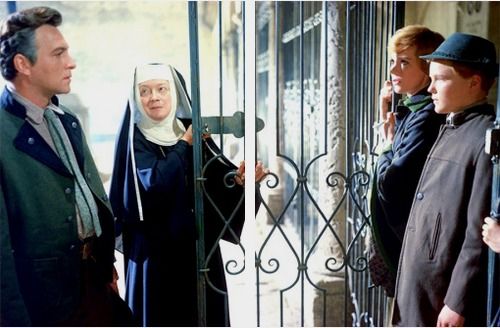
Then I remembered: a former friend of mine and I were scheduled to see a performance by a lesbian called The One-Woman Sound of Music.

He showed up at my place, and we were thinking, go to the play, which was in an air conditioned building with functioning electricity, come back to my place, and see what happens.

The play was literally a scream (her imitation of the Mother Superior saying “The borders have closed” especially), though the overly lecherous captain impersonation (too many jokes about “teddies”) was a bit coarse. Still, I was impressed with her energy and commitment.


The Sound of Music


Anyway, we got back to my place. No electricity.

We talked to my next door neighbors, who were fleeing down the staircase with luggage to find a motel.

My friend said, “You can’t stay here.” I fumbled for underwear, socks, and a shirt in the darkness, and we went to his place, a condo he shared with his somewhat … er … “older” partner.

I spent the night, the partner made frittatas in the morning, and by the afternoon I was back at my place. The lights were on. The humidity had decreased, I was getting a lake breeze, and I relaxed.

I called my partner/Sir in New York City, who told me to thank my friend. I called my elderly neighbor. He told me he was able to fall asleep, waking up only briefly bathed in sweat.

Meanwhile, an apocalyptic scenario was occurring. Just a couple blocks south of me, people had been trapped in elevators. Even in the gentrifying and gentrified north side of Chicago, swaths of neighborhoods were without electricity for a couple weeks. People slept outside and at the lake (according to my grandmother, a common occurrence in her life when air conditioning was primarily limited to movie theaters). Food rotted in refrigerators. People fled the city.
And people died. So many people in areas that I still have never visited.


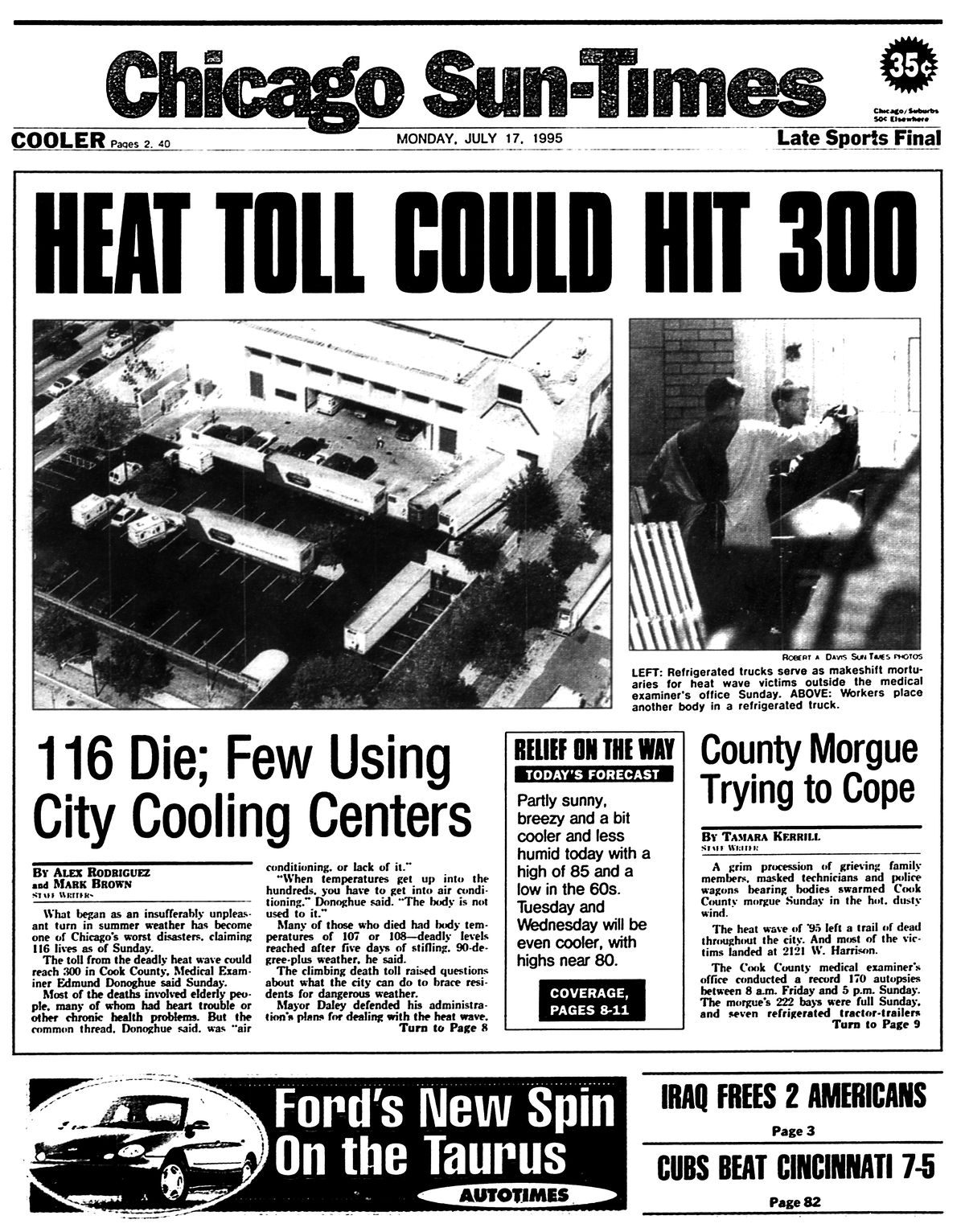
Chicago Sun Times article on the heat wave

Source: National Weather Association


A couple weeks after the event, I wrote a letter to the Chicago Tribune, which was published. I claimed a “hot but cold” Midwestern culture of not knowing one’s neighbors and racial segregation was responsible. An anonymous person mailed me a piece of paper with Nazi symbols on it.

It’s almost become a cliché to talk about LGBTQ persons choosing a family, having to choose and build one because of familial and social rejection. I think the story reveals that like blood family, the “gay family” looks out for each other.

Compared to so many people who suffered in that heat wave, I lived a life of comparative privilege. What’s really tragic is that many who died couldn’t or even, in some cases, wouldn’t get help from not just their blood families, but from a human being. For them, the borders were indeed closed, and for many like them, they still are.
Recommended reading: Klinenberg, Eric (2002). Heat Wave: A Social Autopsy of Disaster in Chicago. Chicago, IL: Chicago University Press.

  1984 Hits

Replacing the National Anthem

Posted by Madam Bubby


The current national anthem of the United States is extremely difficult to sing. As someone who has done some professional singing and is now currently trying to rejuvenate his voice, trust me on this one.

It keeps plunging down into low notes or what some vocal pedagogues call chest register, which can drag the rest of the voice down, and at the end, one is supposed to sing a high note on an “ee” vowel, “land of the free.” Because of this difficulty, it even gets transposed down even lower, which means it ends up sounding like a growling monotone.


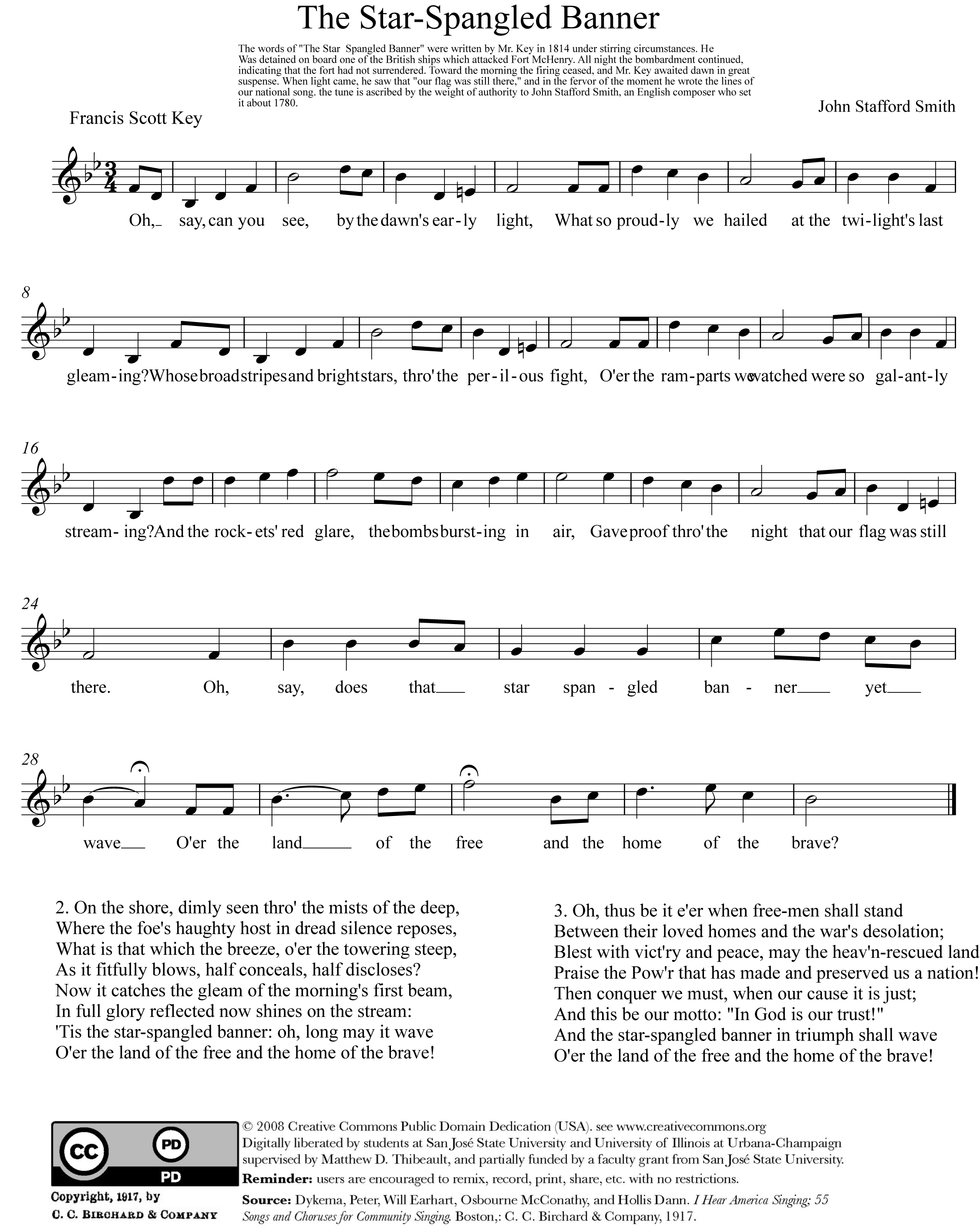
Star Spangled Banner sheet music


The composer, Francis Scott Key, was aiming for a heroic line that matched the bombastic lyrics, and he perhaps was thinking of situation like those that occur at baseball games where one listens to trained singer sing it.

Times have changed in that manner, and unfortunately we have been subjected to travesties like the dreadful yowling of Roseanne, or in the manner of many pop singers, adding to what is already difficult by adding vocal turns and coloratura and the like (perhaps to keep the voice flowing as it tries to surmount the line’s irregular see-sawing movement).

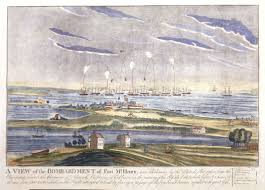
Vocally it’s problematic, but regarding the text, many have complained about the militaristic imagery, especially “rockets’ red glare/bombs bursting in air.”


Bombs bursting in air illustration


More significantly, given the social changes now occurring because of the Black Lives Matter movement, some activists say the United States should replace “The Star-Spangled Banner.” Why? Its lyrics were written by Francis Scott Key, a slaveholding lawyer who expressed white supremacist views.

Songs that some have suggested as replacing it have included “America the Beautiful,” “This Land Is Your Land,” “My Country ‘tis of Thee” “God Bless America,” and “Lift Up Every Voice and Sing.” John Lennon’s “Imagine” and Dolly Parton’s “Color Me America” are also on the list.

See this link for some performances of the some of the above songs.

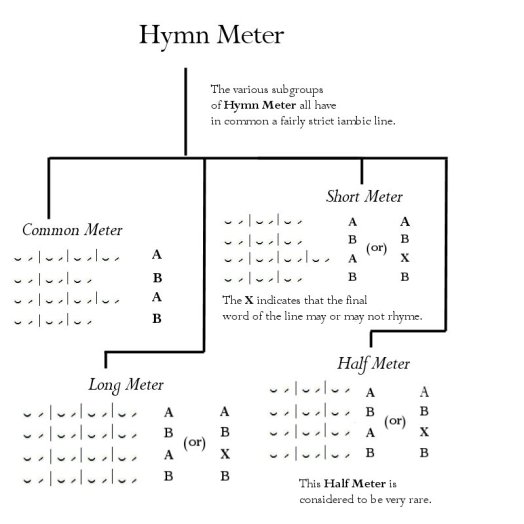
I have in the past tended to move with the “America the Beautiful” replacement crowd. Why? It’s easy to sing, with a range, and more significantly, meter that matches many of the hymns people were used to singing in church. In fact, it’s got the same meter as “Auld Lange Syne,” the common meter, which means one can sing the lyrics and melody for each song interchangeably.


Common hymn meter

Common hymn meter - Source: https://poemshape.wordpress.com/category/guides/about-common-ballad-meter/


Now, some have noted the text by Katherine Lee Bates tends to read like a travelogue or landscape; it doesn’t really proclaim and develop an idea as much as describe a landscape, vast mountains and plains and “spacious skies” surrounded by “shining sea.” But that’s the part of the lyrics we usually sing. There’s much more!

In 1893, there’s the verse:

God shed His grace on thee
Till selfish gain no longer stain,
The banner of the free


Which was then changed in 1904 to:

May God thy gold refine
Till all success be nobleness,
And every gain divine


The 1893 verse actually sounds more radical, given the context of the previous lines, which refer to “liberating strife,” which could refer to the Revolutionary War and the Civil War, “once or twice” events that liberated Americans from “selfish gain.” Ultimately, war is vain and degrades the human person to a number, an impersonal body, rather than as earlier in the verse, “a precious life.”


Katherine Lee Bates

Katherine Lee Bates - Source: https://www.harvardsquarelibrary.org/cambridge-harvard/katharine-lee-bates/


In 1904, and in a later revision in 1911, one encounters stereotypical imagery of heroes sacrificing themselves for America and tying in more the Manifest Destiny idea. The result of the liberating strife veers between martyrdom and material prosperity; I am getting more than a hint of the Prosperity Gospel. Success, in whatever shape or form, means one is blessed by God.

Overall, this conversation ultimately ends up being a “tough call,” and as the LGBTQ Pride Flag has now undergone a transformation to include people of color, one wonders if the traditional staples need to be cast aside as we confront the injuries in the name of those American, using Bates’ word, “glory tales” that oppress rather than liberate, enclose rather than include.


2017 update of the Pride flagUpdate of the Pride flag with black & brown stripes introduced at 2017 Philadelphia Pride as an inclusionary revision highlighting people of color


2018 update of the Pride flag

2018 update of the Pride flag by artist Daniel Quasar that also includes the Trans Pride flag colors


Music moves flexibly in time; it’s not an immobile statue in physical space. As long as there is someone to sing a song, it will exist.

Ultimately, the act of singing itself is an act of vulnerability but also empowerment. Every time one sings, one re-creates, just as all are “crowned with good,” because they were created in the image of the Divine.

  2945 Hits
Tags:

David's Chicago Sexual Underground - 5/29/20

David's Chicago Sexual Underground header

Greetings P(r)icksters,

Still sitting here with an idle shot glass. Illinois just moved to Phase 3 on reopening which allows for some businesses to reopen, restaurants to serve outdoor seating. Phase 4 will permit fuller openings, indoor dining and bars to open with strict limits on the number of patrons we can have at one time. Here in Chicago, we will move to Phase 3 next week and hope, hope, hope Phase 4 by the end of June.

This down time has given us at Touche some time to tackle a few projects that would have been hard to do if we were open. The big job is refinishing the main bar. The bar in the front room has wooden cabinets and front with black counters and bar top. There is a nice wooden bar rail that runs the length of the bar but years of elbows and such have worn down the finish.

So we began a couple of weeks ago to remove the cabinet doors, sand them down, re-stain them and then polyurethane layers to keep them clean. This past week, we began the project of stripping off the old bar countertop and then sanding down the top and bar rail. Today we finish this process by cleaning up all the dust.

Next week it will be time to stain the wood rail, then the polyurethane and, last, install the new countertop. Trying to do this with the bar open would have been a nightmare. We would have had to do it in sections to be able to serve and add several more days to complete. Guess there is one good thing about being shut down.

Since this past Memorial Day weekend would have been IML weekend in Chicago, we hosted a Zoom leather party on Saturday. It was my first time doing something like this and it seemed to go fairly well. We had about 100 folks log in during the three hour event, with many hanging around all night. Being new to Zoom, I did not fully realize that folks could message each other or the whole group at the start and was concerned why folks were visible but not seeming engaged. It finally dawned on me that they were busy chatting with each other.

Lots of compliments, “glad you hosted this” and more let me know that it was a success. I’ll be planning more in the next few weeks while we wait to get the bar back open.

Right now, I am finalizing plans for when we do reopen. Guidelines for reopening will limit our capacity to 50 people at one time, so there goes any thoughts about big events. We will just focus our attention on safety procedures for when we have guests, keeping seats and counters sanitized, etc. But the big changes will be how we operate with limited crowds.

First of all, we will limit the space open for customers. Touche has the main bar in the front and our Club Room bar in the back. This area was originally a garage behind the building - an auto shop, so it is fairly large. Years ago before this space became Touche, the previous owner had connected the two buildings and built a bar in the old garage space.

When we reopen, we will not open this back bar, keeping the crowd to the main bar. That way the place won’t look deserted when the small crowd spreads out between the two bar spaces. Plus I can save on the A/C back there, now that summer is here. along with the coolers running to keep beer cold.

Another change will be the crowd itself. Before the shutdown, you could see that guys were already staying home as the virus spread, and our numbers were coming down. One question will be how many are ready to venture back out once we reopen. Less travel means less visitors, too. So we may be lucky to get 50 guests at one time.

A third change would operating at a 50 person limit. Much as I hate to admit it, some folks feel they can hang at a bar without spending a dime. Going back to our days with the Great Lakes Bears, we’d have a packed house and a line of guys waiting to get in to the wee hours. After the demise of the GLB and competing bars for the bear crowd, we no longer had lines outdoors but still did about the same bar ring. This told me we had guys taking up space inside that were not drinking, or “sucking ice” as we call it.

To make sure we can make enough sales to stay profitable, we may institute a drink minimum on weekends to ensure that if you are in the house, you are supporting the house. It’s a whole new world.

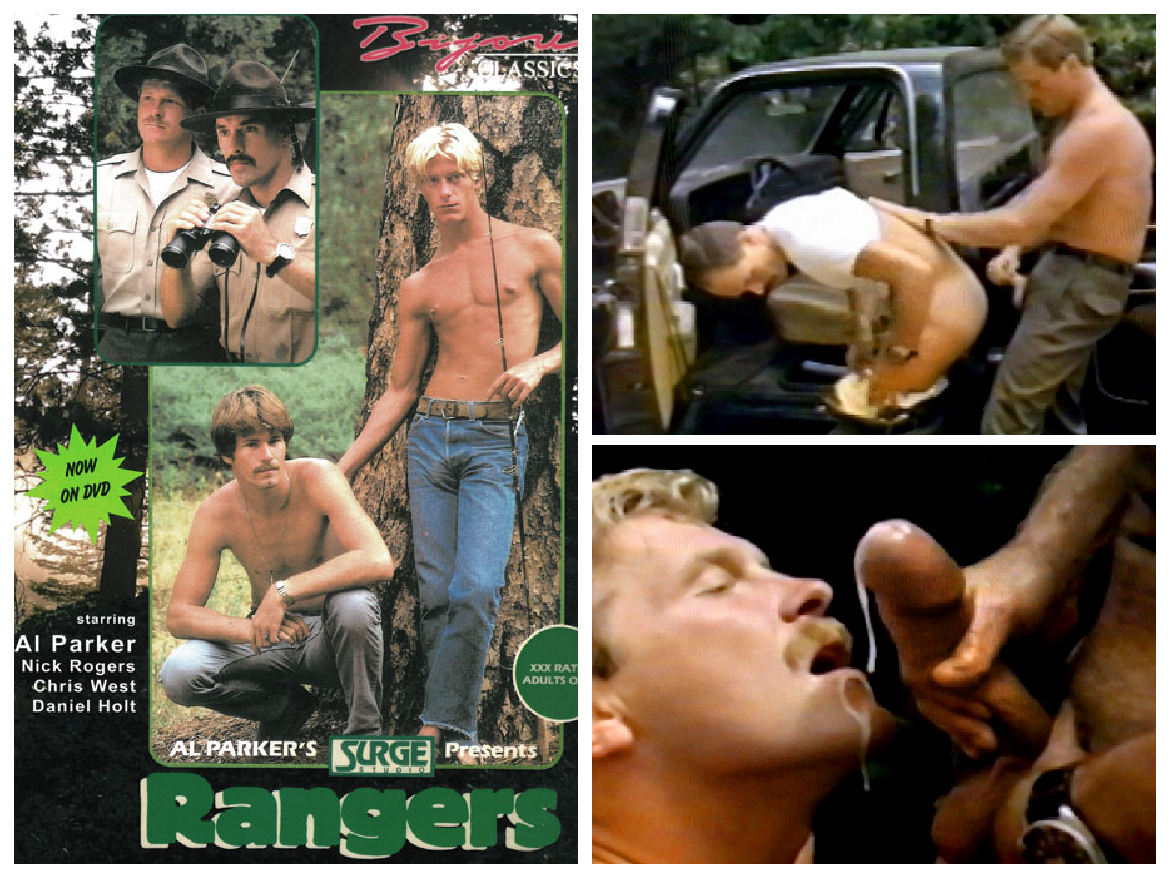
While I am figuring out when we open and what we will do for fun, go ahead and grab my P(r)ick this Week and make your own fun. It’s warming up so let’s enjoy the great outdoors this week. My first P(r)ick this week is Rangers from Surge Studio. Directed by Al Parker himself, this 1984 outdoor epic (shot in the Sierras) focuses on the exploits of the ever-vigilant, ever-patrolling park rangers (beefy, tattooed Chris West and lean Nick Rodgers) and the campers they come across.

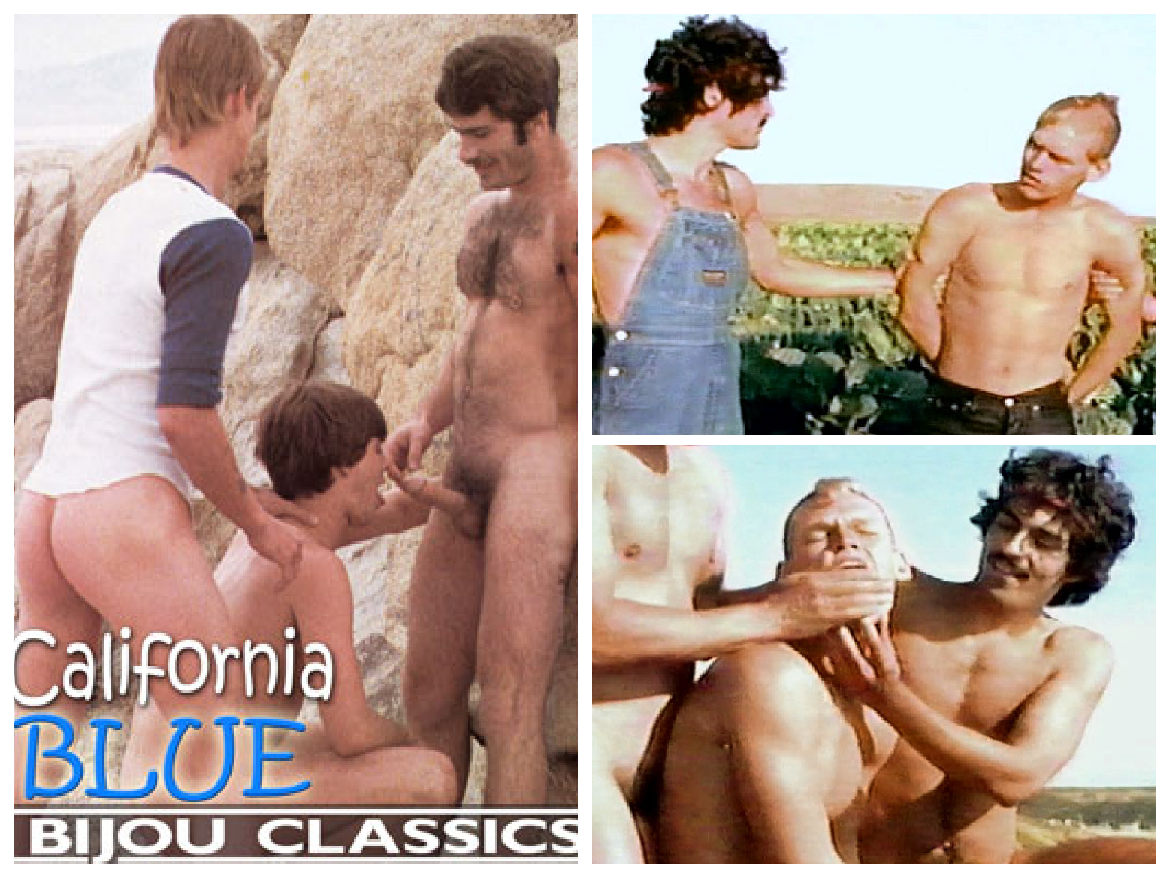
Moving from the Sierras to northern California, my second P(r)ick this week is California Blue from 1983. The late, great cutie Scott O'Hara (the of the one time Biggest Dick in San Francisco) stars in and narrates this excellent little collection of sun-soaked scenes. This vintage gay porn movie is set in California, with beaches, redwood forests and the like, and it's definitely blue.

Enjoy a Bijou Classic to beat the stay-at-home blues (and beat something else).

David

To order from Bijou, visit bijouworld.com, call 800-932-7111, or email This email address is being protected from spambots. You need JavaScript enabled to view it.


Rangers images
Rangers (D00397) - On DVD and Streaming

California Blue images
California Blue (D01007) - On DVD and Streaming

  2490 Hits
GO to Top