
BijouBlog

Interesting and provocative thoughts on gay history, gay sexual history, gay porn, and gay popular culture.

Weird People on the Bus


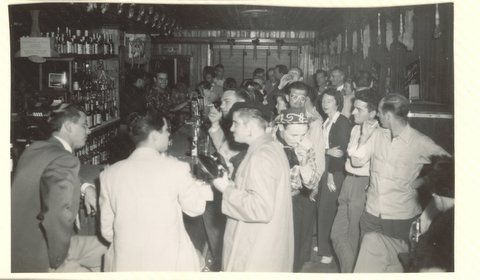
I've seen them on television and the movies, and I've even been in them (well, when you're from Cicero, Illinois, you've got to do something), but what exactly is a dive bar? Or more specifically, a gay dive bar?

The ones I have seen on television and the movies sometimes seem like parodies of these places which in some cases are identical with what used to be called neighborhood taverns. You know, the place where working class guys like Archie Bunker and Ralph Cramden would hang out at; remember Kelsey's on All in the Family?
 

All in the Family

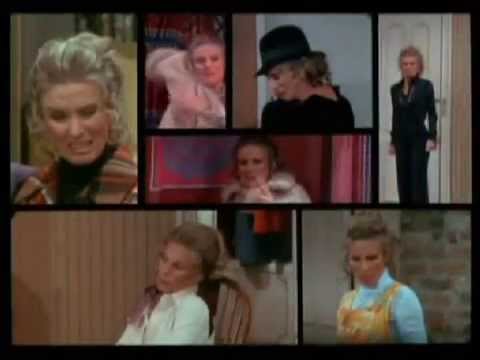
Or the one in Valley of the Dolls that Neely O'Hara (on a booze and pills binge in San Francisco) gets kicked out of; this scene (starting at 1:17:16) pretty much parodies the “dive;” tacky or nonexistent décor, which sometimes involves dark wood paneling; aggressive, bawling customers who begin with beer and end up doing shots; lots of smoking; and a jukebox, all as a backdrop for the inevitable fight.

In some neighborhoods of Chicago, in the early part of the last century, there were often three of these places on every block to accommodate thirsty workers from various manufacturing jobs who wanted in to delay going home to overcrowded two- and three-flats filled with screaming children and nagging wives. They weren't necessarily dives, but they weren't doing a high-class clientele, but the local “average Joe.”

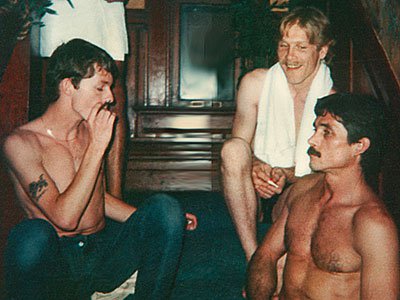
Now gay bars, of course, for the greater part of the last century, had to take often extraordinary measures to just survive. The couldn't exactly be open watering holes for Mr. and Mrs. Bunker. (Well, other open holes existed there, but that's another blog.) And to survive often meant being a dive (or pay off the police or the Mafia), because that's all you could afford being, plus looking “rough,” though it could attract a less “classy” clientele, often kept away bigots.Leather Bar, 1978


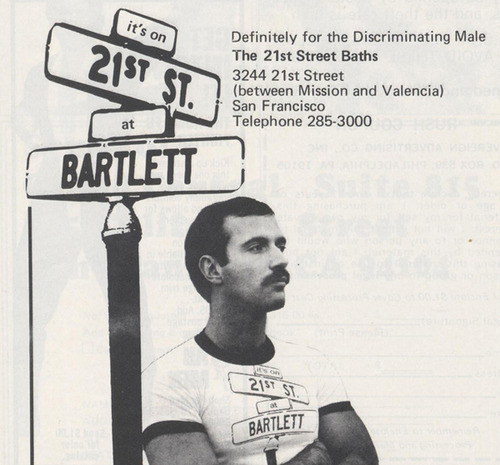
Early leather bars like the Gold Coast certainly were dives physically, but in cases like that, the “dive” look was a deliberate part of their appeal: rough sex, rugged guys, bikers. The old Touche bar in Chicago on Lincoln Avenue perhaps was more strictly kink and leather (think piss trough), but the beers stacked up by the entrance and the generally seedy surroundings (I remember the floor was dirty, and it was caked in; no comment on how I would know such detail) certainly proclaimed “dive.”


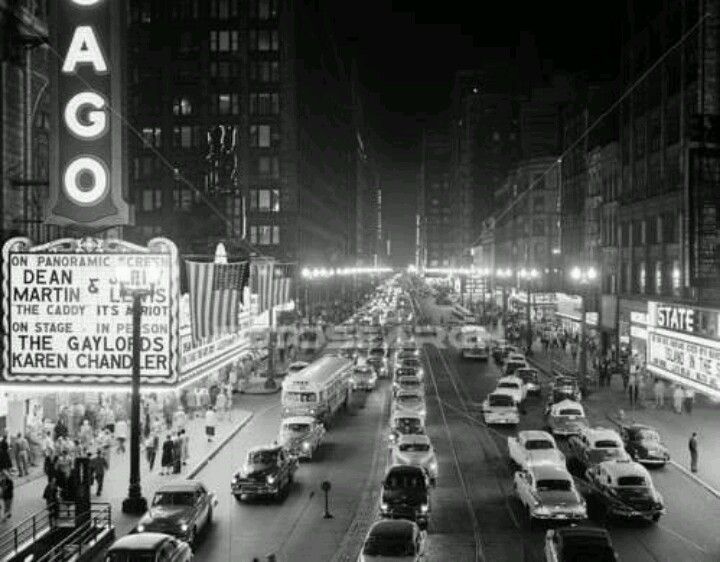
Wells Street, Chicago, 1970s

The Glory Hole on Wells Street when that street was the gayborhood was perhaps more of the pure “dive:” not only the totally rough, thrown-together look, but the backroom (and bathroom) for quickies and more. Perhaps some of the bars that used to bill themselves as “leather and levi” rather than strictly leather (with a dress code) could be defined as more strictly dive, like the now-closed Rawhide in Chelsea, or still thriving, the Second Story Bar right off the Magnificent Mile (yes, it is still there!) and the Granville Anvil on the Far North Side of Chicago, somewhat distant from the trendy, touristy Boystown.

In fact, the Granville Anvil bills itself as a dive bar. From what I gather, based on their Yelp reviews and Facebook page, they've “spruced up” the décor. Did the owners take out the paneling and the plastic flowers covered with dust hanging in baskets from the ceiling, I wonder? I know, because I was there in the nineties, and yes, there was a jukebox playing Cher's song “Half-Breed,” and also, there was a fight in the bathroom. I was indirectly involved. The friend I went with was in the fight. I found out he was pissed because some guy would not leave me alone (those were the days), and then started bugging my friend as well. That night, I also won some lottery tickets as a prize for getting Bingo. I didn't win the lottery.
 

The Granville Anvil

I wonder, in these days when other “divey” places like 24-hour grills and diners have disappeared and were replaced by big box stores and chain restaurants, if the authentic dive bar can survive. Neighborhood taverns evolved into sports bars, and hipsters have set up “divey” places as part their deconstruction of retro; but what will happen to the gay dive bar? I have a feeling it's been replaced by the seedy underbelly of craigslist, minus, so sadly, the both fun and dangerous social interaction in a place where ultimately, a gay man could both hide from and enjoy himself. And share that identity struggle with others over a shot of whiskey while listening to Judy Garland singing “The Man That Got Away” on jukebox that still played vinyl.

  4211 Hits

The Cumshot: Fantasy and Reality


Some person (I was going to use a naughty word, but I am trying to remain calm) on the Huffington Post claimed that homosexuals started the Nazi Party. This type of ignorance (and this claim has been going around for some time, thanks to Scott Lively and others of his ilk) really makes my blood boil. It's the type of defamation that LGBT persons are still suffering from people like Scott Lively (again, I was going to use more naughty words), Bryan Fischer, and now Sally Kern of Oklahoma, who wants to allow people who may be against what they term sinful homosexual behavior (think: a certain type of Christian of the fundamentalist persuasion) to deny LGBT persons access to public services in her state, among other infamies. Check out this site for more information on Kern's bills.
Sally Kern


Ernest Rohm, one of the original compatriots of Hitler, was gay, but he did NOT start the party. And he and his cohorts were “purged” soon after Hitler took over because they Hitler saw them as a threat. He couldn't deal with what was developing into a possibly dangerous internal army (Rohm's Brown Shirts) rising up against him. And he before that point was pretty much willing to “look the other way” about Rohm's predilection for blond, “Aryan-looking” studs. Himmler was the one who pretty much decried Rohm's orientation and influenced Hitler to add gays to his list of Final Solution victims.

By the time the Holocaust was occurring, gays, according to the Nazi world view, had been deemed not acceptable humans. This view was based on their distorted eugenics; degenerate gay men (or lesbian women) could not produce future master race babies. Gays were sent to concentration camps and made to wear the pink triangle. Straight prisoners were encouraged to beat up on them, just as they often would have done in a non-prison setting. It's not clear how many LGBT persons were killed, but of the 5,000 to 15,000 incarcerated, as many as 60 percent may have died, according to one leading scholar.

Gays in concentration camps

And we also need to remember that the injustice continued for gay men especially after Hitler's defeat. Many gays who survived the horrors of Nazism still had to live lives of secrecy and continued persecution sometimes based on evidence found during the Nazi regime. Both Germanies (at that time) eventually overturned their “fornication between men” laws in 1957 (in the East) and 1969 (in the West).

We recently remembered the 70th anniversary of the liberation of Auschwitz, and we remember all the victims of the Nazis, but was also need to still remember that the Sally Kerns of the world are still perpetrating a similar mechanism of scapegoating those whom they see as threats to the supposed “purity” of their systems. In 1938, after the Kristallnacht pogrom, the Nazis pretty much denied the Jews basic public services in Germany.


In 2015, Sally Kern and other government officials in the United States now seek to do something similar, though many of them are probably operating under the different assumption held by her co-religionists that LGBTs offend by their behavior, not their genetic makeup.

Even though we now know Kern has withdrawn her offensive bills, the fact that people support her bills (and that she was even elected) really makes me both frightened as well as angry.


I think we all have to start not just throwing around this saying by Martin Niemoller as a cliché, but using it as a constant call to action, not just vigilance:


First they came for the Socialists, and I did not speak out— Because I was not a Socialist.

Then they came for the Trade Unionists, and I did not speak out— Because I was not a Trade Unionist.

Then they came for the Jews, and I did not speak out— Because I was not a Jew.

Then they came for me—and there was no one left to speak for me.


Martin Niemoller


Martin Niemoller


  2922 Hits

Biblical Beards, Olive Oil, and Sex

Biblical Beards, Olive Oil, and Sex


I remember when I was growing up in the seventies talk of streaking; and given the penchant of pubescent boys of lying about physical (and sexual) exploits, several of my classmates claimed to have streaked. I'm pretty sure their only streaking may have been running wet and dripping from the shower to their bedrooms. 

But given my sheltered upbringing, I knew nothing of the legendary Robert Opel Academy Awards streaking incident, not that the Academy Awards was forbidden television viewing in a household which banned Maude because the character had an abortion. 

(Little did the Catholic household I grew up in know that streaking occurs in the Bible See Mark 14:50-52 for the famous naked youth in the Garden of Gethsemane; also go here for more information. Of course, the blog urges one to run from temptation. I would rather run toward it.) 

According to Leigh Rutledge in The Gay Decades

“April 2, 1974 Having inexplicably fascinated the nation for roughly six months, the fad of “streaking” reaches its apogee with gay photographer and former advertising executive Robert Opel, thirty-eight, plunges naked across the stage during a live broadcast of the Academy Awards ceremony in Los Angeles. Opel's “streak,” almost certainly the most witnessed stunt of its kind, occurs during the most popular part of the telecast, the announcement of the award for Best Picture, thus guaranteeing him an estimated audience of more than one billion television viewers worldwide.” 


Robert Opel streaking


Yes, this really happened; here's a link to the true story

But there's more, and it's even more shocking. 

Robert Opel was murdered by an intruder at his art gallery who demanded drugs and money in 1979. Opel was famous for publicizing the works of gay artists Robert Mapplethorpe and Tom of Finland. 

Opel was a well-known leatherman as well. 


Portrait of Robert Opel by Jack Fritscher, 1979


His nephew -- Robert Oppel -- created a documentary aiming to find out exactly what happened. 

The film, Uncle Bob (now on DVD), is an innovative fantasia filled with vintage clips, interviews, and segments with the young Oppel playing at being his uncle while re-creating his filmmaking, his TV appearances, and even his bloody death. 

Streaking, leather, nude young men in the Bible, the Oscars: what a gay combination! 

  4603 Hits

Ear


1955: a different world than today in so many respects. Eisenhower was president, the Cold War and the threat of communism and nuclear war hung heavy over the hearts and minds of Americans, and despite the tight sweaters, push up bras, beefcakes on the beach, and the new rock 'n roll music, sex was a dirty secret performed in a bedroom by a mommy and daddy who each slept on twin beds (that is, on television!). Homosexuality, in fact, any kind of sexual diversity, was taboo. Not only taboo, but illegal. 


Thus, in 1955, Mattachine Review, published by The Mattachine Society, was the only gay rights, or “homophile,” magazine in the country. In those days there existed physique magazines like Bob Mizer's Physique Pictorial, but these homoerotic publications had to “cover” as bodybuilding manuals to avoid censorship by the United States Post Office. 
 

Mattachine Review September-October 1955 cover


The Mattachine Society, founded in 1950 by Harry Hay and a group of friends in Los Angeles, was one of the earliest gay rights groups in the United States. 

The primary goals of the society were, according to the group's mission statement found in many of the group's publications: 

“1. Unify homosexuals isolated from their own kind; 

2. Educate homosexuals and heterosexuals toward an ethical homosexual culture paralleling the cultures of the Negro, Mexican and Jewish peoples; 

3. Lead the more socially conscious homosexual to provide leadership to the whole mass of social variants; and 

4. Assist gays who are victimized daily as a result of oppression.”
 

This was the era of McCarthyism and, as it turned out, most of the founders of Mattachine were affiliated with Communism. As the McCarthy persecution of Communists progressed, the association of Mattachine founders with Communism concerned some of its members as well as supporters. Hay, a member of the Communist Party for 15 years, stepped down as the society's leader. The new leadership structure became influenced less by Communism and more by a liberal ideology similar to that espoused that by the African-American civil rights organizations. 
 

Mattachine Society 'Why Hasn't Somebody Told Me About This Before?'

What does the word Mattachine mean? According to Jonathan Katz in his book Gay American History, Harry Hay claimed: 


“One masque group was known as the 'Société Mattachine.' These societies, lifelong secret fraternities of unmarried townsmen who never performed in public unmasked, were dedicated to going out into the countryside and conducting dances and rituals during the Feast of Fools, at the Vernal Equinox. Sometimes these dance rituals, or masques, were peasant protests against oppression—with the maskers, in the people’s name, receiving the brunt of a given lord’s vicious retaliation. So we took the name Mattachine because we felt that we 1950s Gays were also a masked people, unknown and anonymous, who might become engaged in morale building and helping ourselves and others, through struggle, to move toward total redress and change.” 

A brief perusal of some of the articles in the September/October 1955 issue shows not only how attitudes about homosexuality have changed drastically today, but also how some of the issues are still relevant today as the “culture wars” continue to erupt over the legalization of same-sex marriage. 

The newsletter features articles entitled “The Liberal Mind,” “Culture and Sexuality,” and “The Importance of Being Honest.” The last article emphasizes the importance of historic research on homosexuality and claims, though somewhat gently, that one should not make the assumption that homosexuality has always been a dangerous perversion and threat to society. Gays are still fighting this assumption, much more overtly of course today than in 1955. 


Homosexuality and the Liberal Mind


There is also a short article on Havelock Ellis and his views on homosexuality. Havelock Ellis, a British doctor and psychologist, coauthored the first medical textbook on homosexuality in 1897. He also studied what today are called transgender phenomena. Together with Magnus Hirschfeld, Ellis is considered a major figure in the history of sexology to establish a new category that was separate and distinct from homosexuality. 

Albert Ellis contributes a piece entitled “The Influence of Heterosexual Culture on Homosexual Attitudes,” significantly, romance and marriage. Yet nowadays, one could make a case for the opposite in a culture which produced Queer Eye for the Straight Guy

James Phelan contributes an article on the treatment of sex offenders: gays are lumped together with child molesters and rapists as “sexual psychopaths,” all of whom need rehabilitation through an experimental group that uses the Alcoholics Anonymous model, called ESP, Sex Psychopaths Anonymous. Today, many right wing extremists, such as the husband of Michelle Bachman, would still concur with this notion, but incorporate it into the therapeutic model “praying away the gay.” 

What is also interesting is a response to someone asking to be taken off the magazine's mailing list. The response from the editors is that The Mattachine Society is “NOT an organization of homosexuals, but of people interested in human sex problems, especially those of the homosexual and sex variant.” Such was the danger of being raided and arrested and censored and thrown in prison as a “sexual psychopath” that the editors felt it necessary to hammer home this point (and others points about the Society not being secret) in what was a real climate of fear in the 1950s. 

Yet a selection from a book entitled Sex and the Law by a Judge Ploscowe printed in this issue does indicate the seeds of a shift in attitudes, calling for a repeal of heterosexual anti-sodomy statutes, which would also hinge on decriminalizing private homosexual conduct. Stay in the closet, ye homosexuals, the author seems to be saying, for what you are doing sexually is fine privately, not publicly, because it accords with your essential nature. One can't totally repress “unconventional” sexual behavior, either homosexual or heterosexual. The law (arrests, imprisonment) cannot change “scandalous,” that is publicly deviant, homosexual behavior but psychiatry and science can change behavior. Still, there seems to be the assumption that homosexuals can and should change for the good of society. But the author also decries heterosexual sexual crimes (again, lumping together homosexuality with criminal acts as noted in the Albert Ellis article described above), including child molestation and male prostitution. Thus, perhaps, the homosexuals shouldn't take all the blame for deviances from the heterosexual norm. 

Now, as the United States nears the end of 2014, some LGBT people are fearful, not because of who they are and certainly not because of the enormous strides in the legalization of same-sex marriage, but because many politicians and religious leaders on the far right seek to return to the fearful isolationism and xenophobia of the 1950s. Harry Hay and the members of the Mattachine Society showed remarkable courage in beginning the fight against gay invisibility; now that gays are so powerful and visible, we are perhaps even more vulnerable. Since those days in the 1950s, LBGT people have dropped their masks; now their only protection is the truth of their stature as loving, just persons. 


If you like our blogs, please reblog or retweet or email them on to a friend.


Also, please support Bijou during this holiday season by going to our website and purchasing an item or two of vintage gay sexuality for yourself or as a unique gift for a friend. 

  6701 Hits
Tags:

Sergius and Bacchus: Gay Military Saints


A while ago on Facebook, I saw a picture of two hot young studs in uniform sitting together: happy and openly in love. Everyone loved the picture, rejoicing at the progress we've made, the liberation from the bondage of “Don't Ask Don't Tell.” 


Men in Uniform

But gays serving in the military isn't exactly a newfangled development. In ancient Greece and Rome, soldiers who were also sexual partners served together, died together in battle, and in this case, were martyred for being Christian, not because they were gay. Shocking, and, as you will see, rather hypocritical, isn't it, given the polarization on the gay marriage issue still prevalent in some areas of the the United States, with the Catholic Church vowing never to change its position against any form of gay/lesbian union. 


The saints' story is told in the text known as The Passion of Sergius and Bacchus. The story is ostensibly set during the reign of the emperor Galerius (305-311 A.C.E.), though the work itself may date to the mid-5th century. According to the text, Sergius and Bacchus were Roman citizens and high-ranking officers of the Roman Army, but their conversion to Christianity was discovered when they attempted to avoid accompanying a Roman official into a pagan temple.


After they refused to offer sacrifice to the god Jupiter in front of the emperor, they were publicly humiliated by being dressed in female clothing and paraded around town. Galerius then sent them to another province in the East, Mesopotomia, to be tried by Antiochus, the military commander there and an old friend of Sergius. Antiochus could not convince them to give up their faith, however Bacchus was beaten to death with whips. The next day Bacchus' spirit appeared to Sergius, encouraging him to remain strong so they could be together forever in heaven. With Jesus, definitely, but together!   

Over the next few days, Sergius was also brutally tortured. Sergius refused another opportunity to offer sacrifice to the gods, and Antiochus punished him by having nails driven upright through the soles of his boots. He then forced him to run before his carriage for the nine-mile journey to the fort of Tetrapyrgium. That night, an angel healed Sergius' feet. The next morning, Antiochus was astounded at Sergius' rapid recovery and accused him of sorcery. He forced him to endure the same punishment once more, this time during the nine-mile journey to the town of Resapha. He then gave him a final chance to change his mind. But Sergius refused to do so, and Antiochus ordered him to be led away and executed. 

The close friendship between the two is strongly emphasized in the stories told about them and in their cult, making them one of the most famous examples of paired or “twin” saints, like Christian versions of the famous twins Castor and Pollux in Greek mythology. The late gay historian John Boswell argues that Sergius and Bacchus's relationship contained a romantic element; he claims the oldest text of their martyrology describes them as erastai, which can be translated as "lovers". He also suggested that the two were united in a rite known as “brother-making,” oradelphopoiesis, which he argued was a type of early Christian blessing or ceremony for same-sex unions. 


Joan Crawford

Now, even though Boswell's claim is still open to dispute, I would think, given that the two lived together and shared property together, were not married to women (as far as we know), and, in the course of their martyrdom, were made to dress as women in a unique way to humiliate them, these two men's true orientation is indicated. But, most significantly, they weren't being punished for being gay. If that were the case, their genitals would have been mutilated, according to one source by David Woods, “The Origin of the Cult of SS. Sergius and Bacchus.” They were being punished in that manner for being Christians! 

The picture to the right is a 1994 icon of Sergius and Bacchus by the gay iconographer Robert Lentz, a member of the Catholic Franciscan order, first displayed at Chicago's Gay Pride Parade. 

To read John Boswell's views on this subject, see his book, Same-Sex Unions in Pre Modern Europe

  4138 Hits
GO to Top