
BijouBlog

Interesting and provocative thoughts on gay history, gay sexual history, gay porn, and gay popular culture.

Posing

Posted by Madam Bubby


The word posing can evoke images of runway models and persons on instagram (including celebrities famous for simply being famous).

But there's more to posing than duck lips and giving the finger.

Posing has been an integral part of the bodybuilding world, a specific part of contests, and I might add, one can view many of these contests on youtube.

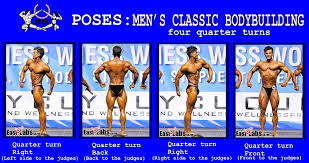
According to one source, these are the mandatory poses in bodybuilding:

1. Quarter Turns
2. Front Double Biceps
3. Rear Double Biceps
4. Front Lat Spread
5. Rear Lat Spread
6. Side Triceps
7. Side Chest
8. Front Abdominal & Thigh


Men's Classic Bodybuilding Poses
Men's Classic Bodybuilding Poses, source: https://www.ifbbsa.co.za/images/Criteria/men/men-s-classic-bodybuilding-2019.pdf


A quarter turn shows off the symmetry of the muscles as a whole. The lat is a large, flat muscle on the back that stretches to the sides.

Specifically in relation to their function in a contest, the source clarifies that “a pose which is either optional or mandatory depending or the federation one belongs to is the most muscular. During any bodybuilding show, in the pre-judging portion, the bodybuilder will be called upon to complete the mandatory poses, often several times he or she is called back out and compared with their fellow competitors.”


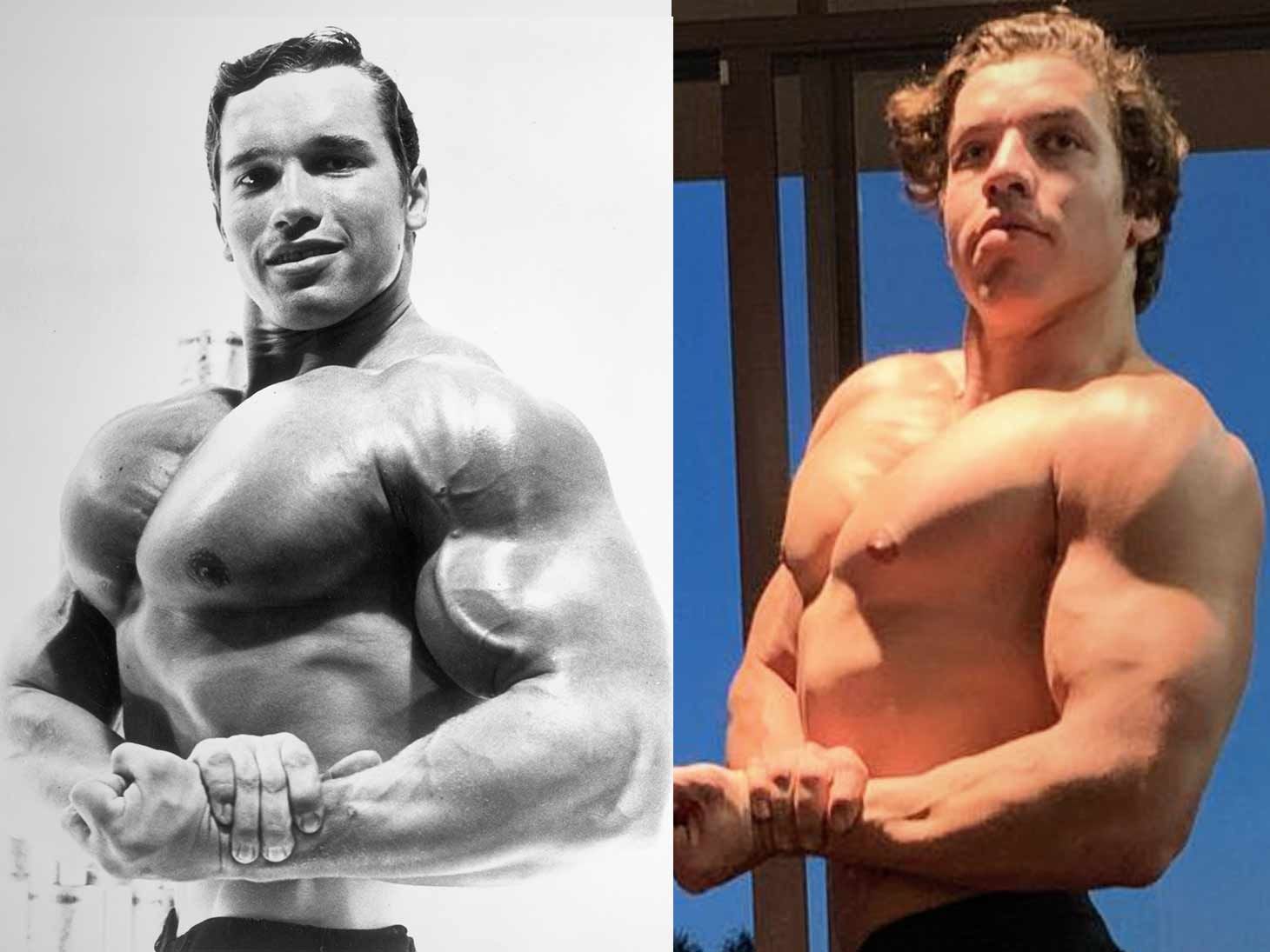
Schwarzenegger and son posing
Schwarzenegger and son, source: https://theblast.com/c/arnold- schwarzenegger-joseph-baena-famous-pose


Yes, they are showing off too, but it's something they worked hard to develop, whatever their intentions. It reflects discipline. It's earned body show-off time.

Now, personally, I'm not into super, super bulked up guys; I am attracted more the attitude conveyed by these poses that combines both discipline but also dominance, even arrogance. It's like that male hands on hips pose on steroids. Or rather, the body and the attitude become one powerful image.

Overall, by watching some of these contests online, I discovered a perfect way to while away time in quarantine. It's ultimately voyeurism, and guess what, it's something one can do alone. Build muscles and pose alone, and then show off the glory to others who are alone digitally. Their invisible audience can participate in the glory, which in many cases, including mine, involves a glorious orgasm.

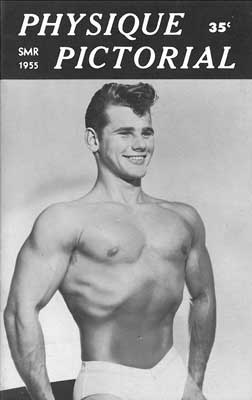
And tying into Bijouworld's mission of disseminating and analyzing the rich LGBTQ historical materials it carries, check out our extensive selection of vintage/retro/physique beefcake magazines from the 1900 through the 1970s, including the famous Physique Pictorial founded by Bob Mizer. Some are traditional bodybuilding magazines, but some, even though they do contain information about contests and bodybuilding tips and exercises, are really vehicles for coded homoerotic imagery that became more and more prominent toward the latter part of the last century.


Cover of Summer 1955 Physique Pictorial
Physique Pictorial, Summer 1955


You can also check out a 1987 San Francisco gay bodybuilders' competition presented by the Male Entertainment Network, available from Bijou Video both streaming and on DVD.

  2284 Hits

Queering Valentine's Day

posted by Madame Bubby

I've written about “this day” in a couple of past blogs, including this one on our website. Sigh. I even posted a tweet on my personal account that I “had no plans,” passive-aggressively playing for sympathy (or maybe a date?).

An article I came across in a student publication called the Miami Hurricane makes a strong point, almost a manifesto, “the fact that the day went from one about beheading to betrothing is proof that we have the ability to radically transform this day into anything we want. And transform we did.” To some extent, yes. A day commemorating an early Christian martyr was also proclaimed as the day birds began to mate and is now essentially aisles in retail stores filled with items in various shades of red and pink.


Valentine's Day aisle

But is that its end: Hallmark, kitschy images of cupids and teddy bears, overworked florists walking on floors covered with stem cuttings, angst about making restaurant reservations in time and buying the perfect gift?

The article I reference above mentions how some campus organizations are making the holiday more gender-inclusive and include queer narratives in its celebration.

It's interesting though, that queer narratives that either code implicitly or explore explicitly romantic relationships (with varying degrees of intimacy) don't subscribe (because they have to) to what is essentially a kitschy bowdlerization of Victorian sensibilities about gender relationships (which were perhaps more idealized than real).

In fact, in the heady days of LGBTQ liberation in the 1970s (essentially the product of social changes that began in the 1960s), an era that rejected aesthetically (and culturally to some extent) the “hearts and flowers/moon and June” sentimentality of previous eras, gay erotic filmmakers produced work that probes tensions in romantic, intimate relationships on so many levels. Marginalization in this case, as with much groundbreaking art, becomes the space and time to bend and even break conventional social boundaries.

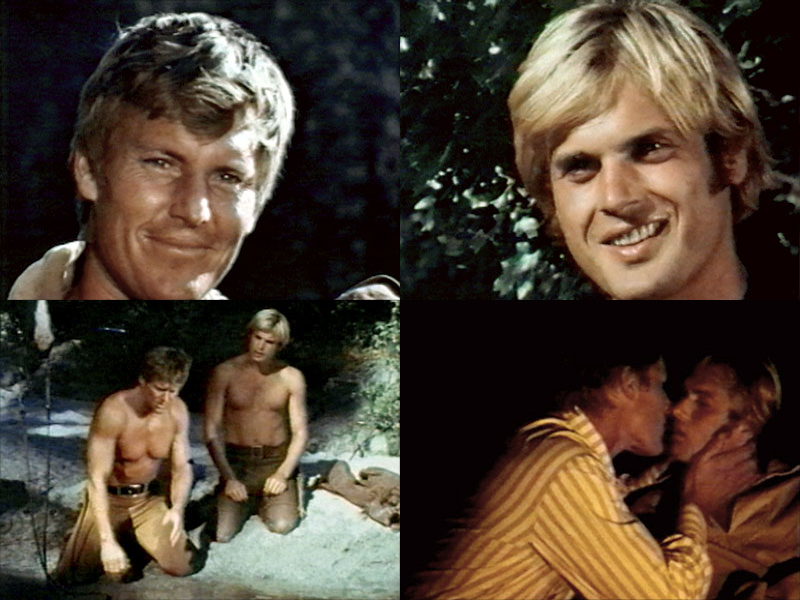
For example, in Andrew Herbert's Song of the Loon, in the 19th century, Ephraim, a white man, has left his lover and taken up with a trapper, Cyrus. Ephraim wants to settle down to an outdoors life of bliss as the object of affection of only one man, but Cyrus knows that Ephraim isn't dealing with his own, or his lover's, emotions on a realistic level. He takes Ephraim to an old Native American medicine man, who imparts the wisdom of the ages to the young blond buck (through words and hallucinogenic visions): Sex and love are not one and the same.
 

Images from Song of the Loon
Song of the Loon (1969)

And in Tom DeSimone's The Idol, an young athlete's (played by Kevin Redding) struggles with coming to terms with his sexual orientation shows how sexual activity and intimate relationships are not mutually exclusive. In fact, no “one” person ends up being the ideal/idol in this film for its protagonist.
 

Images from The Idol
The Idol (1979)

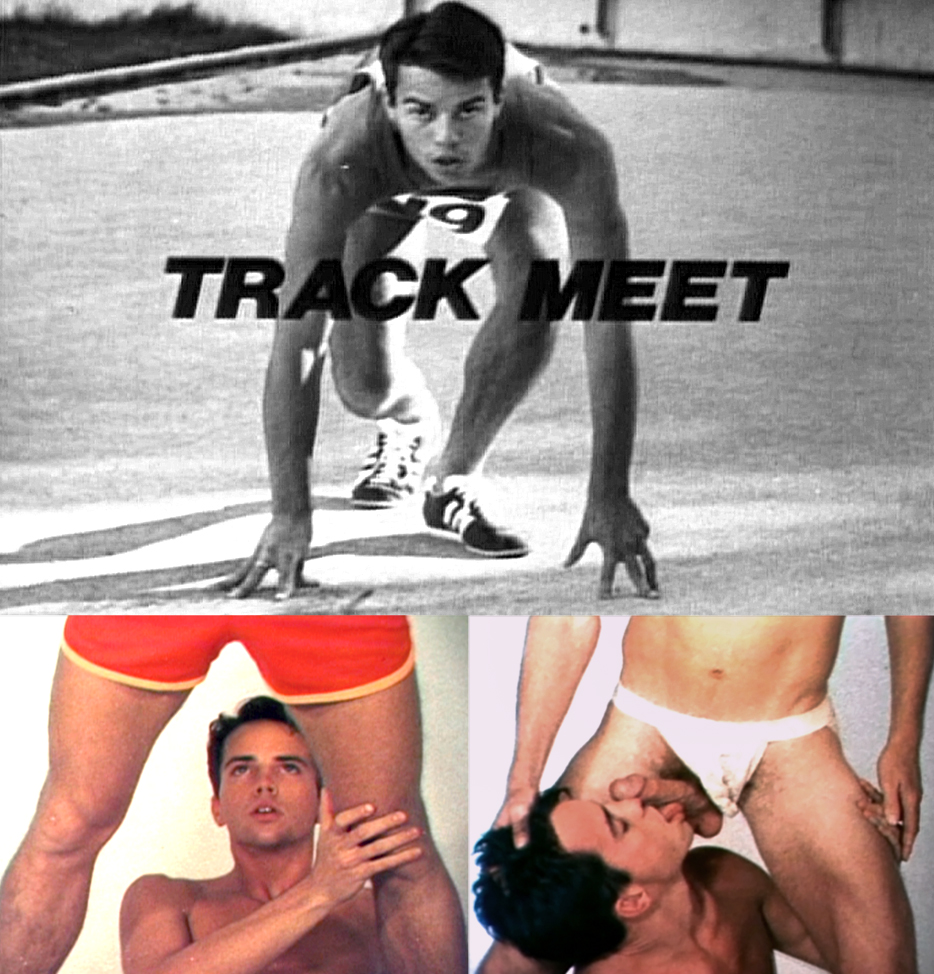
Steve Scott's Track Meet parallels the story of The Idol, focusing on a young track star's (played by Gavin Geoffrey) tension in coming out and accepting himself. Romance, strength, affection, and lovemaking are explored by Gavin as he discovers himself and the world of gay sex.
 

Images from Track Meet
Track Meet (1976)

What's interesting is the coming out narrative present in these films, because of how its complex psychosocial dynamic of fear and repression but, more significantly, self-discovery and self-acceptance, and, ultimately, liberation, subverts the cloying and also creatively bland Valentine's Day sensibility.

Yes, of course, times have changed, but I do wonder if more LGBTQ-themed Hallmark Valentine's Day cards is the blessed fruit of liberation. The struggle of the past should have taught LGBTQ persons to expect more; that the hearts and flowers are transitory and superficial, and that the end is not finding the “One,” but the glorious and at the same time heartbreaking day-to-day challenge of loving him/her/they.

For highlights from more of our romance-oriented films, also check out this video on our YouTube channel.

  1737 Hits

Judy

posted by Madame Bubby


I was dating a part time fireman in Milwaukee some time ago, and he made a comment that the gay guys in one bar should have gotten out more, rather than sitting inside said bar and listening to Judy Garland. (A rather ironic comment, I might say, as he spent 12 hours Saturday and Sunday inside bars himself, but he of course was better than listening to Judy.) Our romance was intense but ephemeral. He was, I found out via the internet many years later, after getting his dream job as a full-time fireman, arrested for drunk driving.

And some time ago, a former friend opera queen type decided to become an older gay “auntie” type and teach me Gay 101. I fit the opera queen stereotype, but he seemed put out that I showed very little interest in Broadway and the “older” female popular singers who were gay icons. And number one on that list was Judy. He bought me the CD Judy at Carnegie Hall. One could say I failed to understand its significance. I ended up giving it away. At that point, Judy’s significance for me was her role in The Wizard of Oz.

(And in that movie, I was more interested in Margaret Hamilton’s tour de force as the Wicked Witch of the West.) And of course I was supposed to think that Stonewall was caused by all those closeted “sweater” gays in tight trousers upset about the death of Judy Garland. (No, that was not the reason.)
 

Judy Garland at Carnegie Hall CD cover

Fast forward many years later. The younger gays’ divas include figures such as Lady Gaga (significant because she starred in a remake of A Star Is Born, one of Judy’s most famous movies and performances) and someone named Lizzo (I found out about her only because I joined Twitter). I live in the past. Perhaps many younger gays are into Judy, Barbra, or even Ethel. Perhaps.

Perhaps. I admit I did go through a brief Ethel Merman phase about the time I failed to worship Judy, mostly because I was fascinated by the famous conductor Toscannini, after hearing her, saying she was a castrato. It was the voice.

And now my love affair with the female voice includes Judy, mostly because of one book and because of youtube. Henry Pleasants, the late great music critic, wrote a book The Great American Popular Singers, which I think managed to pierce to the beating heart of the matter (and in Judy case, that heart one could say ended up killing her more than the pills), when he reflected that she “had the most utterly natural vocal production … it was an open-throated, almost birdlike vocal production, clear, pure, resonant, innocent.”
 

Henry Pleasant's Great American Singers book cover

The innocence of what became her anthem of the heart, Somewhere Over the Rainbow, always remained inherent in all her performances: more than emotional honesty, more than the bond of love she experienced with her live audiences, gay and straight, that reached a type of apotheosis in that Carnegie Hall performance I have since listened to again and again in conjunction with youtube clips of the short-lived Judy Garland Show.

Judy, born with that immense talent, it’s true, never really experienced that idealized innocence as a child. (Who has, really?), according to the admittedly at times very depressing bios (the stage mother, the closeted gay father, the pills, the sexual harassment at MGM, all those men, yes, the gay and straight and bi husbands, in her life) I recently read. By the time she was 18, she experienced, suffered, more than what most persons experience in a lifetime.

Yet I think it’s too easy to get swept up in all the over the top, truly frightening personal drama of her life, because in her case, life and art aren’t mutually exclusive categories.

I now, perhaps because I’m in a different point in my life (yes, I’ve lived, lived, lived in my own way) can really hear the voice (I always appreciated the lustrous beauty of her lyric contralto in its prime), but now the art that in her case is organically a part of that voice. I thank youtube, because I was able to see and hear her performance of “Old Man River” on The Judy Garland Show.
 

Judy Garland performing Old Man River

Give a listen. Take a look. She doesn’t just sell that song. She doesn’t just intuitively understand the style of that song which is often treated as an operatic aria or a piece of campy cultural appropriation. It’s her, and she’s doesn’t need, like some divas, all the glittery trappings which are now Instagram and other social medias to portray her image. She’s no illusion here. She is the song.

When she sings “land in jail,” it’s not a phrase to show off low chesty notes, sung in a melodramatic way. Just in those words is heartbreak, resignation, even a bit of wry humor, a twinge of hope that she’ll get out of jail, the river will keep rolling along, and just maybe, and in her case, tragically, she might herself find the elusive love over the rainbow.

She did find that love when she sang to her audiences. Or rather, when she is singing, because she still is.
 

Judy Garland Wizard of Oz image

(P.S. I haven’t seen the movie with Renee Zwelleger, yet.)

Sources:

Anne Edwards, Judy Garland

Gerald Clarke, Get Happy: The Life of Judy Garland

  2092 Hits

I Love a Gay Halloween Parade!

posted by Madame Bubby

Yes, it's coming up, the unofficial LGBTQ holiday, Halloween! I was looking online for more information about Halloween events going on next week, and I noticed that the famous Greenwich Village, New York City Halloween parade is now in its 46th year.

Pretty amazing, if one thinks what year it was 46 years ago: 1973. Thus, celebrating Halloween was part and parcel of the then young and militant gay liberation movement.

I remember seeing from a distance many years ago Chicago's own LGBTQ Halloween parade on Halsted Steet, and now the event has become “Haunted Halsted Halloweek and Parade,” running from Saturday, October 26 to the great day itself this year, and the day of the parade, Thursday, October 31.

Why am I essentially advertising the above events? Because I think, in tandem, Bijou Video provides its own parade of Halloween porn movies you can enjoy anywhere and throughout the entire year. In fact, I would even say Bijou is carrying on the legacy of directors and producers and actors who originated the genre of Halloween porn or horror porn.

Here are some of our films of that genre:

The anthology Scared Stiff features scenes from some of the titles described below, plus others like Gayracula and Four in Hand.
 

Scared Stiff box cover

Vintage Gayracula ad

Four in Hand still
Image from Four in Hand

Night of the Occultist, a Jaguar film from 1973 (year of the first Village Hallloween parade!) directed by Kenneth Andrews, is certainly overall quite “trippy,” but the major Halloweeneseque scene in this campy yet also complex film is an ancient Egyptian ritual, a sacrifice to Osiris, the judge of the dead (he serves as the gatekeeper between life, death, and the afterlife), which involves gay sex in an temple.
 

Night of the Occultist still
Image from Night of the Occultist

A Ghost of a Chance, also from 1973, features some ghostly sex with a deceased boyfriend, but the overall story is not just about the crossing of the seemingly insurmountable boundary between death and life, but about how sex with multiple partners itself is a way of liberation from imposed boundaries.
 

A Ghost of a Chance stills
Images from A Ghost of a Chance

Strictly Forbidden, a Hand in Hand film from 1974 directed by Jack Deveau, reimagines the ancient trope of a statues coming to life as the main character enjoys sexual contact with many in a Parisian museum.
 

Strictly Forbidden stills
Images from Strictly Forbidden

Falconhead, a complex, profound film from 1977 directed by Michael Zen, plays with some archetypal images such as mirrors and falcons as several men undergo rituals of initiation that involve mysterious, ambiguously violent interactions.
 

Falconhead stills
Images from Falconhead

And, perhaps the true depths of the genre occurs in Peter de Rome's The Destroying Angel, which combines religion, psychedelic drugs, sex, and violence in one amazing conflagration as a young priest abandons his vocation and plunges into what is really the depths of himself he had previously repressed.
 

The Destroying Angel stills
Images from The Destroying Angel

What's interesting and significant about these films is that, yes, they are related to Halloween, but not in the conventionally “spooky,” explicit way.

By wrestling with the endlessly mysterious and fascinating conjunctions between sex, death, religion, and violence, they really end up targeting the deep, primal roots of the holiday, something LGBTQ persons, themselves cultural boundary-crossers, can connect with intimately.

It's a day when boundaries dissipate, masks and costumes make us aware that persons are not all what they seem, and somehow we end up experiencing on various levels death and life becoming one.

  3440 Hits

The Legacy of Scotty Bowers: A Brief Reflection

posted by Madame Bubby

Scotty Bowers, recent photo

Scotty Bowers, a legend in Hollywood’s sexual underground in the 1950s and 1960s, died at home in Los Angeles on October 13 at the age of 96.

When I found out about his book, Full Service, I must admit I was excited to read it, mostly because I always enjoyed titillating, “Hollywood Babylon” scandals. And here was someone who actually made satisfying the sexuality of Hollywood royalty of that period (and others) his business, literally.

He started his “infamous” gas station procurement network in the late 1940s, mostly hiring out young studs for closeted gay actors and others in the Hollywood business (and there were many).

According to his book, his career as a sex worker began in 1946 while he was working as an attendant at The Richfield Oil gas station located at 5777 Hollywood Boulevard, at the corner of Van Ness Avenue. In 1950, Bowers stopped working at the service station, and he then began working as a party bartender (one his party “tricks” involved using his schlong to stir drinks), while continuing his sexual services to both men and women. And he himself, because he was gifted with such a stunning endowment, according to Bowers, was quite popular.
 

Young Scotty Bowers
Young Scotty Bowers

I must admit I was surprised that the famous Hollywood actor Walter Pidgeon, whom I call Mr. Miniver (he was Mrs. Miniver’s [played by Greer Garson] husband in one of the most wholesome, inspiring, patriotic 1940s movies, Mrs. Miniver), was one of his first clients. It’s still sometimes difficult to separate the screen persona from the real person (and in Pidgeon’s case, he was married to a woman, of course), but that was Hollywood: ultimately, illusion.

What I found to be, according to Scotty (and I don’t dispute at all his reliability in this case, as many others do), the close to ultimate Hollywood illusion: the Spencer Tracy and Katharine Hepburn romance. I remember when growing up, it was pretty much a given that these two were the romantic Hollywood power couple of the period (at least before Burton and Taylor came along). Yet, according to Bowers, both were gay (or in Tracy’s case, probably bisexual), and Scotty apparently was one of his sexual partners. Hepburn, who some have argued was really more fluid in her relationship to gender and sexuality, used Bowers as a means to “hook up” with several women.
 

Young Scotty Bowers
Spencer Tracy and Katharine Hepburn

But what I think when reading the book and also viewing the documentary (I made a special trip to see it), Scotty and the Secret History of Hollywood, is that one can get distracted by all the Old Hollywood “scandal” and peccadilloes.

Scotty himself suffered many tragedies in his life that are perhaps closely related to, or perhaps not, his life a sex worker. He lived with a common-law wife whom he met right after his service in WWII, but they grew apart, and the daughter by this marriage, Donna, died young from complications after an abortion.

He did finally manage to find happiness with his last wife, but looking at the documentary, it’s clear Scotty suffered, especially later in life, from a hoarding disorder. I remember, and this behavior is that of a typical hoarder, a scene where he is going through memorabilia in a rented storage space stuffed to the maximum. Yes, there’s history made visible in the things he cherishes, but it seems buried, hidden, physically and mentally in clutter, multiplicity out of control.

Hidden and buried, yet now, no longer a secret. Scotty helped others keep secrets, but he never made his sex life a secret. He gloried in it. And I also think it wasn’t just a case of someone who knew he could use his sexuality as a commodity. Of course, he did, if one interprets his legacy very literally. Old Hollywood needed and wanted him to keep its illusion of heteronormative glamour intact.

But in doing so, he ended up exposing that illusion, not out of spite, but because in a world that was built on dreams and illusions, he actually fulfilled in the most primal, honest way the personal dreams of the stars who embodied on screen the dreams of people who probably got their gas pumped (and much more) at the Richfield Oil Gas Station.

  2445 Hits
GO to Top