
BijouBlog

Interesting and provocative thoughts on gay history, gay sexual history, gay porn, and gay popular culture.

Stonewall 50 Is Here, But I Remember Stonewall 25!

posted by Madame Bubby

In 1994, I attended the Stonewall 25 celebrations in New York City. And, most significantly, it was my first visit to New York City. And even more significantly, it was the beginning of my intense journey into the world of BDSM relationships.
 

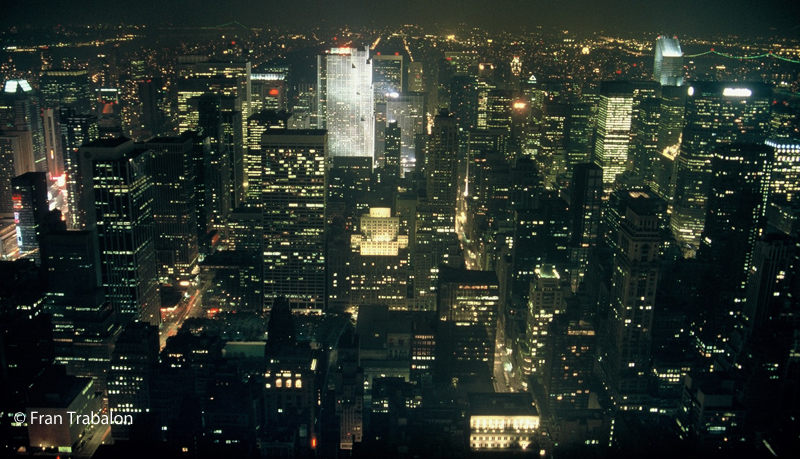
New York City, 1994

That year, I had pretty much abandoned the more “vanilla” activities of the LGBTQ world. My forays into, for example, singing in the choirs of Dignity and with the Windy City Gay Chorus were socially and artistically disappointing. I had been to IML a couple of times, and because I was working at a mundane office job that was not demanding outside the actual hours I had to suffer there (I should have been attempting to complete my academic ambitions, but that's another story), I spent much time on the weekends in bars. One might say, I was in my “slut” period. I was really looking for kink and romance, but that goal proved to be elusive.

Thus, looking for some excitement and still longing for connections in the LGBTQ community, I jumped at the opportunity when a couple of friends on the gay choral circuit invited me to go with them to New York. I worked some overtime so we could split one room four ways in Midtown Manhattan.

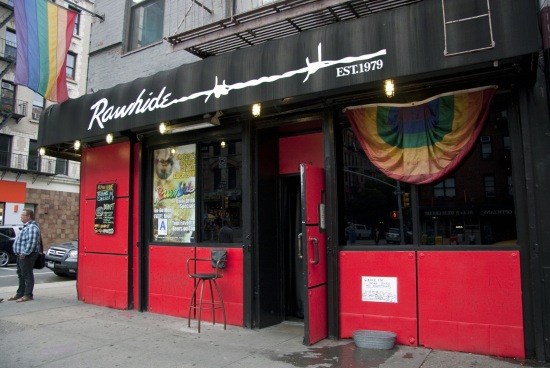
Upon arrival, in keeping with my life's trajectory at that point, I pretty much abandoned my friends' events (seeing Barbra Streisand, no thank you). The first night in New York City, I took the subway by myself down to Chelsea. I walked into a bar called Rawhide. Several persons in that bar lusted after me in my tight Levis and snakeskin cowboy boots. I smoked a joint with a guy I met outside. Yes, That Boy had arrived. Admittedly, the city was in a feverish celebratory mood, and perhaps what happened to me was a product of that feeling, but as usual, I never received such attention in my hometown.
 

Rawhide bar, NYC
Rawhide bar, NYC

I ended up at the Eagle and arrived back at the hotel room at 4 a.m., much to the consternation of one of my friends, who had previously decided I was on the path to gay perdition because I was into leather and did not like Judy Garland or Barbra Streisand. (At least I liked opera, but he did not think I loved La Divina aka Maria Callas enough.)

The next days were frenetic, but in a good way, as I, like Agnes Gooch the sponge of Auntie Mame, lived, lived, lived. Impressions: Chinatown, the fish on the streets. The Metropolitan Museum of Art, a wonderland of the Old Masters (I had to show my friends how to get there, as I figured out the subway they were so scared of pretty quickly). Bodegas, fruits, flowers on the street. Buying food at D'Agostino's. People, people, so many on the sidewalk like in the movies. Vibrant, no one cared who you were or what you did. Little evidence of the segregation and compartmentalization I experienced in Chicago.

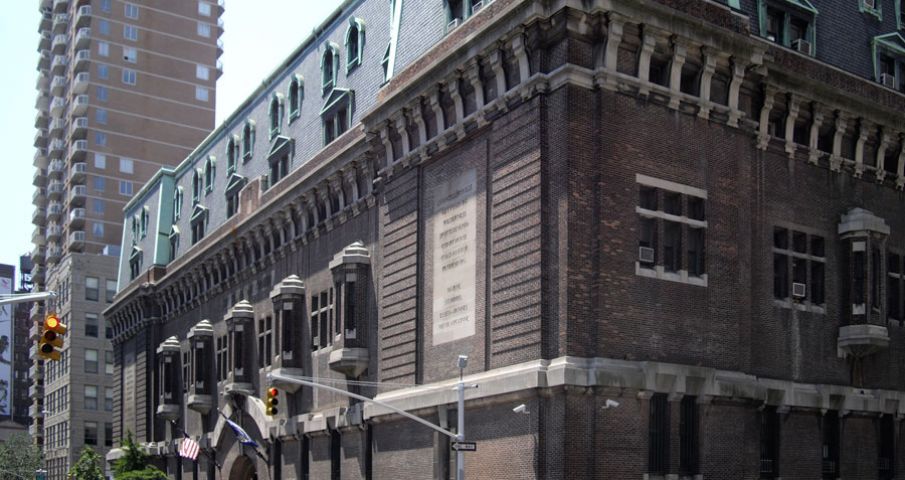
The Saturday night before the big parade the next day (we marched with the Illinois contingent), I said, I am going to go that Leather Ball in the Armory, by myself, and I don't care how much it costs. Let my roommates go to their vanilla choral concert. I put on my chaps, paid at the door an astronomical fee to get in because I had not reserved in advance, and entered a vast space of pounding house music and surprisingly, perhaps because I had arrived early, lots of space between bodies.
 

Lexington Avenue Armory

After about a half an hour, I saw him. He had been looking at me, and I at him. He certainly was no party boy, faux leather type. African-American, mature, bearded, glasses. Holding a rope. Cut off jean shorts. Worn beige work boots. Not exactly a Tom of Finland look or outfit. Perhaps that was the appeal. In less than fifteen minutes, I was tied to that rope. Yes, some enchanted evening does happen.

I spend the rest of the evening on that rope and at the boots. It was kinky, but also romantic. Lots of smiling at each other and at the straight BDSM couple at the ball (the girl was on a rope like me). At about 2 a.m., he took me to a pansexual sex party in an apartment with orange and green walls. I felt like I was in a Fellini movie. An orgy of naked grungy bodies in one corner, a coked up guy who was supposed to be guarding the door, an extremely large woman on a folding chair.

I arrived back at the hotel room at 5 a.m., much to the consternation of the friend mentioned above.
 

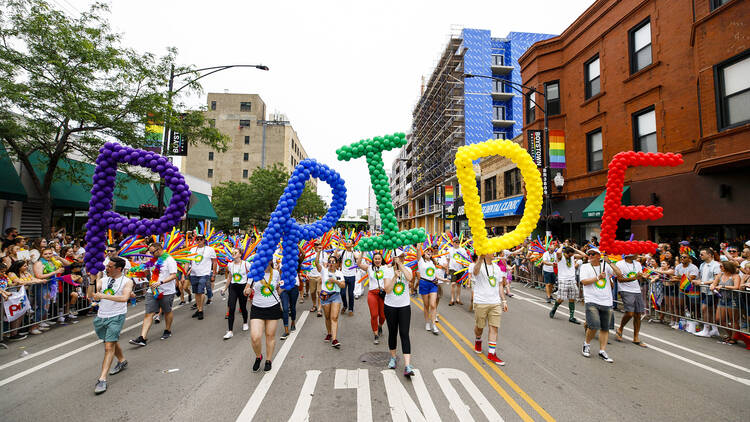
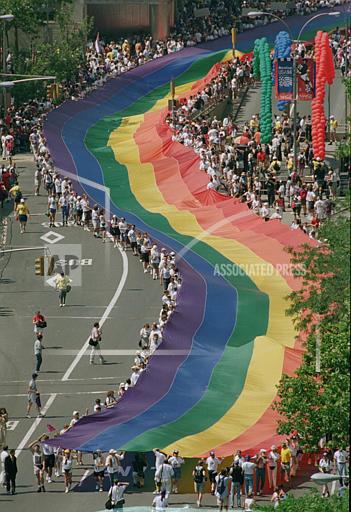
Giant rainbow banner, Pride/Stonewall 25 parade, NYC
Stonewall 25 banner

After all the above activities, and the massive parade (which I managed to walk in cowboy boots) the next day, the return to Chicago was extremely disappointing. The physical space of my hometown seemed to me flat, with too much arid space between buildings, and a ramshackle public transit system. Provincial, I kept saying.

New York had called because the man, the first master, was there. And I would return there, and he would come to me. My ritual initiation into serious BDSM. The scouring of body and soul. We were the one to each other.

I often dreamed of living there, but for practical reasons, mostly financial, that never occurred, but for a few years I could enjoy a world that for me resembled one I had only seen in movies. New York and Stonewall 25 were an escape, but also the beginning of a real life which showed me, contrary to what I was hearing from so many persons I knew at that time, that romantic love and BDSM can exist together in the diverse spectrum of human relationships.

  1639 Hits

International Mr. Leather 2019 Fashion

posted by Madame Bubby

I passed by a booth at the leather market, and I noticed witches' hats. Yes, the kind with the peak. I heard a woman cackling. No, I am not making the above up, and I am not recounting a surrealistic dream.

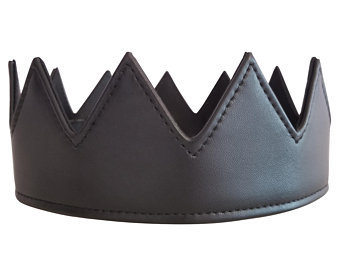
And this booth was also selling a particularly hot item at the mart, a leather crown (for Baby Boomers like me, it resembles the head gear of the character Jughead in the Archie comics).

jughead leather crown

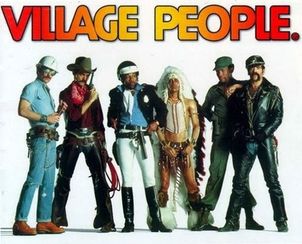
To be honest, I've noticed changes in the types of items sold at the market over the years, but this one was certainly, let's just say, interesting. The leather market is no longer solely a gay male space, or for that matter, a “traditional” gay cis leatherman space, with guys wearing the iconic Village People gay macho gear.
 

Village People

Through the years, as a diversity of genders have competed in various contests, the overall inventory of the mart and those who attend it has changed to reflect a more fluid, self-defining identification with and practice of kink.

Thus, the witches' hats could reflect, however superficially, a Wiccan influence, and many gay leathermen have rejected traditional monotheistic religions in favor of other forms of spirituality, often veering toward transmutations of beliefs and rituals prominent globally before Christian domination and colonization. In fact, the polyamorous life of many leatherfolk meshes well with a fluid polytheism.

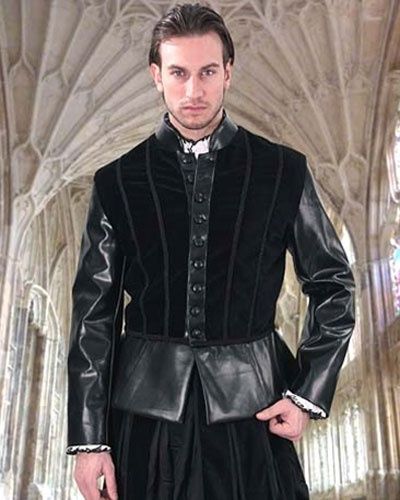
Other kink/fantasy trends that have integrated themselves into International Mr. Leather include costume play. Think Renaissance fair, think Lord of the Rings, think Game of Thrones. Opera masks, capes, pirate boots with the cuff.
 

Renaissance men's clothing

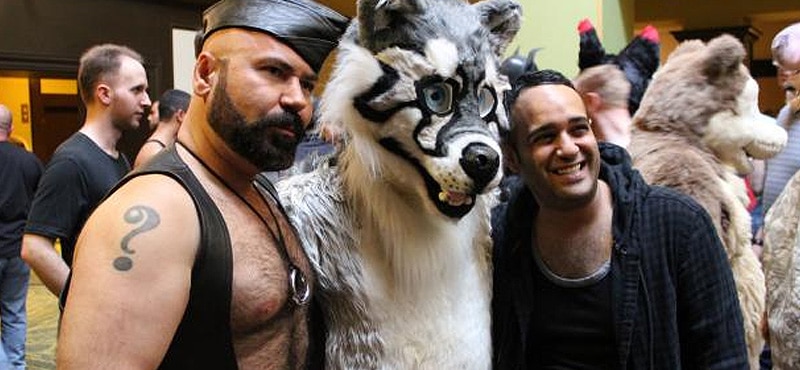
I also noticed a couple of furries, though the fox had to take off the head (the mart tends to become hot and claustrophobic).
 

Leathermen and furries at IML

And, surprisingly, because I had thought it was not trending, steampunk fashion. I noticed a couple of guys with this gear attached to their hats.

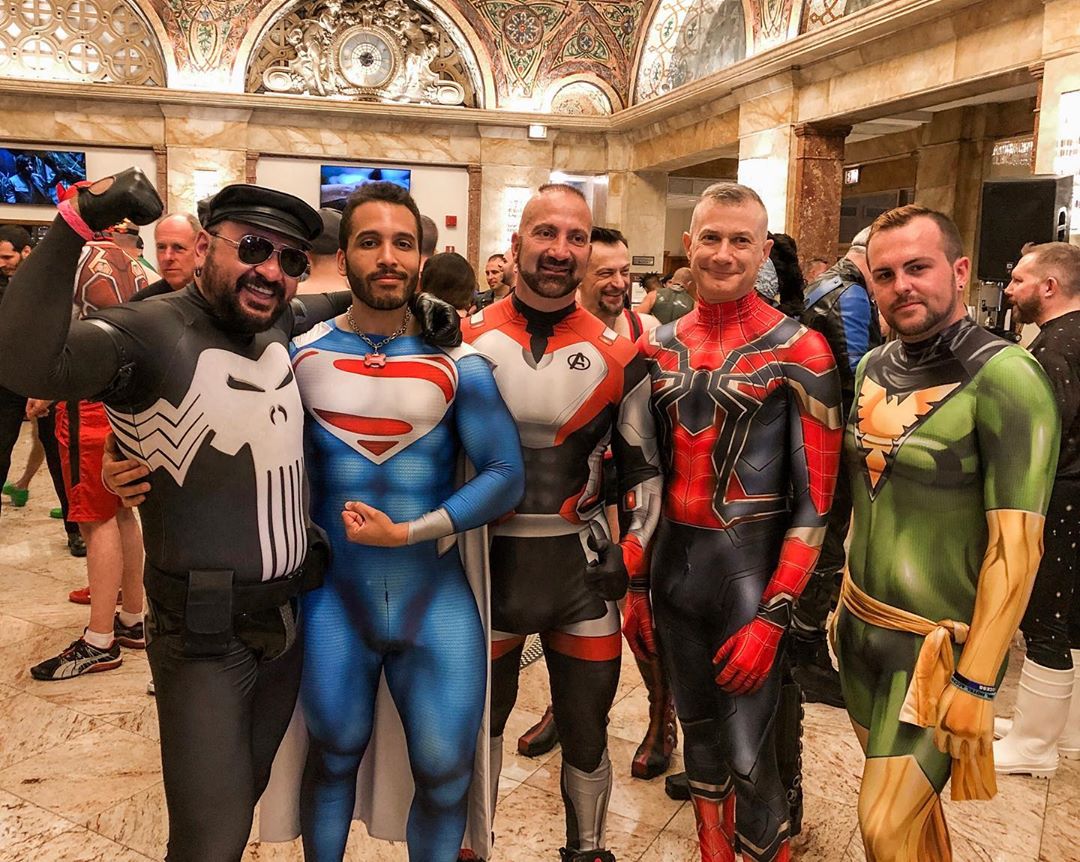
One of the events this year was a discussion of the superhero fetish; this event makes sense, as the culture is replete with multiple constructions, reconstructions, and deconstructions in this genre. The line to get into Avengers: Endgame merges with the line to get into the mart.
 

Men in superhero fetish attire at IML

Even the conventional leather gear is taking on the colors of the rainbow. No longer black and red leather shirts: I noticed bright yellow and a green that somewhat resembles a lawn turf.

Uniforms composed of cloth are now composed of leather. I noticed a boy scout uniform produced completely in leather, and a couple of leather football shirts. Leather for those who can afford it or who want to combine looks and textures, while the cloth will fulfill the fetish/fantasy on its own terms.

Overall, dizzying! A traditional Old Guard type might lament the diffusiveness and lack of authenticity he sees in these fashions, while a millennial might rejoice that she can find something that fits her sensibility and budget. Leather gear has always been expensive. In fact, I noticed substantive price increases all around), and I am not trying to perpetuate the broke millennial stereotype, but the traditional leather scene has tended to attract older, established guys who possess the time and money to be kinky.

But who can really determine not just how to appear non-normative, but be non-normative? The leather kink world thrives on the tensions between hierarchy/freedom, appearance/reality, norm/taboo.

Perhaps the kaleidoscope of colors and textures shows this tension as the scene embraces generations who assume sexuality develops on a spectrum, and for whom reality shifts at a dizzying pace between a cyberspace primarily visual and private: pics, gifs and memes, and the physical, public space of the mart invaded by all the senses: the smell of leather and sweat, the sound of boots, the touch of meaty hands and moist tongues.

  1843 Hits

The New Age of Leather

posted by Madame Bubby

International Mr. Leather 2019

Now that I am in the autumnal phase of my life (early autumn, mind you), and International Mr. Leather is fast upon us (its fortieth year!), I share again a paragraph I wrote a few years ago about this event:

“The leather community has entered a new age. It's no longer so much on the margins, even of the gay community. I even argue it's lost something of its edginess, its element of taboo and danger. Where do I, who was trained by a master who was influenced by hardcore Old Guard, fit into this picture? I'm still exploring that question, but I hold fast to the core values of mutual respect/courtesy and a desire to learn and grow in the scene I experienced through the years with the many leathermen I've known since that first day in 1991 when I entered the leather mart.”

I still agree with many of the ideas in the paragraph, but I am revisiting with another concern, one that is more focused on demographic. To what extent is the leather/BDSM community, still primarily gay and male, aging out? Or, perhaps, the real question could be, how is transforming itself as its social and cultural context changes?
 

International Mr. Leather, 1979

Some of the changes that have developed I see paralleling with mainstream social progressive movements. 2010 was particularly significant when Tyler McCormick competed as Mr. Rio Grande Leather. When he won the contest, he made history three ways: first transgender IML, first IML to use a wheelchair, and first IML from New Mexico.
 

Tyler McCormick
Tyler McCormick

Yet, I've also noticed that the traditional leather/BDSM club social structure, based upon I claim a kind of lodge/fraternity model, seems to be less popular than before. Perhaps I am landing on a cliché or stereotype here rather than a more nuanced interpretation, but these groups are aging, and younger guys (not just millenials) aren't necessarily seeing them as a prime, exclusive space to discover, learn about, and grow in, their complex sexuality.

The line of mentoring I experienced in this community seems to be less certain. Just because a young guy says Daddy, teach me, doesn't necessarily mean anymore a serious ritual of initiation. It could mean a quick fuck. It may have always been that way to some extent, and gay sexual spaces have always been commodified in various respects (thinking of bathhouses, another space that seems to be much less ubiquitous than before), but this is the age of nanosecond ratings, the Yelp/Amazon world. Of course technology has played a part in a fluidity that risks diffusiveness, and of course social media apps have changed drastically how one lives physically and mentally as a sexual person.

Perhaps the gay male leather/BDSM club, used to be the center of this world, forced in the past to into a fortress-like mentality because of its taboo activities in a world just starting to tolerate LGBTQ persons, is now shifting to one point on a spectrum.

Overall, I am concerned that future generations will forget about or even claim is outmoded this point of origin in spaces like the Gold Coast Leather Bar and the Chicago Hellfire Club. But without this history of external and internal courage and danger and respect and conflict, there wouldn't be persons today engaged in transforming it.
 

Chicago Hellfire Club

International Mr. Leather, 1979
  2572 Hits

What's All This I Hear About Manspreading?

What's All This I Hear About Manspreading?


Emily Litella of Saturday Night Live fame might have got this term wrong and called it something like “tanspread” or “manshead or even “sandwich spread;” I am waiting for this term to perhaps get into the Oxford English dictionary in a few years.

So what is it? Is it a noun, a verb? Animal, vegetable, or mineral? Bigger than a bread box? It actually could be all of these.

Here's a pic which shows, not tells, what it is, and it mostly takes place on the subway or other forms of public transportation, perhaps making it a more urban image:

 
Essentially, the posture takes up too much space on a seat, and those who complain about it tend to be women. Some women tend to see it as showing a basic lack of consideration among males (I totally agree), and some even see it as an assertion of male privilege and its accompanying sexual dominance (well, that depends … )


Even the conservative National Review, despite its biases and nasty overgeneralizations about feminism, satirized (I would hope this is the case) some more extreme reactions to this posture. The article is actually more upset that “big government” would intervene even to the point of arresting someone(?!).


Yet, how dare a municipality put up a sign reminding people (in this case, mostly men) to just be more considerate of others on public transportation. And not just manspreading, but loud headphones and backpacks and other luggage and staring into phones and thus not watching where one is going while entering and exiting ...

The fact is, both sexes use specific body language to assert dominance; in the case of guys, such dominance usually involves taking up space, marking territory, as it were.

Manspread is one of those postures, as is the hands on hips or arms akimbo one. The latter also indicates readiness (sports players often stand this way waiting for action in a game) as well as dominance, and some studies have revealed that African-American women will also use this pose to show disagreement or even disgust.

Have I noticed this pose? Yes, of course, because who at gay men isn't looking for a seductive bulge? A gay man thus might interpret this pose differently, as a sexual come-on, however unconscious. But does a gay man interpret the accompanying power dynamic differently?


I could see this particularly pose as actually more submissive than dominant. The cock is open for play. And for those BDSM-inclined guys, open for cock and ball torture. In a pansexual BDSM scene, a dominatrix might want this pose so she could squeeze the guy's cock and balls. I even coined a term called “slavespread;” a sub bottom slave would sit this way, hands behind his back, cock and balls exposed.

I don't want to suggest that everyone should thus enjoy manspreading. There's a time and place to get horny, be it a dominant, submissive or mutual interaction. Move your legs. Let someone else sit next to you. Well, in the case of a gay man, that action might end up becoming an even more intimate proposition.

b2ap3_thumbnail_slavespread.jpg

  8867 Hits

Whatever Happened to LGBT Bookstores?

On June 8, 1974,the Lambda Rising Bookstore opened its doors in Washington, D.C., with a stock of three hundred titles and average sales of about $25 a day.


By 1987, it had opened a second store, established a thriving mail-order business, offers more than twenty thousand titles, and has annual sales of $1.5 million.

“We really didn't expect it to make any money,” said owner Deacon Maccubbin in retrospect.

Maccubin opened up a second store in Maryland in 1984, but it closed in the spring of 2008, as part of the trend toward LGBT bookstore (in fact, practically all brick-and-mortar bookstores) closures in the early 21st century.

Lambda did try to save one famous LGBT bookstore: The Oscar Wilde Bookshop, the United States' first gay and lesbian bookstore. Craig Rodwell in 1967 at 15 Mercer Street in Greenwich Village, later moving to the corner of Christopher and Gay Streets in Manhattan. Lambda Rising got the store going on again financially, but then sold it to the long-time manager.


Other famous LGBT bookstores that have closed include A Different Light in Los Angeles and San Francisco and Giovanni's Room in Philadelphia.

Specifically, Maccubbin announced in 2009 that his stores would close in 2010. He said:

The phrase 'mission accomplished' has gotten a bad rap in recent years, but in this case, it certainly applies. When we set out to establish Lambda Rising in 1974, it was intended as a demonstration of the demand for gay and lesbian literature. We thought ... we could encourage the writing and publishing of LGBT books, and sooner or later other bookstores would put those books on their own shelves and there would be less need for a specifically gay and lesbian bookstore. Today, 35 years later, nearly every general bookstore carries LGBT books.


What “general bookstores?” In Chicago, I've witnessed the disappearance of Kroch's and Brentanos, Crown Books, Barnes & Nobles, Barbara's Bookstore (where I bought my first gay book, The Sexual Outlaw by John Rechy) and Borders. Unabridged Books, a local (now it's trendy to be local) icon, in the Boystown area still thrives, but it is not exclusively LGBT, but does carry quite a bit of stock in that area.
 

Are brick-and-mortar bookstores, or gasp, even books, now a thing of the past, like rotary phones, local savings and loans, and milkmen?

Some might argue that the medium of print has evolved into diverse, flexible, electronic formats such as Kindle and will continue to evolve. But I think there's a deeper message here, and to understand it, we need to go back even further, before the days of gay liberation.

I was reading on the precarious faculty blog site (which calls itself an online reading room) that workers' reading and education tradition include Mechanics' Institutes (1800) and Reading Rooms in union halls. Dorothy Day's February 1940 Day by Day column in The Catholic Worker specifically mentions the reading rooms in every union she visited. Samuel Gompers' cigar rollers even voted to have a member on the clock read to them as they worked!


Imagine! Someone reading to you as an adult, not a child! And at work!


Now, in the monasteries and convents up to the days before Vatican II, as part of the religious discipline, someone would be assigned to read while the monks and nuns ate meals in the refectory. (I can't fathom something comparable happening in today's virtual offices!)

The experience implied that language was something that was savored patiently, like a gourmet meal or a good sex scene with a partner willing to go beyond slam, bang, thank you ma'am. Whether you experienced it reading out loud or silently, the act was both individual and communal.

In the past, going to a bookstore meant you were both browsing alone but also doing it physically, in a public place where you could, without incurring suspicion, hang out for hours. Going to a LGBT bookstore implied you were also part of a community of shared values, and you not only showed your affinity my physically hanging out there, but also by purchasing a physical source of knowledge and values and taking it into your home environment. Even if you had to hide the book or magazine, it became something sacred because it was taboo, and thus a tangible, living connection with the deepest part of your identity.

Social media is fast and convenient and works wonders to connect others with shared values in crisis situations, but what bothers me about it is that the word element gets lost: the word as both language and also something that a live person embodies in an “I-Thou” dialogue. Kind of like Judaism's idea of the Torah as the eternal voice of God or the Christian theology of the Word made flesh. Something that needs more than a tweet or a non-verbal instagram to express.


Joan Didion predicted something this dynamic would happen in her study of the 1960s counterculture, Slouching Towards Bethlehem, where she decried that the reliance on images and quick fixes (slogans like" All You Need Is Love") to complex problems, caused a loss of critical thinking: “The ability to think for one's self depends upon one's mastery of the language.” 

In those 1960s, feeling groovy meant you needed to “slow down, you're moving too fast, gotta make the morning last.” In the 21st century, where and when can you even slow down? Definitely not in a tweet. And sadly, no longer in a bookstore.


  4338 Hits
GO to Top