BijouBlog

Interesting and provocative thoughts on gay history, gay sexual history, gay porn, and gay popular culture.

The AMERICAN Way

By Josh Eliot

The 1999 movie The American Way and its sequels made in the early 2000’s were a pinnacle in producer/director Kevin Clarke’s career in the gay adult video business. From 1995 to 2006, Kevin Clarke directed 14 movies with one thing in common: cute, athletic and boyish young men. Within the course of his career in the adult industry, he met or worked alongside most of the major players and calls those days “the best times of my life.” But Kevin wasn’t initially destined to become a porn director; in fact, Kevin’s career from 1973 until his first adult project in 1995 was as a manager for musicians. He was introduced to David Forest, who at the time was managing Stevie Nicks, Lindsey Buckingham and Ozzy Osbourne’s guitarist, Randy Rhodes. Of course, I know of David Forest as a porn star agent – of Ryan Idol, to be exact, as well as others. Kevin’s other initial connection was with Vicki Wickham, who was managing the group Labelle's member Nona Hendrix, along with Dusty Springfield and Marc Almond of Soft Cell. Kevin credits Vicki with teaching him everything he knows about the music management business. His first client was Scott Gatewood, and he parlayed that into working with countless musicians throughout the years, including Ronny Drayton and Sarah Dash from Labelle. He and Sarah became close friends all the way until her death.

A music connection that had “six degrees of separation” to the gay porn world was Kevin’s encounter with gay porn model Tony Young. Kevin was working with a young band from Pawtucket, RI that had just fired their drummer (Tony Young) because they found out that he worked in some gay pornos: Backyard Boys (1990), Tempting Tommy (1990), Summer School (1990), Hot Summer Knights (1990), Beat Street Boys (1991), Sparky O’Toole’s Excellent Adventure (1991) and Takin’ Care of Mike (1992). The band regretted firing “Tony” and Kevin was playing negotiator. Tony Young wanted to make music, his focus, and to stop working in the movies, but the conversation between the two parties went south. In 1994, Tony Young worked in the movie Hip Hop Hunks in a scene with co-star Billy Houston. It was the last movie either one of them would ever make and Tony Young was never heard from again. Billy Houston is currently serving two life sentences for numerous murders. A haunting premise for Tony’s disappearance that has stuck with Kevin all these many years.

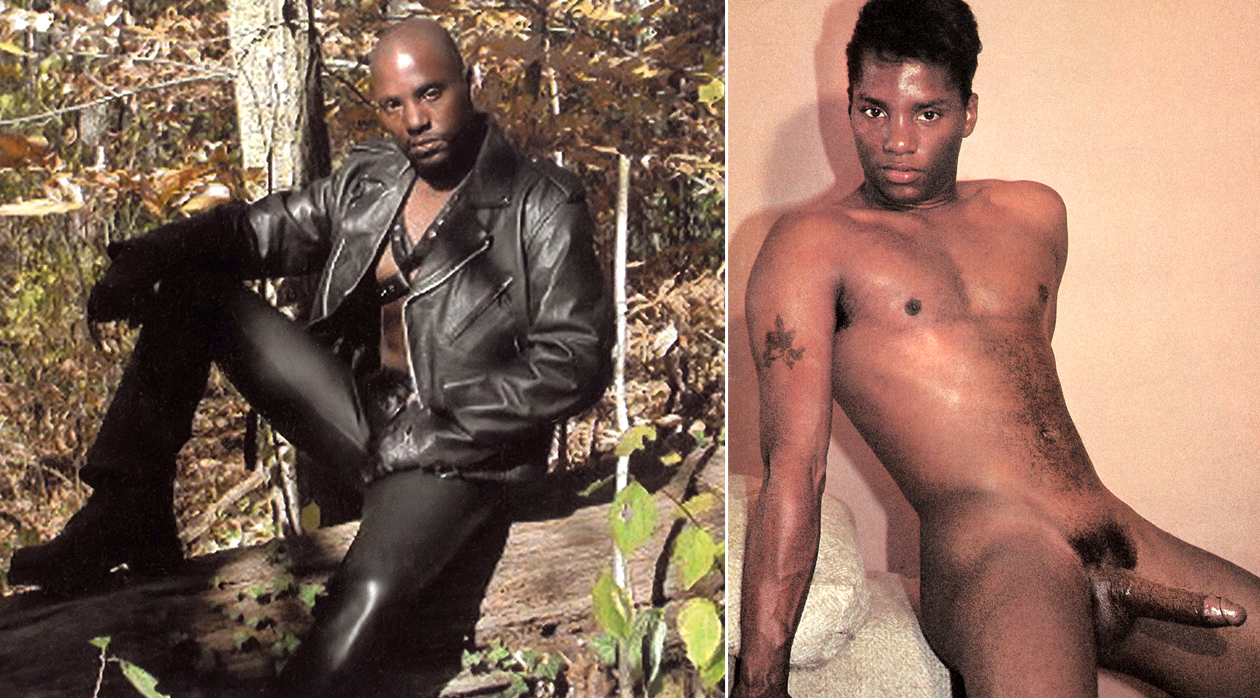
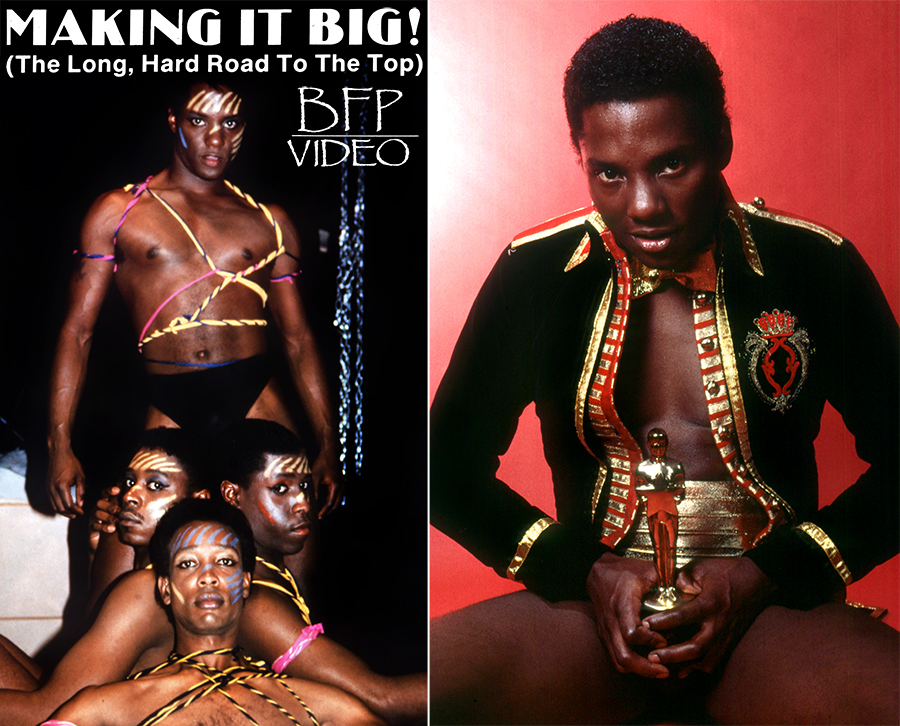
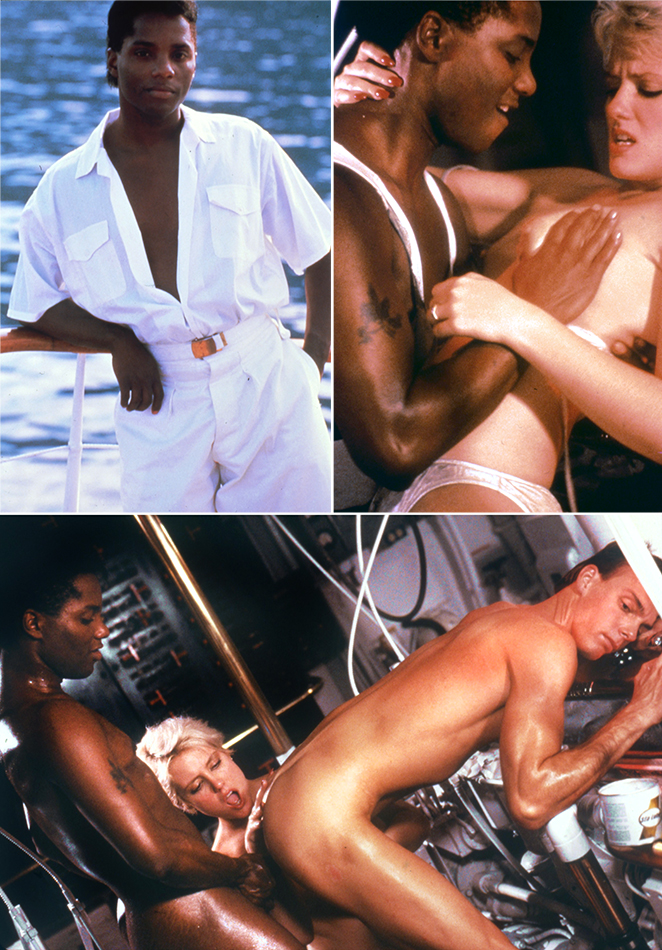
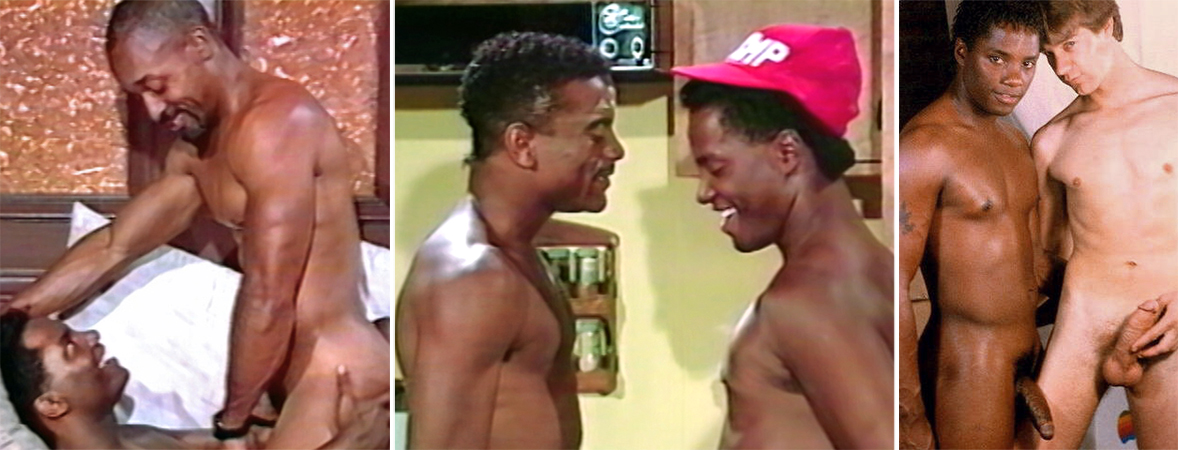
Tony Young in some of his movies


The following year, Kevin Clarke had his first introduction into adult gay video when he took a position as an offline editor for Richard Morgan’s movie Feels So Good (1995). A couple years later, his regular position was working as an editor at Delta Productions with Barry Knight and Russell Moore. Barry Knight worked with Monroe Beehler (aka Mark Aaron, director of Grease Monkeys) at Jaguar Films since the early 1970s. Barry and Russell wanted to bring back the Jaguar line of movies and asked Kevin to direct their initial effort. The idea from the beginning was to compete with Bel-Ami Studios whose founder, George DuRoy, specifically shot hairless young men with athletic bodies and boyish charm, mostly from Eastern Europe. The movie Kevin would debut his directorial skills in was called Pleasure Principle (1997), and upon its release became enormously successful and garnered Best Picture and Best Director nominations. Kevin rode the wave of acclaim and went on to direct Tony Donovan in Something Very Big (1998) for Odyssey Video, with our favorite gal-pal Sharon Kane in the credits for “make-up.” Kevin followed up with titles Heartland and The American Way in 1999, produced by Richard Morgan and starring Ashton Ryan for Rad Video. The American Way was extremely well received, won Best Twink Video at the Grabby Awards and birthed two sequels, The American Way 2: Lust and The American Way 3: Love.

Several box covers of Kevin's movies and a photo of Kevin with Russell Moore and Barry Knight
Some of Kevin's hit movies & a candid photo of Russell Moore, Kevin, Barry Knight & Jason Miller


From 2000 to 2003, Kevin directed Ashton Ryan’s B-Boys, Freshman Diaries and Kevin’s favorite movie by far, A Young Man’s World. In his movie A Young Man’s World (2000), he tells the story of five young men through the lens of their older selves. Playing the older version of the young characters in non-sexual roles are Ron Aaron, Barry Knight, Russell Moore, Kevin himself and, most surprisingly, 1980’s icon Derrick Stanton. Looking studly at (I would assume) age 44, Derrick Stanton featured a classic haircut, shaved on the sides, which made his facial features look striking. His physique in a black tank top was in peak condition as well!

Box cover and stills from a Young Man's world showing the cast and Kevin having his long hair shaved off by his younger co-stars
A Young Man's World (2000): Kevin's locks get shaved off & Derrick Stanton takes on a non-sexual role


In 2004, Kevin relocated back home to New York City and finished off his career with five more movies for Latino Fan Club and IOP Productions: The American City (2004), Seduction of a Surfer (2005), American Boys (2006), Something Much Bigger (2006) and College Boys (2007). College Boys was his last before retiring from the adult film industry. During his tenure, he mixed and mingled with the likes of George Duroy, Jerry Douglas, John Travis, John Summers, Tom DeSimone, William Higgins and more. He has amazing stories to tell with great info that filled in a lot of cracks for me regarding the industry back then. I swear he knew everyone, and everything about them! Not to shoot myself in the foot but if Kevin were writing blogs for BijouWorld, I would venture to say that his stories would blow mine out of the water!

Cover of The American Way and photos of Kevin with Jerry Douglas and George DuRoy
The award-winning American Way & some candid shots with Kevin, Jerry Douglas & George DuRoy


Kevin and I were recently talking about William Higgins' The Boys of Venice and Derrick Stanton’s name came up. I mentioned that I recently watched a YouTube video featuring Derrick being interviewed at the Abbey in West Hollywood. Without missing a beat, Kevin offered to give me Derrick Stanton’s contact information, stating that he was a nice guy and would love to talk with me about his career. The thought of reaching out to Derrick intimidated me initially, so it took me a few weeks to muster up the courage, but I did. Derrick replied to my message within moments, which absolutely thrilled me, and when he agreed to do a Q&A about his 11 movies for William Higgins, I was over the moon! I am happy to say that our question and answer session is complete and will debut in two weeks on the BijouWorld Blog.

Derrick Stanton in the '70s and in a recent photo
Derrick Stanton then & now


Derrick discussed his time on the set of the following William Higgins movies: Jack Wrangler Jocks (1979), The Boys of Venice (1979), Rear Deliveries (1980), Class of ’84 (1980), Class of ’84 Part 2 (1981), Brothers Should Do It (1981), These Bases Are Loaded (1982), Members Only (1982), Printers Devils (1982), Class Reunion (1983) and Route 69 (1984).

His recollections are vivid and intriguing. Thank you, Kevin Clarke for connecting me with icon Derrick Stanton and for your amazing contributions as writer, producer and director in the gay adult video industry!


Bio of Josh Eliot:

At the age of 25 in 1987, Josh Eliot was hired by Catalina Video by John Travis (Brentwood Video) and Scott Masters (Nova Video). Travis trained Eliot on his style of videography and mentored him on the art of directing. Josh directed his first movie, Runaways, in 1987. By 2009 when Josh parted ways with Catalina Video, he'd produced and directed hundreds of features and won numerous awards for Best Screenplay, Videography, Editing, and Directing. He was entered into the GayVN Hall of fame in 2002.


You can read Josh Eliot's previous blogs for Bijou here:

Coming Out of my WET SHORTS | FRANK ROSS, The Boss | Our CALIGULA Moment | That BUTTHOLE Just Winked at Me! | DREAMLAND: The Other Place | A Salty Fuck in Saugatuck | Somebody, Call a FLUFFER! | The Late Great JOHN TRAVIS, My POWERTOOL Mentor | (Un)Easy Riders | 7 Years with Colt Model MARK RUTTER | Super NOVA | Whatever Happened to NEELY O’HARA? | Is That AL PARKER In Your Photo? | DOWN BY LAW: My $1,000,000 Mistake | We Waited 8hrs for a Cum Shot... Is That a World Record? | Don't Wear "Short Shorts" on the #38 Geary to LANDS END | How Straight Are You Really? | BEHIND THE (not so) GREEN DOOR | The BOOM BOOM Room | CATCHING UP with Tom DeSimone | Everybody’s FREE to FEEL GOOD | SCANDAL at the Coral Sands Motel | DEEP INSIDE THE CASTRO: The Castro Theatre | DEEP INSIDE THE CASTRO: The Midnight Sun | RSVP: 2 Weeks Working on a Gay Cruise Ship | VOYAGER of the Damned | I'M NOT A LESBIAN DIRECTOR | Diving Into SoMa/Folsom: THE FOLSOM STREET FAIR | Diving into SoMa/Folsom: A TALE OF TWO STUDS | BALL BROTH | My 1992 “Porn Set” Diary | Out of Print | There’s a Gloryhole WHERE??! | LUNCH HOUR: When the Big Boys Eat | IN and OUT and All ABOUT | UNDER the COVERs with Tom Steele | 8 Is Enough on Sunsex Blvd | Steve Rambo & Will Seagers For Breakfast | The Many Faces of Adult Film Star SHARON KANE | The ALL-MAN Magazine Interview: The Man Behind Catalina Video | Captain Psychopath | BAD BOYS SCHOOL | VAMPIRE'S GRAVE | The Making of CatalinaVille (PART 1) | The Making of CatalinaVille (PART 2) | Private Dick & The Young Cadets | Meet RAY HARLEY | The GOLD COAST Gold Rush Boys | Colt Model MARK RUTTER: In His Own Words | Bringing in the BIG GUNS | “WHAT THE F@CK?” Moments | You So RUSSO | Bond, SCOTT BOND | I Just Watched: KILLING ME SOFTLY | Sex in Tight Places | Calling GLORIA | DOWN FOR THE COUNT | More Than a Mouthful | When JON KING Returned to Catalina Video | Junior Meets the BEAR Patrol | A Taste for Leather and Fur | Straight to Bed | The Hills Have Bi’s | The Malibu Pool Boy: Cody Foster | New England Summer | The Making of RUNAWAYS 1989 | The Making of FULL SERVICE 1989 | Hot Buttered Cop | The Making of HARD TO BE GOOD 1990 | The Real CONJURING HOUSE | It’s Not a Crime, It’s a SCORE | I Just Watched: Steve Scott’s SCREENPLAY (1984) | Wet and Wild | 69: Discover the Secret | What Really Happened BEHIND THAT BARN DOOR! | I Just Watched AL PARKER & WILL SEAGERS in WANTED | Secret Boys Club | Jawbreaker Pt. 1 | Jawbreaker Pt. 2 | I Just Watched CRUISIN’ THE CASTRO | 80s/90s Porn Star RYAN YEAGER | ADAM Film World’s GAY VIDEO GUIDE | ERIC STONE: Ranger in the Wild | THRILL ME with a SINGLE WHITE MALE... | The SPOILED BRAT | BUSTER & STEVE YORK | LANCE, TEX ANTHONY & MICHAEL GERE | KIP NOLL: The First Real Twink Superstar | THE GREASE MONKEYS | The "Other" Idol

  195 Hits

Retrostuds of the Past: Richard Locke

posted by guest blogger M. Webster


Richard Locke images


Richard Locke - the sexy, confident, bearded daddy, with a hip tattoo of a butterfly and a physique naturally toned from working outdoors (or, as he claimed, from jerking off in front a a mirror for thirty minutes a day) - was one of the first to establish mature men as potent sex symbols in gay porn. He became an icon from his outstanding starring role as Hank, a relatable everyman hero, in the late '70s Working Man Trilogy from the Gage Brothers (Kansas City Trucking Co., El Paso Wrecking Corp., and L.A. Tool & Die). This trilogy brought a new sexual focus to average working class men who have sex with men, and their sexual lives in smaller cities and rural areas across the United States, which had a massive impact on gay porn.
 

Vintage Kansas City Trucking Co. poster

Vintage poster (available here) for Kansas City Trucking Co.


Born June 11, 1941 in East Oakland, California, Locke served in the Army in his early adult life, where he worked as a tank mechanic. He returned to California and eventually began starring in porn in his mid-30s, quickly ascending to star status. Locke worked on films with some of the finest auteur directors of classic gay porn (Joe Gage, Arthur Bressan Jr., Steve Scott, Wakefield Poole) and biggest stars (Jack Wrangler, Will Seagers, Fred Halsted, Clay Russell, Roy Garrett, Casey Donovan). He even had a sex scene with his real-life lover, Alex, on the roof of their Desert Hot Springs home in Wakefield Poole's Take One (1977). Locke used his real name in porn, telling Jerry Douglas in an interview for the December 1992 issue of Manshots, “I'm very proud of my work and everything I do. An artist signs his name to the canvas, and I sign my name.”

Locke's films (narrative features, experimental/art porn, straight-forward sex films/loops) and characters span a wide variety. His character Hank focuses on raunchy casual encounters throughout the majority of the Working Man Trilogy, but shows his soft side by following his dream man (played by Will Seagers) across the country in L.A. Tool & Die, and Arthur Bressan Jr.'s Forbidden Letters also focuses on a romantic storyline. (Locke also appeared in a smaller role in Bressan Jr.'s Passing Strangers.)


=

Locke on Will Seagers, co-star of Cruisin' the Castro and L.A. Tool & Die: "There was a magic between Will and me, and that happens very rarely onscreen... Every time we had a scene together, we came at the same time, just like the honeymoon couple. There was a magic." (Manshots, December 1992)


In contrast to his romantic roles and the easy likability of the trilogy's Hank, in Joe Gage's 1982 release, Heatstroke, Locke plays a mean sonofabitch, the gruff ranch foreman (though with a knowing sense of humor). In addition to his countless filmic sexual encounters, Locke gets into two memorable brawls on screen, both in Heatstroke and L.A. Tool & Die, tossing a homophobe out of a gay bar in the latter.
 

Heatstroke and L.A. Tool & Die brawls

Heatstroke and L.A. Tool & Die brawls (pictured above); Hank in L.A. Tool & Die: "If there's anything I like better than sucking cock, it's kicking ass."


In this fascinating 1978 interview with Richard Locke, conducted by his brother Robert, Richard stated his goal in making pornography: “When I was coming out, I didn't feel good about myself. Now I do feel good and I want to share that. If I can project that solid, good feeling within myself into the audience, to people who don't feel good about themselves, if they can say, 'That's what I like; that's what I want to be like, open and free,' then I will have accomplished one of the goals in my life – to bring freedom to other people, the freedom of being themselves.”

Later in his career, Locke toured the country performing live strip/jack off shows for enthusiastic crowds (including at the Bijou Theater), published two books (Locke Out and In the Heat of Passion), authored a play (Loving), mountain climbed, and lived in a sparsely-populated part of the desert outside Palm Springs, where he did body work as a licensed masseur in the city and, out in the desert, worked with his interests in rural and self-sustaining/do-it-yourself living by building a geodesic domed home with a working solar and wind power system.
 

Richard Locke striptease from a suit into leather gear

"Here's another one of my gimmicks: to take the ordinary and mundane and make it erotic. When I went to Washington, I took a business suit with me, and I stripped out of that suit into leather. Everybody in Washington has to wear a suit because they work in the government, so I took their 'ordinary' and eroticized it." - Locke in Mandate, October 1987


After his 1983 HIV positive diagnosis, Locke turned his focus to activism. In the '80s and '90s, he used his platform as a popular porn star to tirelessly spread information about safer sex practices and health services during the AIDS crisis, in radio and magazine interviews, at seminars, and even at his strip show appearances (which featured creative and practical safer sex activity demonstrations).

Magazine clipping reading Richard Locke: Responsible Sleaze During the AIDS Crisis. The legendary King of Sleaze is changing his sexual style, and offers some tips on how to do it without becoming a celibate monk!
Richard Locke safer sex inspiration images from Advocate MEN

“I'm very positive about stopping fluid exchanges... Still, I have a great sex life... I was on radio station KPFA for about 15 minutes before they censored me. I said, 'testicular fornication.' The moderator said, 'Well, what's testicular fornication?' And I said, 'Ball-fucking.' We went off the air for 45 minutes.' (Advocate MEN, March 1987)


Richard Locke nude, holding a condom

“One of the things [Locke] does in his shows, he says, is to jerk off that legendary scholong and then toss (unused) condoms at his audience. 'And I say – remember when your mammas told you to wear your rubbers? Well, now your daddy's telling you!'” (Advocate MENMarch 1987)


During this period of time, he additionally worked with support groups, raised money, protested, publicly advocated for condom usage for individuals as well as porn studios (saying he was blackballed in the business as a result), visited patients in hospital wards, and much more that is likely not chronicled. This beautiful article - “Two Kinds of Hero: Richard (Butterfly) Locke” - provides some insight into that chapter of his life.

Locke was inducted into the Hall of Fame at the 1994 Gay Erotic Video Awards. He died of AIDS-related complications in 1996.

Richard Locke was known for being a charming combination of strong, caring, bright, unpretentious, and entirely genuine; a down-to-earth guy and a confident, unapologetic gay man – qualities reflected in many of his movie roles. Bijou owner Steven Toushin described him as a very kind man and director Joe Gage (in this interview discussing his films, including commentary on Locke) called him “the last of the true live-and-let-live hippies.”
 

Richard Locke images

“The nice thing about film is that I will live a long time, even after I die. 'Cause it's there.” (Manshots, December 1992)


Through Bijou Video, you can find Richard Locke in our fresh new release, Heatstroke (DVD | Streaming) as well as in a number of other classics we carry, including L.A. Tool & Die (DVD | Streaming) and our collection The Best of Richard Locke (DVD | Streaming).

Online Sources and Further Information:
My Brother the Porn Star: An Interview with Richard Locke
Keep on Truckin': An Interview with Joe Gage
Two Kinds of Hero: Richard (Butterfly) Locke
Ask Any Buddy podcast: Kansas City Trucking Co.
Wikipedia – Richard Holt Locke
Gay Erotic Video Index – Richard Locke
 

Heatstroke and The Best of Richard Locke DVD covers
  11947 Hits

I Know I'll Have Many Other Homes, But Never a Place Like This: A Brief-ish History of Bijou Theater Parties

posted by guest blogger M. Webster


Bijou exterior and upstairs map
Bijou Theater exterior and upstairs map


I first went to the Bijou Theater in 2008. It was a snowy day that March. I was in my last month of being 21 – quite an eventful year. It was weeks after I met my first real girlfriend, who I would wind up being with five and a half years. At the beginning of my 21st year, I had my first kiss. (I was a very late bloomer.) Months later, I first had sex (in the bathroom of the longstanding goth club, Neo, another Chicago landmark that closed mere months before the Bijou Theater in 2015). Shortly afterwards, I began going to S/M events and getting curious about the sexual spaces in the city.

The snowy March evening in question, I attended one of Bijou's Wayward Sisters parties with a group of friends. These parties were a blast. They generally got good turn outs and lively crowds – mostly younger art students and predominantly women, though a big mix of folks were present, including Bijou regulars. (There were intentionally never any gender restrictions at the Bijou, unlike many other gay adult businesses. Bijou owner Steven Toushin welcomed all adults and his attitude was always, “No one should be left out; it shouldn't be an exclusive space.”)

At these parties, David Boyer from Chicago's leather bar, Touche, would hand out beers in the back garden and spank the recipients. People DJed in the theater area and danced on the stage and, upstairs, explored the space, cruised, had sex, talked to each other through glory holes. That night, I wound up in the sling in the dungeon, making out with two of the girls I'd shown up with, while some Bijou regulars stood around in the dark and jacked off, a few of our other friends peeping at this display through a window. I later went outside and saw my dude friends and some other guys standing in a circle on the balcony with their dicks whipped out, comparing them while deep in conversation.

Bijou exterior and upstairs map
Bijou's upstairs


About six months after attending this party, I wound up answering a Craigslist ad seeking an editor for a gay porn company; an ad so brief it was almost cryptic. When I went in for the interview, it was a very pleasant surprise to realize it was for Bijou and that, in addition to the theater, Bijou was also a vintage gay porn company. I was a filmmaker with a particular interest in '60s sexploitation films and LGBTQ film history and a burgeoning interest in '70s porn, so this was extremely up my alley. I very much wanted the job, even more after Steven discussed the company and its history and philosophy, so I was thrilled when I picked up the call confirming that I got it.

The Wayward Sisters events were still running when I got hired at the Bijou office and, in total, operated for around a year and a half. Steven recalls once showing up at a Wayward Sisters party with his partner and doing a flogging and fisting scene in the dungeon. As they played, party-goers wandered by and started gathering, their conversations soon growing silent as they watched intently. Afterwards, a group of young women came over to talk to his partner and pay compliments about the scene. I went to one or two more of these parties before they wound up being discontinued not long after the person who originally ran them moved to Europe.

But let's back up much further, well before my time.

Wells Street in 1976 and 1970s Bijou Theater ad
Wells Street, 1976, and '70s Bijou Theater ad


The Bijou Theater opened in 1970 in Chicago's Old Town neighborhood on Wells Street, where it was in the proximity of several other gay and sexual businesses. The first film that played there was Richard Nixon's Checkers Speech, named after the Nixon dog. The next was a gay porn film. In 1980, it expanded to a second floor, with a maze of glory hole booths and a dungeon room. By then, it was open 24/7 and people partied there late into the night. Touche and other gay bars would bus folks over and the crowd from Carol's Speakeasy, located next door, regularly spilled into Bijou (sometimes for free through its back door) after hours. During these decades, the theater endured numerous police raids, obscenity busts, bomb threats, and more, but it kept running. In addition to porn films on Bijou's screen, these first few decades saw live performances on stage by many of the films' major stars, including Al Parker, Richard Locke, Lee Ryder, Peter Berlin, Jim Cassidy, and Casey Donovan (and Colt stars later on in the 2000s).

Ad for live appearances by Peter Berlin at the Bijou Theater
Ad for live appearances by Peter Berlin at the Bijou Theater, April 1980


From 2000 to 2002, Miss Tiger and her Erotic Cabaret, featuring the Bijou Boys, took to the Bijou's stage. Drag performer Miss Tiger's events were elaborately staged erotic revues featuring theatrical pieces, humor, musical numbers, strip shows, live sex acts, and more. One notable show incorporated a Gregorian chant playing as a man came out dressed as a priest and with four men dressed as choir boys. They all read from Bibles, then the choir boys took turns sucking the priest's dick on stage.

Ad for live appearances by Peter Berlin at the Bijou Theater
Ads for Miss Tiger's Erotic Cabaret


Not long after I began working at the office, a fellow employee asked me if I wanted to help out with one of the theater's strip shows. I wound up running lights and music for these each month. Another co-worker, Bryan, took over as host for a long while and he incorporated stand up comedy into the Nude Revues. We often made elaborate videos to feature during the intros and during intermission. Finally, Michael, who worked in the box office, took over hosting. He had a great rapport with the customers, which made for a comfortable flow. (At the final Nude Revue before the theater's closing in 2015, he ended the show by singing a poignant song, which brought tears to many an eye in the crowd.)

Bjiou Boys Nude Revue posters
Bijou Boys Nude Revue posters


Bijou held a big 40th anniversary party in the first months of 2011. This was hosted by David Boyer, and the packed audience took in live music performances of classic gay porn theme songs accompanied by dancers (one of whom poured orange juice all over her naked body to a very noisy cover of the theme to Arthur Bressan Jr.'s 1984 film, Juice), videos about gay porn history and Bijou's history (both viewable at the bottom of the Bijou Theater page on our website), words from Steven Toushin, a two foot tall ejaculating dick cake (made by my girlfriend), and a strip show.

Dancers, bands, and dick cake from the Bjiou's 40th anniversary

Bijou Theater 40th anniversary party photos


During the 2000s, more people were approaching Steven with interest in doing events at the theater, as the dynamic at the bars was changing. The first huge event to be staged there by organizers from outside the theater during my era in the 2010s was the release party for the vintage gay porn soundtracks of Patrick Cowley by Dark Entries Records on Valentine's Day of 2014. DJs played in the dungeon (which got crowded, hot, and sweaty) and others played downstairs on the stage while clips from the movies Cowley scored were shown on screen. This event illuminated some new possibilities for hosting parties in the space that were influential during the theater's final two years, during which we worked with many different organizers and artists.

Later that month, a friend of mine staged reading of an erotic play he'd co-written about Abraham's Lincoln alleged gay relationship. This event segued into a year or so when a friend in the same circle proposed doing monthly variety shows at the theater. I helped him run these and they were chaotic, sometimes thrilling, and often messy installments called Upstairs/Downstairs, featuring performance art, video art, experimental film, punk bands, noise musicians, installations, DJs, and stand up comedy. Some highlights: a performance featuring a corn cob strap-on covered in I Can't Believe It's Not Butter; legendary Chicago bands and performance artists taking to the stage and finding creative ways to utilize the space; a night when I had to mop milk, piss, and cum off the floor of the dungeon after the show; and a fake human sacrifice and haunted house.

Dancers, bands, and dick cake from the Bjiou's 40th anniversary

Upstairs/Downstairs poster; performance by Chicago legends Ono and a "human sacrifce"


With these and following events, inspired by the broadly mixed crowd and dynamic use of the building seen in the Wayward Sisters and Patrick Cowley parties, we tried to find more opportunities for newcomers - across a range of ages and genders - to feel welcome in the theater, while also hopefully being an interesting change of pace for the customers who had called it home for decades. Finding this balance was tough and sometimes tense, but a worthwhile endeavor. Steven was interested in people trying new and different things at the theater and he gave them pretty much free reign in what they planned (basically unheard of), though he often suggested to organizers that one successful approach to the uniqueness of the Bijou was allowing things to unfold throughout the entire venue. The staff of the theater went above and beyond during the events in these final years, which often required a huge amount of extra work.

During this span of time, S+S Project hosted an exciting show highlighting the work of many talented local artists, including installations of artwork, video art screening in the theater, and performances on stage and upstairs (featuring nudity, lard, and balloons). Afterwards, we hung around late into the night in the dungeon while DJs kept playing.

A couple of large queer dance parties were thrown by Chances Dances – one for Halloween and one for Valentine's Day. These included DJs, performers, vintage lesbian porn, and more.

The Men's Room parties also came to the Bijou during this time and hosted several events. These quickly turned massive, culminating in a sprawlingly large and debaucherous one during the IML weekend of the theater's final year. These nights featured music on both levels and erotic performance art (once incorporating fireplay and once featuring piercing play; in the latter scenario, a disco ball was strung up to the performer's cock and balls and when the needles pierced into his chest were tugged out, blood spilled down his body and onto the disco ball).

Chances Dances and Men's Room poster
Chances Dances and Men's Room posters


In the same era, we held an intimate memorial service in the theater, hosted by the folks I went to my initial Wayward Sisters party with, for their friend Wiley, a long-time Bijou regular who loved the place and had recently died. His friends shared memories and screened videos they'd made with Wiley in the theater to a small gathering that also included theater attendees and employees who'd known him.

In the fall of 2015, we got the terrible news that the Bijou was being forced to close, as the result of a legal battle with its landlord. We quickly scheduled a series of events for its final week, David Boyer running several great Touche parties and classic porn films playing 24/7 on the screen. We set up one last party on the theater's final night in operation, and I welcomed anyone who was interested in participating to contact me. We had an overwhelming response.

The night saw wild performance art in the dungeon, live music, beautiful dance performances on stage, DJs doing disco sets in the dungeon, classic porn clips in the theater, erotic videos by local artists screening upstairs, a photobooth and roaming photos by GlitterGuts (all of which you can see here), and I even, in one gorgeous moment, walked by to see a person sawing out a section of the glory hole booths while fucking someone. (Several panels were removed for posterity, Steven keeping some and the person who removed them continuing to this day to install pieces of the Bijou in art shows and other spaces around the country.)

Glitter Guts final party photos
Forced Into Feminity and more from the final party by GlitterGuts


Many friends and strangers talked and fucked. Intergenerational conversations were happening throughout the night, as many people from all different points in the theater's history (and newcomers) showed up. I finally managed to have sex in the theater (in one of the booths, with my then-girlfriend). People were so appreciative of the space, each other, and the history, and being able to be free to do whatever they wanted there, engaging enthusiastically in the way I'd always hoped for. A few asked if they could keep the faded vintage porn film posters on the wall and we took these down and gave them out. One DJ (who'd been involved in putting on several previous events) played an entire new score to the Frank Ross classic Made in the Shade in the theater, which thoughtfully included a sample of the lead performer's final line: “I know I'll have many other homes, but never a place like this.”

Final scene from Made in the Shade
Final scene from Made in the Shade (1985)


This party ran until the next morning. As the remaining stragglers lingered, I found myself alone in the dungeon as Donna Summers' Last Dance came on the playlist, and I danced and cried.

Party remnants
Party remnants


The rest of that day is a blur. I may have napped in the office or not slept at all. A few of us, including Steven, David, Bijou's custodian Shrodney, and I, had to take down the screen and clear out any remaining equipment by the end of the night before the property was turned over to its new owners. We climbed ladders to disconnect lights from lighting rigs, cleared out the projection booth, and packed everything up. Shrodney and I made a final pass through the upstairs, which was a wreck from the party (we didn't have to clean up after it for once), and removed lightbulbs and signage and took photos of the graffiti on the remaining glory hole booths. We headed down the spiral staircase for the last time and shut the door to that room, placing a peacock feather we found, left over from one of the previous night's performers, on top of the door frame.

Screen removal, peacock feather, graffiti: final photos taken in the Bijou


We all finished our work and headed out, locking the front door for the first time in 35 years. Steven had to install a lock for this, because the front door didn't even have a functioning one – the theater had been open every day all those years, even through fires and bomb threats, since it became a 24/7 establishment in 1980.

Weeks later, a large group of my friends, moved by their experiences there, held a beautiful memorial service for the Bijou Theater in their own space, which was deeply in the spirit of the venue. I've seen its spirit continue on in gatherings of friends, sexual spaces, and porn screenings since, and hope to continue to catch glimpses of it as the years pass.

  2922 Hits

Interview with Robert Alvarez, Hand in Hand Films Co-Founder/Editor

By M. Webster

In 2019, Robert Alvarez, co-founder and editor of the groundbreaking and influential early gay porn studio and distribution company, Hand in Hand Films, kindly took the time to do a phone interview with Bijou.

Along with his partner Jack Deveau, as well as Jaap Penraat, and, later, Kees Chapman, Alvarez co-founded and was at the helm of Hand in Hand Films. Formed in 1972, a mere few years after more permissive legislation in the U.S. began allowing for the exhibition of hardcore films, the studio undertook ambitious and elaborate cinematic productions, expanding the ideas of what a pornographic film could be, and constructing their ideas into a large catalog of outstanding and entertaining narrative features. They additionally became an early distributor of the work of a number of other gay adult filmmakers, as well as their own product. A highly collaborative enterprise, Hand in Hand's films combine the creative influences of all of their participants. They continued making films until 1982 and distributing until 1988.

Alvarez, a skilled editor with a background in dance and experimental and documentary film, elevated Hand in Hand's output with his technical polish and creative flair, helping to create the distinct style and high quality level of the studio's output. From character dramas, to comedies, to outrageous psychedelic and horror films, his work on Hand in Hand's productions covered a range of tones and genres, but maintained Hand in Hand's cinematic quality and particular sensibility. With some of the studio's wilder and more avant-garde films and sequences, Bob applied complex and experimental editing and post-production effects, leading critics to frequently praise the “Alvarez effects” that enhanced scenes and often created some of the movies' best moments.

In the conversation that follows, Bob discusses his artistic background and influences, Hand in Hand's formation, his relationship with Jack Deveau, his editing style, the studio's philosophy, and more.

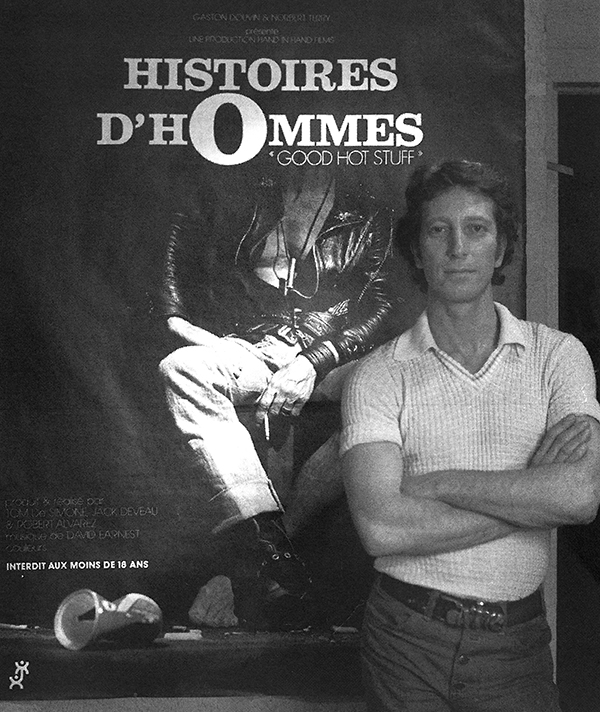
Robert Alvarez in front of French poster for Good Hot Stuff, 1975
[Image Credit: Good Hot Stuff: The Life and Times of Gay Film Pioneer Jack Deveau]

Bijou: I am curious about some of your filmmaking influences and your experimental film background.

Alvarez: Well, I’ve always loved movies. And, in addition to that – this goes back to 1958, maybe – I started going to see some experimental films that were being shown in a little storefront place, and I got to know about Kenneth Anger and Gregory Markopoulos, for whom I worked. Not even worked – I assisted [Markopoulos], is more like it. And then I ended up being in one of his films. And then there was Warhol, but Warhol didn’t really influence me that much. I wasn't a great fan of his movies, but I did follow certain ones. Chelsea Girls is one of his early ones that I more or less liked, because it was so outrageous. The most influential [experimental filmmakers] for me were the ones that I just mentioned.

In addition to that, one of the first things that I came to New York to do was to become a dancer, because I started studying in Florida when I was about 18 or 19 and decided that New York was the only place that would be smart for me to go to. So I moved here and I kept studying dance and going to auditions, and so forth. After a while, I wound up doing Summer Stock and then a touring company. I did it ‘til I was about twenty-five and then I just decided that I should not continue to pursue it, that I should do something else. And, of course, the thing that came up in my mind first was film. I worked for [the animator] Francis Lee while I was doing the experimental film part of my life. He worked with this thing called photo animation. And he also made some experimental films, as well as regular ones.

I started getting more into film and wound up working for another animation man who did commercials for NBC, and then from that I went onto NBC and became assistant editor to the supervising editor there, and after that I got my first editing job. And, in between, I did some other stuff and wound up doing the documentaries [Woodstock, An American Family] and working freelance for mostly – it was Channel 13; it’s now PBS - until 1971 or ‘72.

It was my partner who I convinced we should get into the business of making movies, which is a story in itself, but, anyway, we turned out our first film, which was Left-Handed, and it was very unlike any other gay films that I’d ever seen. I became more and more interested in how far we could push the envelope, you know. Wakefield Poole, a pretty good friend of mine, made Boys in the Sand prior to this and that was a big success. And so we decided we would do ours, and that’s when we did Left-Handed. And ours was quite different, of course. We tried to take it from a different gay slant than just porno, give it some kind of a plot and characters and motivations, and so forth, as well as some editing that I did that I think was somewhat experimental.

Bijou: Had you edited any pieces that were that experimental at that point in time, or were you kind of getting to develop some of those techniques in your editing style on Left-Handed?

Alvarez: I actually was influenced by… I never got over being a dancer, and I was interested in dance and choreography, and so forth. When I started editing, I began to feel that there were a lot of similarities in certain aspects of editing to choreographing, and became a real fan of Bob Fosse, among others. So I used a lot of their techniques, but I also used some other techniques that I learned back when I was seeing experimental films, that involved quick cutting and a lot of - especially in Markopoulos - a lot of very extended dissolves, and things, that were quite beautiful. And I used those things, myself, as well as my sense of rhythm and cutting to music, which I loved to do, because that really gave it movement; some emphasis, depending on the music that we used. And we had original music for Left-Handed that came from a friend of ours, a guy that was a sound mixer, who had a small band. He composed some music for us.

Bijou: Yes, those are wonderful pieces.

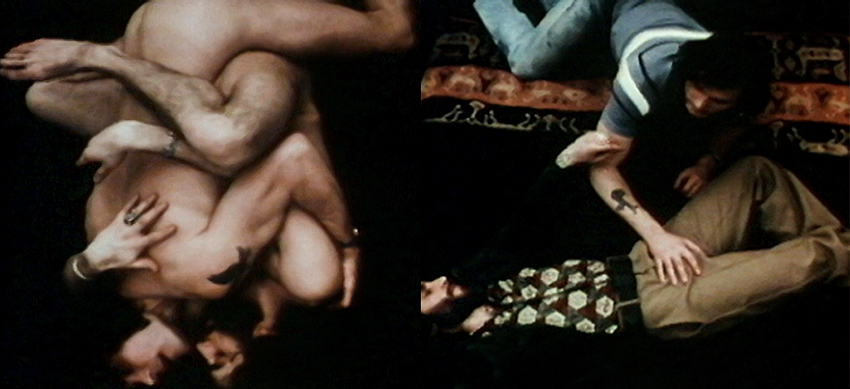
Images from Left-Handed (1972)
Images from Left-Handed, 1972 (DVD | Streaming)

Alvarez: Anyway, I really enjoyed it, because I was doing it like I wanted to do it, and I was given a free hand to do whatever I did. So that more or less gives you an idea of how I got started, and where.

Bijou: I didn’t realize you came from a dance background, also. I know some other people involved [in making gay porn in '70s NYC] were from that background. Did you get connected to anybody through the realm of dance that wound up working with you?

Alvarez: Well, I had known Wakefield slightly back in Florida, because he was in a ballet company and I was in a different one. We met at some kind of convention. We got to know each other and we were sort of, not buddies, but… We were in two different locations in Florida. But when I came to New York, I saw that he was dancing, and, also, he did some choreography. So I got to know him pretty well.

Bijou: Do some of the people involved in Ballet Down the Highway come from those connections?

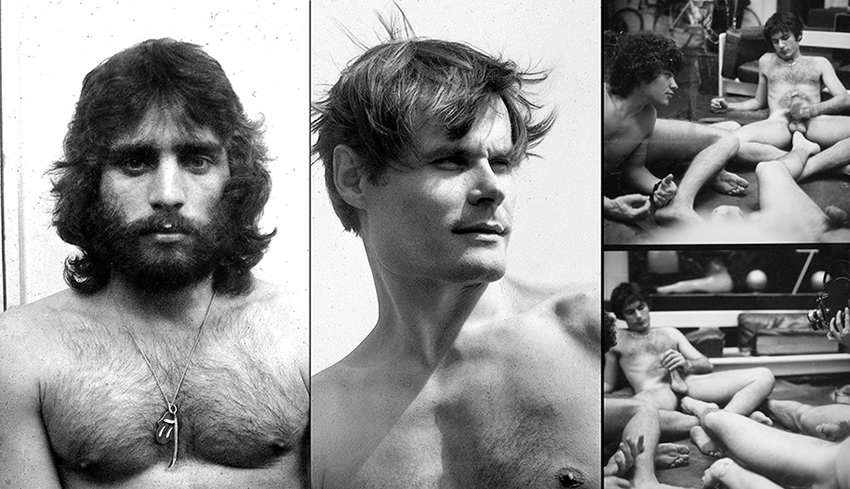
Alvarez: They did, but they weren’t friends or anything. They were people that we cast, who were dancers, to be in the ballet scene, as well as the lead in the movie, who was a Dutch young man [Henk Van Dijk] who came with a choreographer that we got to know from the Netherlands ballet, and became rather close friends with after this lover of his appeared in our film. Anyway, we got this young man, who was studying dance, and he was not a great dancer, but through editing and so forth, I made him look better. (laughs) You know?

Bijou: (laughs) It does look good.

Alvarez: He always remarked on that, you know, how I made it look like he could really dance. Other than that, the other people that were supposedly in this company he was dancing for were cast from, I guess, one of our casting calls. We put out casting calls for some of our films, like in Show Business [the newspaper].

Henk Van Dijk (left) and other dancers & cast members (right) in Ballet down the Highway, 1975

Henk Van Dijk (left) and other dancers & cast members (right) in Ballet down the Highway, 1975 (DVD | Streaming); clips from the film

Bijou: Is that how you found most of your performers - casting calls? I noticed, with Hand in Hand's films, there’s some crossover between people you have in the crew and the cast, and some people that I don’t see in any other [adult] films. I was curious where the Left-Handed cast came from or if you knew some of them from social circles, as well.

Alvarez: The Left-Handed cast, I’m not sure, because I wasn’t involved in the casting, directly. That was Jack Deveau, who was, of course, my partner, and the guy who was primarily the producer/director - you know, the whole shebang. He used to put out casting calls. And, I think, we knew the guy who played the lead. We knew both of them. And so they agreed to be in it. And then we had an orgy scene at the end that was a lot of other people that we weren’t particularly friends with but somehow got to be in this, our first film. And I’m not sure whether they were cast directly, or they were cast through friends, or something. But that’s more or less how that happened.

Ray Frank & Robert Rikas, the leads in Left-Handed, and orgy cast

Bijou: How did you and Jack meet? I don't think I know that.

Alvarez: Oh… That’s a kind of a story in itself. We met several years before. I met him, actually, at a performance of an opera by Gian Carlo Menotti called The Saint of Bleecker Street. It was written up in the papers as being a really good production, and blah blah blah. I had a friend who wanted to be an opera singer, and I think he told me about it and said, “Do you want to go see it?” And I said, “Yes. I definitely want to go see it.” Because I knew who Gian Carlo Menotti was and I’d heard some of his other work and always liked it. But anyway, I went to that and, during intermission, this young man came up to me, you know? And we started talking, and so on, and so on, and so forth. And I had a feeling that we were… we were evaluating each other. (laughs) Also, it turns out that his mother was part of the orchestra. She played the viola. During that intermission, she came out, and he said, “Tell me your name really quick, because there comes my mother and I want to introduce you.” (laughs) So we met and… She’s a wonderful lady. Just a wonderful, wonderful person. Anyway, I immediately got interested in knowing more about him. He invited me to go out with him after the opera, which I did. And that was the beginning, you know? And, little by little, we became more and more involved until we decided to live together. It was good. We had a sort of an open relationship - not completely open, but rather. And so there were a lot of other sexual experiences that I had that were not with him, but were influenced by him. I’ll put it that way. (laughs) He was very interested in people that he’d meet off the street who were either hustling, trying to make a little money, or sailors, you know. He had a very great gift of gab, so he could charm anybody - and did. (laughs)

Bijou: Yeah. It sounds like everyone loved hanging out with him, from all the people I’ve spoken with about him.

Alvarez: Yeah, he was a lot of fun. He was a funny character.

So anyway, we had this relationship, never really committing to a long-term thing, but it kept going, kept going, kept going, and we ended up being together for twenty-one years. And at that point, he died, and so... It was a long, long relationship. And I loved him very, very much. And vice versa.

But I always thought it would be great if we could work together. Incidentally, another person that was greatly responsible for Jack getting the courage to get into this and actually direct people was [Rebel Without a Cause star] Sal Mineo, who became a friend of ours some years before.

Bijou: Yeah! I was so curious where you knew him from.

Alvarez: We met him in Madrid, and he was getting ready to shoot a film somewhere in Europe. I can’t remember the name of it. Anyway, we got to know each other, and while we were there, we went out together. And he was sort of… not just coming out, I guess, but he was definitely coming out. (laughs) And so he enjoyed being with us, and was always a good friend.

And then a little later, we got into the film business and decided to become our own distributors, because we didn’t trust any of the distributors. Everybody that had dealt with the distributors had been pretty much ripped off by having copies of their films made and sold, and all kinds of stuff that went on. We felt it was better if we could set up a business to distribute our own movies and not sell them, which a lot of other gay filmmakers were doing. Instead of selling them to make a quick buck, we’d keep the movies and then rent them out to the exhibitors and charge them a percentage of the gross. And, of course, they were never exactly honest, either, but we found ways to kind of get around that. When we showed our stuff in New York, we had somebody counting the number of patrons that would go into the theater, so we had an idea of about how much money we should be getting. But anyways, that’s a whole other area of the business. And, incidentally, that’s how we met [Bijou owner] Steve Toushin, because he started renting some of our films, and we liked him. He was always really very nice and very fair.

Bijou: I was wondering about Good Hot Stuff [Hand in Hand's documentary about their studio] showing in Paris. I read that that was the first gay porn film to show in France. I was curious about that trip over there and what that experience was like.

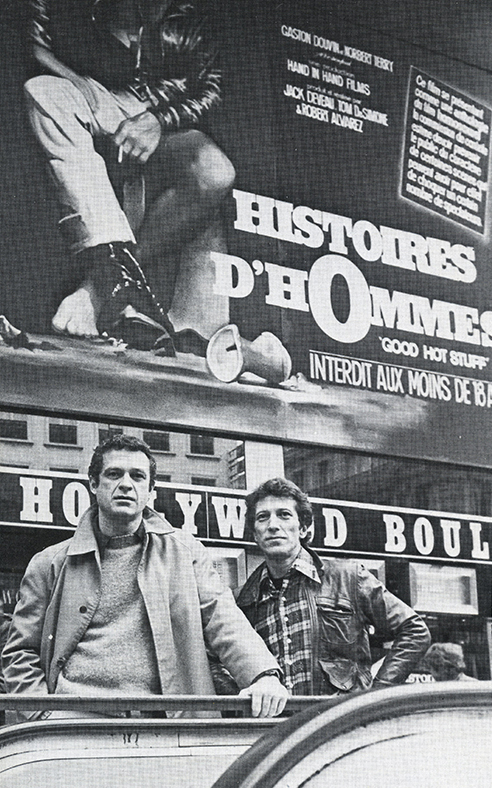
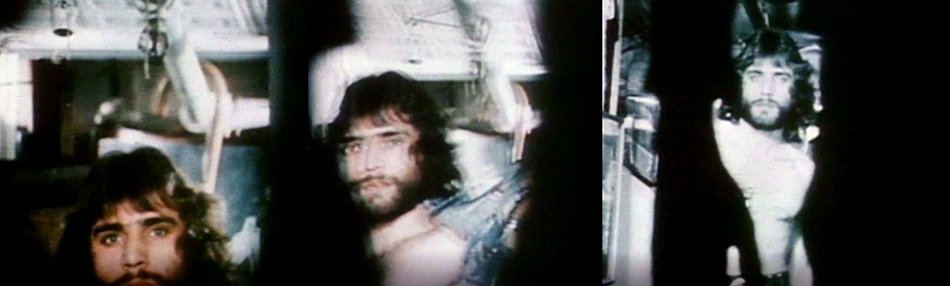
Jack Deveau & Bob Alvarez in front of French Good Hot Stuff billboard
Jack Deveau & Bob Alvarez in front of French billboard for Good Hot Stuff (DVD | Streaming); excerpt from the film

Alvarez: It wasn't the first film. It was the first American explicit gay film ever shown in France. We hooked up with a man named Norbert Terry in France who had apparently shot one or two movies that were in French. I always wanted for us to go there and be shown with subtitles and (laughs), you know, the whole thing. Because there’s a lot of narrative to Good Hot Stuff; Jack and some of our actors talked about being in the films, and so forth. We opened in Paris at two or three theaters. And they made a big deal out of promoting it. And, sure enough, we ended up outgrossing the [Robert Altman] movie Nashville, which was also playing there (laughs) - and Nashville is a classic film.

Bijou: (laughs) Yeah, that's amazing.

Alvarez: Jack and I had been to Paris a couple of times before, and we loved Paris... I still do. It’s a magical city and I love it. So we ended up, eventually after we made some more films, making a deal with a guy who was a producer in Paris, and contracted to make a movie in French and we would share the profits. It turned out to be a disaster, but we released the movie anyway.

Bijou: Was that Le Musée, [also known as Strictly Forbidden]?

Images from Le Musee aka Strictly Forbidden, 1974
Images from Le Musée aka Strictly Forbidden, 1974 (DVD | Streaming)

Alvarez: Le Musée, yeah. I had to end up using our work print, because they had confiscated our original negatives from the lab, so I had only the work print to work with.

Bijou: Oh wow, they confiscated it?

Alvarez: Yeah. They figured they had a legal right to do it, because we ran out, I guess. We didn’t continue working on the film. We left, and when we went to get our original negatives, found out that they had already been taken by the production company, and they weren't about to give it up.

Bijou: Wow.

Alvarez: Which is too bad, because it was really a beautiful film in many ways.

Bijou: Yeah, the footage is gorgeous from that film.

Alvarez: Yeah, the color footage is really good. And that’s only the work print, so you can imagine the original.

Bijou: Oh wow. I see, so the B&W is the work print?

Alvarez: Yeah, that’s all from the work print.

Bijou: Oh!

Alvarez: And I decided, from my experimental film days (laughs), “Hell, I’ll just mix them all up,” you know, and we’ll have B&W and color.

Bijou: I like that about it. I thought that was intentional. It felt intentional, watching it. (laughs)

Alvarez: That’s what I tried to do - make it look like it was intentional. I wasn’t happy with it, completely, because I knew what we could have had, but we didn’t want it to go to waste, so we released it. And made some money on it, you know.

Bijou: Yeah, I still think it’s a great one, but that would be sad knowing that you lost a good chunk of footage. What was your philosophy on making the Hand in Hand films at the time?

Alvarez: Well, almost all of them were shot in New York, and we dealt with New York situations and stories. I mean, Left-Handed is certainly that. And several others we did were about typical New York scenes. Some of our slighter stories had New York characters in them, and we used New York as a kind of a backdrop for everything. So we decided our films would have that element, as well as kind of a freewheeling style where we made it seem like being gay was a normal thing, long before (laughs), long before [many gay rights advancements]. We were just assuming that our characters all were gay and that’s how they talked, as normal people would talk.

Bijou: That’s true, that is kind of distinctive about your films - now that you said that - versus some other studios. In Hand in Hand's films, most of the people are already out and it’s set within gay life and that’s not, like, a huge ordeal with it.

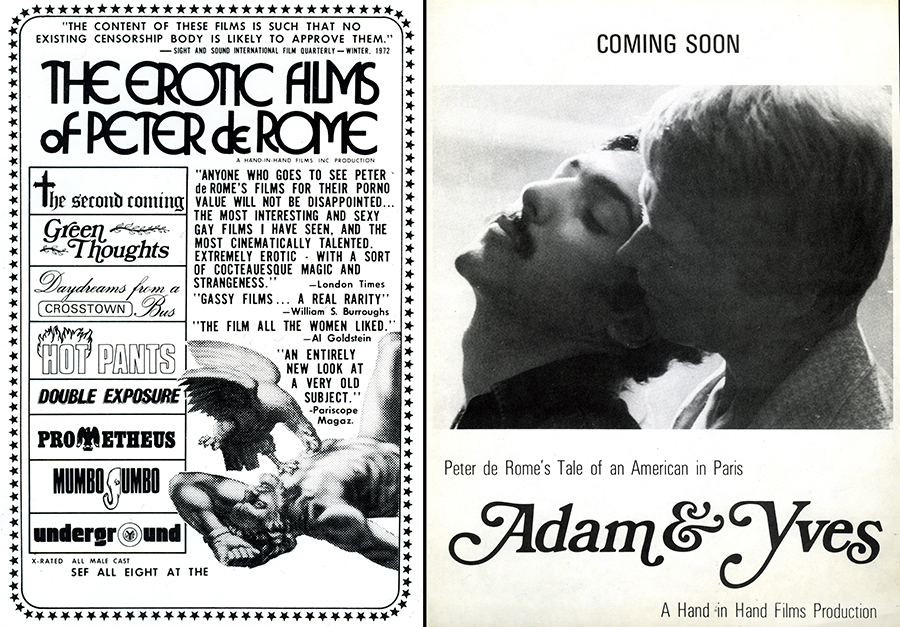
Alvarez: Yeah. And another film that we did early was… Well, we worked with this guy Peter de Rome on his first feature-length film. ‘Cause he had done some short films on 8mm. We ended up blowing up a lot of them to 16mm, and then adding a couple of his [other] short movies, and making a movie, after that, called Adam & Yves, which took place in Paris.

Posters for The Erotic Films of Peter de Rome and Adam & Yves
Posters for The Erotic Films of Peter de Rome 1972, (DVD | Streaming) and Adam & Yves 1974, (DVD | Streaming)
 
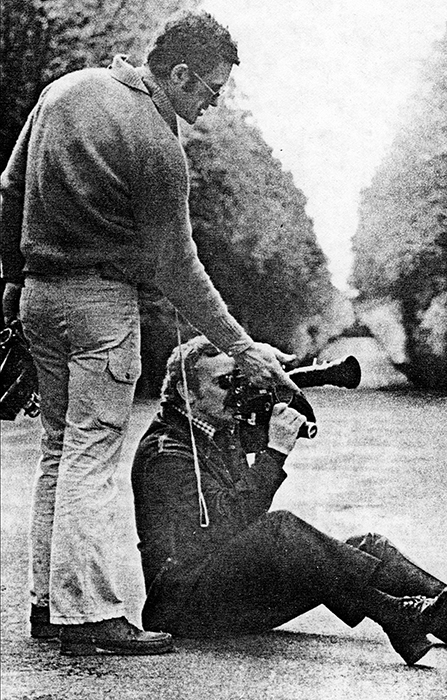
Jack Deveau and Peter de Rome filming Adam & Yves

Jack Deveau and Peter de Rome filming Adam & Yves; audio and set photos montage

Alvarez: Another chance to go to Paris; I didn’t go to, but Jack did. We made the film that Peter de Rome directed. Well, Jack actually directed it more than he did, but…

Bijou: Oh really?

Alvarez: But we gave him the credit, because it was his idea, and his concept and the whole thing about shooting some of it in Paris.

After Adam & Yves was released, we started working on a film which was a little more intricate… a lot more intricate, actually (laughs), called Drive. And I did a lot of quick cutting and switching from one scene to another, like in the middle of a sex scene; kind of making a comment about what was coming up, you know, sort of like a prequel to what was going to happen.

Bijou: Yeah, I love the edits in that movie.

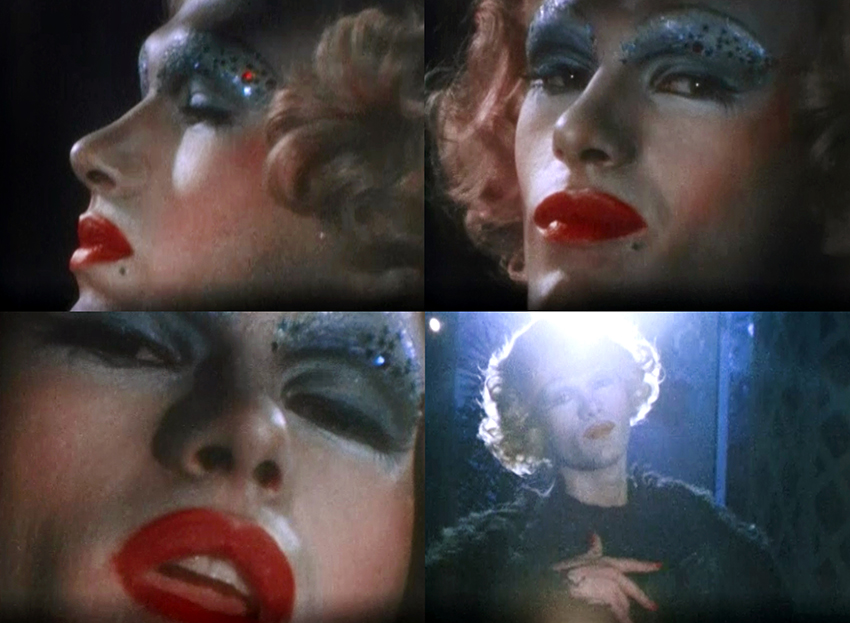
Alvarez: And it took place in this decadent disco that was run by the character named Arachne, whose goal in life was to rid all men of their sex drive. But she would do it by castrating them, up to the point where she found out that there was this drug being developed... This was funny, too, because this was long before Viagra or any of that stuff. But there was a drug being developed that would kill the instinct or the desire to have sex. So she wouldn’t have to be mutilating people anymore. (laughs) So her goal was to go out and get this drug and the scientist. She was an evil character. But as far as the movie goes and my involvement in it, I was very taken by this and I loved the idea that some of it took place in a disco. And there was a scene that was kind of a tribute or take off on Marlene Dietrich’s gorilla suit sequence in [Blonde Venus]. But we did our version of that with the character Arachne, who was in drag, of course, and I loved it. I think it really works well. And that’s one of the scenes where I cut to the disco. And we had original music for it. Now, I did my best to cut to the music, and then I intercut with the sex between the detective and his partner. So we go back and forth, back and forth, back and forth, until the scene at the disco became a climax when the Arachne character takes off the gorilla head and out she comes. And so that was the end [of the scene], and that was in vivid color. And at the same time, the couple was climaxing in their scene, and so the two climaxes kind of coalesced together.

Bijou: It's a great sequence.

Christopher Rage as Arachne, after emerging from the gorilla suit in Drive, 1974

Christopher Rage as Arachne, after emerging from the gorilla suit in Drive, 1974 (DVD | Streaming); Drive's original theme song by David Earnest

Alvarez: That’s what I mean about our films. I mean, there was so much… Not to make art, necessarily, but to make something that would be contemporary, of the day, and also would get us… We always had the goal, really, to get into regular movies - mass market movies - eventually, and this was sort of going to be our training ground. And, for a while, it looked like we could do it. I know Wakefield had the same desire and almost made it. But the whole business changed so quickly, and it became corrupted, and more of a “quick buck” kind of thing, and so forth. There were exceptions. There were a few filmmakers that were rather important at that time, and one of them was a guy by the name of Tom DeSimone, who ended up working with us on a couple of movies.

Bijou: Right, he shot a couple of them, didn't he?

Alvarez: Oh, he shot many films. That’s a whole other story. It’s in the book [Good Hot Stuff: The Life and Times of Gay Film Pioneer Jack Deveau], in the chapter on Tom DeSimone. Anyway, we liked him, because his movies - the movies he made, himself - were more substantial, and often had plots, and so forth. There were a few people like that. Another one was Fred Halsted who, in L.A. Plays Itself, used a rather - not only shocking - sequence, but also some underground film tactics.

Anyway, I was talking about Drive and how that was a departure from everything.

Bijou: Yeah! That’s the first really kind of elaborate effects piece that you did, right?

Alvarez: Yeah, exactly. I took some of the disco stuff to an optical house and had them do several things to make it more unusual. You know? I incorporated a lot of stuff like that in all our films, if possible.

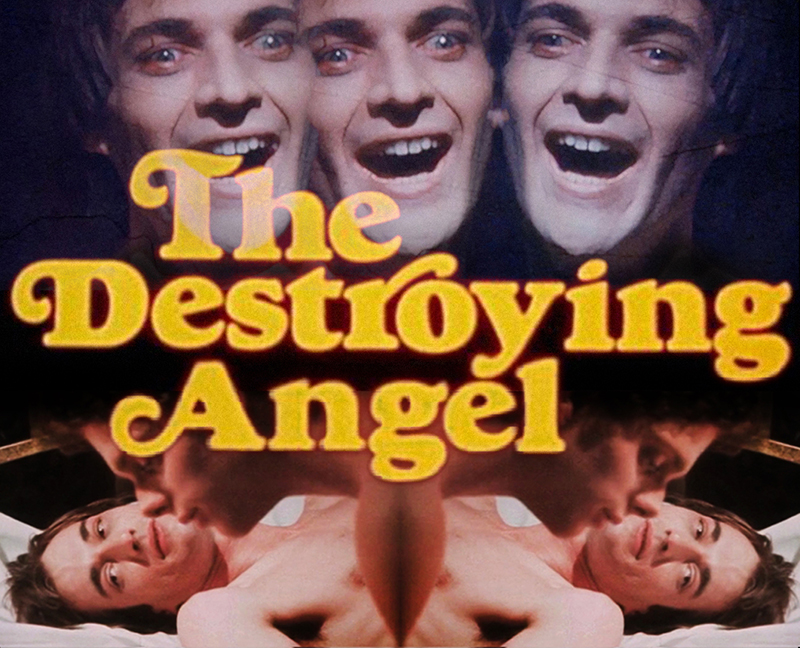
Bijou: Right. Destroying Angel has couple of those great sequences, too.

Alvarez: Right, Destroying Angel, especially.

Bijou: I love that one.

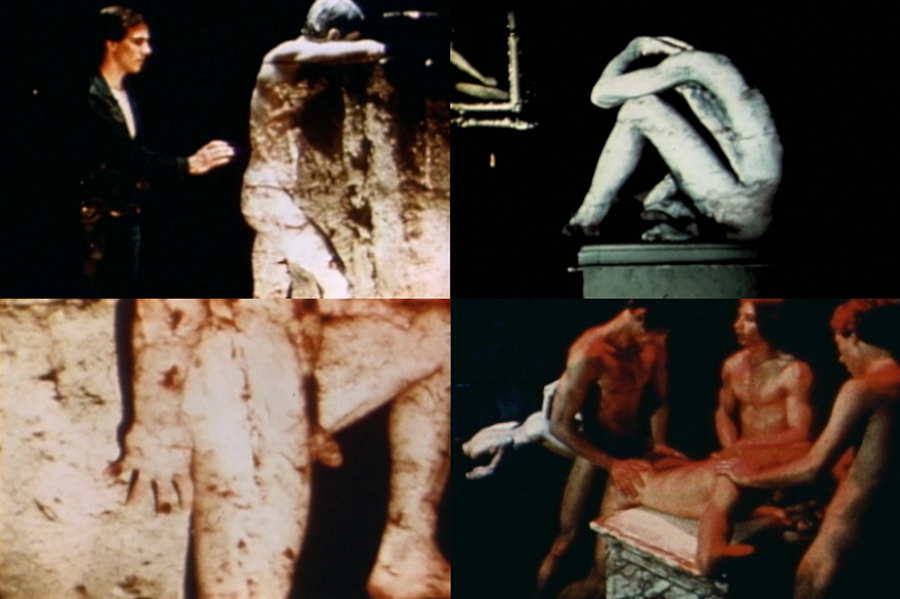
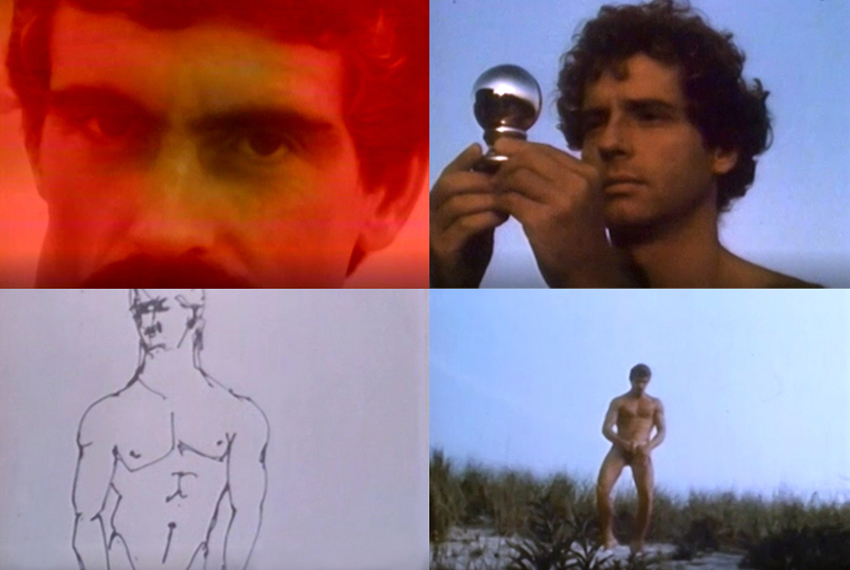
Images from Peter de Rome's The Destroying Angel, 1976

Images from Peter de Rome's The Destroying Angel, 1976 (DVD | Streaming); excerpts from the film

Alvarez: Yeah. And there’s one called Fire Island Fever, which has a sequence where one of the characters accidentally takes a tab of acid and we kind of see what he’s seeing through his eyes as he is high, which is a fantasy sex scene with what turns out to be one of the characters that he meets at the end of the film. Anyway, I tried as much as possible to incorporate some more daring kind of editing. You know, make our films look different. And they did. (laughs) For the most part, they did.

Bijou: Yeah, they did!

Fire Island Fever fantasy sequence
Fantasy sequence from Fire Island Fever, 1979 (DVD | Streaming)

Bijou: Oh, I wanted to ask you about Kees Chapman.

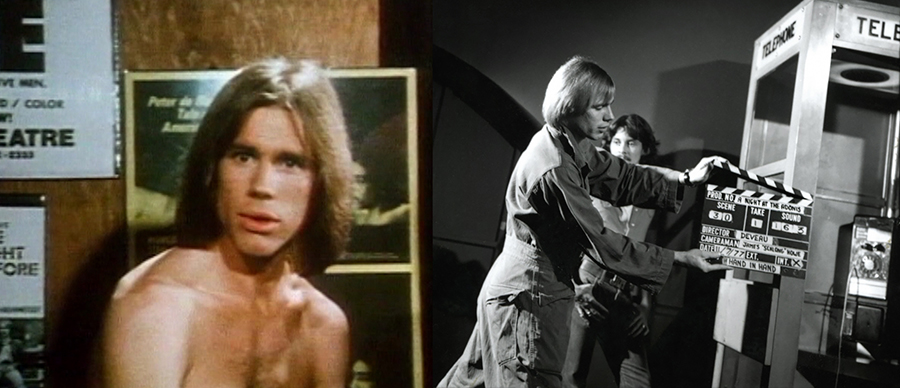
Alvarez: He was also, I think, from a Dutch background. But he was an American; I think he was born here in the States. His lover had been one of our actors early on. [His lover] was actually in Drive. He played the scientist. He had long blond hair. For the movies, he was [named] Mark Woodward; to us, he was his real name, Sydney Soons. And he became an employee of ours, and was helping Jack with keeping track of the finances and getting the movies sent out to the exhibitors, and all that.

Fire Island Fever fantasy sequence
Mark Woodward aka Sydney Soons hosting Good Hot Stuff and slating for A Night at the Adonis, 1978 (DVD | Streaming)

Alvarez: After a while, he and Kees ended up breaking up, and then Kees kind of took over his job, and became even more of a necessary part of Hand in Hand Films. And he also ended up doing some camerawork for Jack, as well as directing, and so forth.

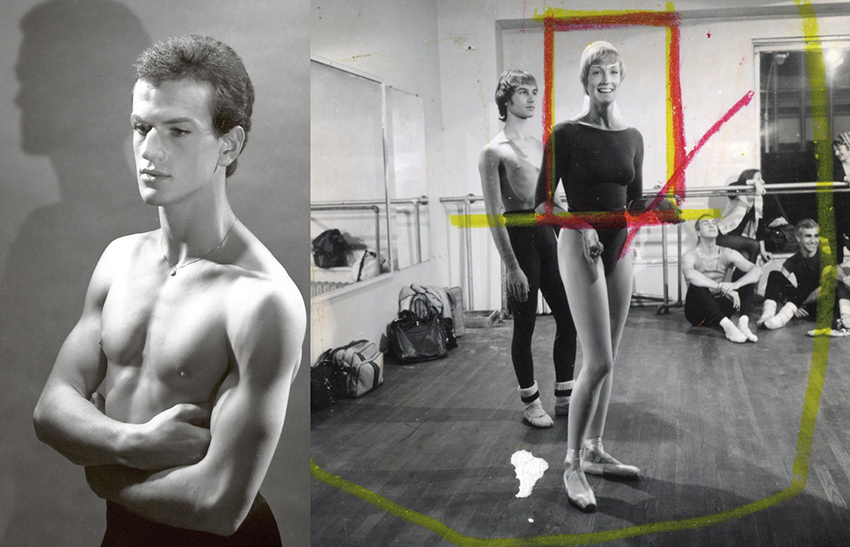
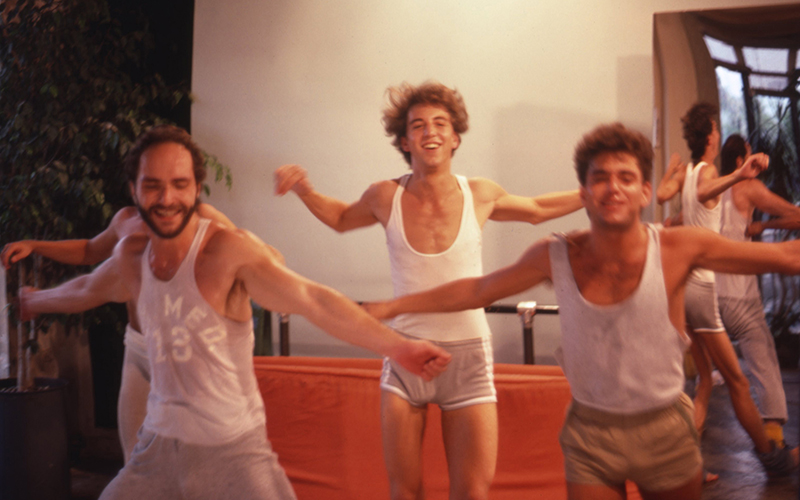
In fact, he shot the sequence I directed in In Heat, which was shot in a dance studio. It was guys taking a ballet class, and then the teacher takes a break, and during that time, the boys get together and have sex. And eventually, the teacher comes back and he joins the crowd. (laughs) So that was one small segment that I directed, because I’d always wanted to, but I didn’t want to impose on Jack’s ideas, you know, because he had plenty of ideas.

In Heat dance studio segment directed by Robert Alvarez
Dance studio segment directed by Robert Alvarez in the Hand in Hand shorts collection In Heat (DVD | Streaming)

Alvarez: In fact, Kees and I tried to make a full film, with Kees directing, after Jack died, but it turned out that I couldn’t use the footage; it was too dark and just a mess. And I’ve always thought I should take that footage again and look at it again with today’s technology, you know?

Bijou: Oh, you should. I bet it could be enhanced a bit, yeah. That would be interesting. What was the premise?

Alvarez: I’m not too sure, except I know that it had the lead character going to Fire Island and having several encounters there. And finally, at the end, I think he gets back with his lover that he had at the beginning of the movie. It’s been a long time since I’ve looked at it.

Bijou: I bet it could be brightened.

Alvarez: Yeah. I think with today’s video technology, especially, a lot of things can be certainly improved. Steven’s done that already. I’m very pleased with the way he has kept our movies up to date.

Bijou: Oh, I'm glad.

Alvarez: Oh, let me finish with Kees. Like I said, he became part of our group that ended up being Jack, Kees, and myself, who were the principal people. We had another partner for a while named Jaap Penraat. But that ended at some point and… Not too happily, but it ended.

And that’s when Kees became interested in working for us and kind of took over Jaap’s position, and started working with Jack directly. He was a terrific guy. And I was very surprised when he died of AIDS because… He must have gotten it from his lover, Sydney, because Sydney also got it and also passed away. And, a year or two later, Kees became ill and he died.

So that left it just up to me, and that’s where I finally decided - after making that little film, which was kind of satisfying for me - that it was time to get out of the business. That’s when I started looking for people that might be interested in buying the business, buying all the material, which turned out to be Steve. And I’m glad it was, because he’s been the most trustful of the ones that I talked to about it. There were other people interested, but I knew what would happen. We wouldn’t be who we are today if it had gone to somebody else and they copied our films badly and, you know. It would have been awful. So I’m glad Steve had some real interest in keeping it as a sort of a record of what was happening in the time when they were made, and so forth, which was one of the things Jack…

Speaking of the philosophy, you know, he said that these films were like literature and that if we kept them - you know, rather than sell them - we would end up eventually having them seen over and over and over again and be a representation of what it was like in the days that we shot them, you know? Because most of them were contemporary stories of people at that time. So that’s kind of what his philosophy was. He would make films and try to incorporate things that were relevant to the time that we were shooting in.

Bijou: Yeah, that was probably a conscious effort from the start, even from Left-Handed?

Alvarez: Yeah. It’s funny. After making Left-Handed, and then making a few others, I kind of became a little bit… It wasn’t embarrassed exactly, but… Left-Handed is, no question about, it a crude film. We didn’t shoot in sync sound, we had to dub in the voices, and so forth, and we did it as best we could. And then, Left-Handed always bothered me, because, to me, it wasn’t professional. And looking back at it now, I find I like it very much, you know? (laughs) I like what we were doing.

Bijou: Yeah, I think it's great.

Alvarez: And the fact that it was different. It was different than any other gay sex film that was ever made.

Bijou: Yeah, it is! It does stand out. Even the non-sync sound does something really interesting in it. Its style feels really different, even from your other work.

Alvarez: Yeah, yeah. To me, now, the dubbing almost becomes like a narration, you know? Like it’s almost purposefully done that way (laughs), you know, after the fact. But anyway, I ended up really liking Left-Handed a lot, because it sort of set the mood, also, of my type of film editing. And a lot of the techniques I used in Left-Handed, I used later on in other films that we made, so it kind of was our benchmark movie, being our first.

Bijou: That’s interesting you mentioned developing some techniques there, because in terms of developing cutting hardcore sequences, since the genre was pretty new in the era, were you sort of figuring that out from scratch or… I mean, you’d seen some other [porn] films, but… What was that like developing how to cut and how to pace those sequences?

Alvarez: Well, for one thing, our films, sometimes they got criticized because they weren’t explicit enough, whereas some films are almost like a medical study.

Bijou: Yes. (laughs) Yeah, yeah, yeah.

Alvarez: Ours were more like – at least I felt and Jack felt – to capture the sensuality of the sex or the dynamics of a sex scene, and whatever shot said that the best is the shot that we used. So we didn’t go in for, like, where you can see every pubic hair, you know? (laughs)

Bijou: (laughs) Yeah. Right. Because that B&W sex scene from Left-Handed is, I think, very beautiful and erotic, but it’s far from being like a medical, durational kind of sex scene.

Alvarez: Yeah. And that B&W sequence in that section, Jack did on purpose B&W, because he said, “We’re going to do like The Wizard of Oz, only backwards.” (laughs) In The Wizard of Oz, it’s in B&W until Dorothy goes through the door, and goes into Oz, and it becomes Technicolor. [And in Left-Handed], when it becomes a dream sequence, it turns into B&W film. And that’s how that came about. And with things like that, you know… I mean, we did that before anybody else [in sex films] did that. Maybe some people followed us, you know, and did the same sort of thing, but… But my cutting, especially, I really loved the idea of creating a piece, a sex scene that had some rhythm to it and some sense of movies, of real movies, you know?


Bijou: Oh yeah, that’s a good distinction, because the sex scenes do feel cinematic in your films.

Left-Handed color to black-and-white shift
Left-Handed color to B&W shift

Alvarez: Yeah. So that’s pretty much the story of Hand in Hand Films. There’s a lot more. If you look at the book, you’ll see that there is a lot more. (laughs)

Bijou: Oh yes, there is. It's a fantastic read. I’m so happy you all put that together.

Alvarez: The book was written by a German guy [Marco Siedelmann] that I met and got to know at a festival where our films were shown, and he said, “I want to do a book on Jack Deveau.” So I said, “Great!” And he said, “And it should have pictures,” and I thought, well, I have some pictures. I mean, Steve has most of them, but I kept a few for myself. You know, things that were duplicates, and so forth. And so, with that, I was able to help him get this book out.

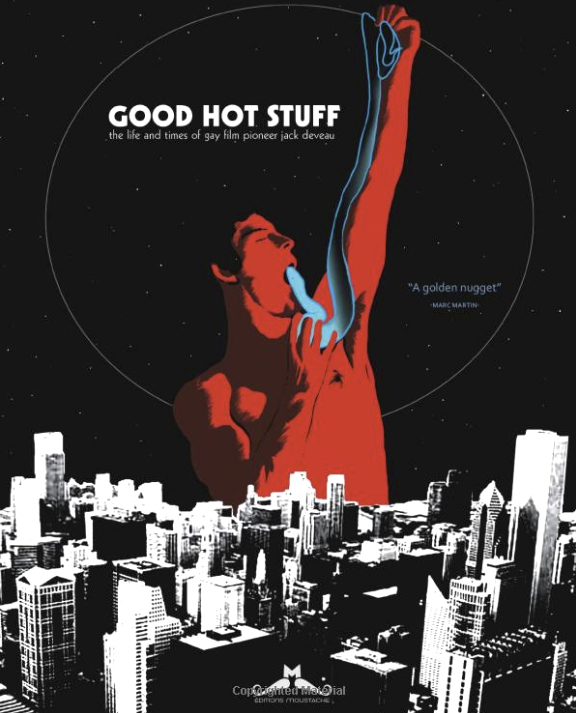
Good Hot Stuff book cover
Book cover - Good Hot Stuff: The Life and Times of Gay Film Pioneer Jack Deveau

Thank you to Robert Alvarez for taking the time to talk to us and share stories. For much more information about Hand in Hand Films and a more extensive interview with Alvarez, please check out Good Hot Stuff: The Life and Times of Gay Film Pioneer Jack Deveau.

Bijou is very proud to present Hand in Hand's full film catalog! You can watch their movies on DVD and Streaming.

Further Reading, Listening & Viewing for more information on Hand in Hand Films:

Excerpt from the Hand in Hand Films documentary Good Hot Stuff (1975) on Vimeo and more Hand in Hand clips on our Vimeo and YouTube channels
Bijou Blog - Jack Deveau: Vintage Gay Porn Director Profile
Interview with Tom DeSimone (Part 1 and Part 2)
Blog - Hot House: Behind the Scenes
Ask Any Buddy podcast episodes on movies produced and/or distributed by Hand in Hand Films: Good Hot Stuff, Drive, The Night Before, Adam and Yves, The Destroying Angel, Rough Trades, Fire Island Fever, American Cream, Catching Up, The Idol
Blog - Chris Rage, Arch Brown, & Frank Ross: Hand in Hand to Live Video
Blog - The Backstory of Peter de Rome's The Destroying Angel
Hand in Hand Films Wikipedia entry

  3189 Hits

THE “Other” IDOL

By Josh Eliot

Depending upon which generation you come from, when you saw the name IDOL within the gay adult industry it could have referred to two very different origins. If you were coming out in the 1970’s or early 80’s, you watched Tom DeSimone’s classic The Idol at the cinema or on a top loading VHS player. Similarly, If you were coming out around 1990 and you were watching a movie titled or starring an Idol, Ryan Idol was the headliner in a slew of features using his last name as the first name of their title. But wait, there was a third Idol of interest: the “other” Idol, a young, masculine Massachusetts stud with a flawless body, outstanding facial features and a very fuckable butt that directors put to very good use. If you were a gay porn aficionado in 1994, there was Tony Idol, the younger brother of Ryan Idol – well, for marketing purposes only.

Tom DeSimone's movie The Idol with its cast, plus Ryan and Tony Idol
Tom DeSimone's movie The Idol with cast, plus Ryan & "baby brother" Tony Idol


The IDOL


Written, produced, and directed by Tom DeSimone with cinematography by Nick Eliot, the movie’s theatrical release was in 1979. From Hand in Hand FilmsThe Idol tells the story of a college track star who thinks he might be gay, and is determined to find out. The cast, led by Kevin Redding in his one and only adult gay film, also features Mark Bitler, Nick Rodgers, Greg Dale, Jerry Foxe, Jim Battaglia, Peter Borchard, Darla-Lee Barnett, and Derrick Stanton. The Idol was considered a movie like no other that, to this day, is considered one of the very best gay adult films of its time. Just read some reviews from Letterboxd and magazines: 

“One of the most beautiful and romantic coming of age movies in the history of homosexual erotica.” – Patrick S.

“A poignant, gentle and romantic story with sexy guys, believable performances and beautiful cinematography.” – Ben Kinney Harris

“The culmination of everything that Tom DeSimone had spent a decade working towards. DeSimone’s best film?” – Elizabeth Purchell

“The ultimate coming out story! If a person were to see only one sexually explicit gay film in his lifetime, The Idol is that film.” – The Advocate

Ryan IDOL


1990 brought the world a new icon, Ryan Idol, who starred in his first movie, Idol Eyes, for director Matt Sterling. Coming off the success of his Playgirl photo spread in the February 1989 issue, Ryan Idol rose to fame because of his handsome looks, hot body, and debut movie from the most in demand director of the time, Matt Sterling. 1991 brought Score 10 for Sterling, Idol Worship for H.I.S Video, and, in 1992, a gay and straight movie pair for All Worlds: Trade-Off (gay) and Letters From The Heart (straight), where Idol worked with actress Bobbi Blair. In 1993, Catalina Video jumped on the band wagon to shoot the very first movie where Ryan Idol sucks dick – it was called Idol Thoughts. I remember when the GM told me how much he was getting paid to do the movie, I was quite shocked; the amount was more than the budget for one of our monthly releases. Chi Chi LaRue brought Ryan to Catalina, so he directed the movie and I was lead videographer. It was kind of cool to be the first ones to witness Ryan going down on a guy, and I made sure to shoot it beautifully! More movies followed, like Idol Country (1994) and Idol in the Sky (1996), which was his last before retirement from the industry. In 1999, Ryan joined the cast of the play Making Porn, followed by the stage production of Scent of Rain. He also played the role of “Cisco Patron” in the 2007 revival of Terrence McNally’s The Ritz. It’s no secret that Ryan Idol had his share of problems and jail time, but all of that is not really relevant to today’s story.


Ryan Idol on the cover of Playgirl and on several box covers
Ryan Idol's brilliant career


Tony IDOL


From the moment I received his pictures at the Catalina offices, I knew we found someone special. I immediately saw his resemblance to Ryan Idol, and my mind started racing on how we could market him. We would promote him as Ryan Idol’s younger brother Tony, who, unlike Ryan, is a bottom. We initially talked on the phone, and I remember thinking that his accent was so “Boston,” which added to his charm. It reminded me of working with Jake Corbin years earlier, that “Paaak the caa in the yaaaad” East Coast slang. When we flew him to California, we shot his introductory masturbation scene for the movie Stargazing 5, which featured up and coming stars. During that trip, we also gave him a full sex scene in Chi Chi LaRue’s movie Seeds of Love. Tony Idol was the epitome of a video virgin, freshly graduated from high school and still wet behind the ears, as they say. I felt obligated to go out of my way to make sure he felt safe and secure while on the set. I wasn’t sure how sexually active he was at the time, so I constantly checked in with him to make sure he was comfortable as things progressed within the sex scenes. When it came time for anal, he definitely needed to open up with a dildo so he wasn’t so tight for the co-star. We booked extensive magazine layout shoots with him and let him know step by step how we were going to promote his name. He made a number of trips to California in 1994 and 1995 for the following movies: Stargazing 5, Seeds of Love, Idol Dreams, Idol in Exile, Down On It, Revenge of the Bi Dolls, Idol Universe, The Roommate, and Jawbreaker.


Tony Idol's first movie, Stargazing (1993) and more from 1994 and 1995
Tony Idol's first movie Stargazing (1993) & more from 1994 and 1995


Consensus around the office was that, because we just loved throwing the Idol name around, we might have oversaturated him too quickly. His final scene in Jawbreaker was actually one of his best performances to date, and his scene with Vince Rockland and Hunter Scott was fireworks! I knew it was his last shoot with us at the time and it made me question myself as to why we were not going to book him anymore. There are models we used for decades because they were solid performers, but not necessarily “stars.” He was a solid performer and throughout his time with Catalina he never lost his innocent boyish charm, which is rare – trust me. I did take solace in the fact that when his contract ended with us, Chi Chi booked him in movies with All Worlds Video and Falcon Studios. He was in All Night Long (1996) for Jocks, then Freshman (1997) for Falcon, and his final movie Gold Diggers (1997) for All Worlds. In hindsight, I wish we wouldn’t have been stuck in the Idol box I created. Making him the younger brother of Ryan didn’t really work long term. If anything, when we started our Freshman Features and Generation Gap Features (mature men with younger guys), he would have been perfect for those types of movies, as he was still in his early 20’s. He would have been awesome as the lead in either the Junior or Rascal series that we started later on. A twink with a face and body like that would have really stood out. He is one of the models I still think about to this day; he would be in his late forties/early 50’s at this point. I’m confident with his level head and charm he is doing just fine.

Tony Idol
Tony Idol


Bio of Josh Eliot:

At the age of 25 in 1987, Josh Eliot was hired by Catalina Video by John Travis (Brentwood Video) and Scott Masters (Nova Video). Travis trained Eliot on his style of videography and mentored him on the art of directing. Josh directed his first movie, Runaways, in 1987. By 2009 when Josh parted ways with Catalina Video, he'd produced and directed hundreds of features and won numerous awards for Best Screenplay, Videography, Editing, and Directing. He was entered into the GayVN Hall of fame in 2002.


You can read Josh Eliot's previous blogs for Bijou here:

Coming Out of my WET SHORTS | FRANK ROSS, The Boss | Our CALIGULA Moment | That BUTTHOLE Just Winked at Me! | DREAMLAND: The Other Place | A Salty Fuck in Saugatuck | Somebody, Call a FLUFFER! | The Late Great JOHN TRAVIS, My POWERTOOL Mentor | (Un)Easy Riders | 7 Years with Colt Model MARK RUTTER | Super NOVA | Whatever Happened to NEELY O’HARA? | Is That AL PARKER In Your Photo? | DOWN BY LAW: My $1,000,000 Mistake | We Waited 8hrs for a Cum Shot... Is That a World Record? | Don't Wear "Short Shorts" on the #38 Geary to LANDS END | How Straight Are You Really? | BEHIND THE (not so) GREEN DOOR | The BOOM BOOM Room | CATCHING UP with Tom DeSimone | Everybody’s FREE to FEEL GOOD | SCANDAL at the Coral Sands Motel | DEEP INSIDE THE CASTRO: The Castro Theatre | DEEP INSIDE THE CASTRO: The Midnight Sun | RSVP: 2 Weeks Working on a Gay Cruise Ship | VOYAGER of the Damned | I'M NOT A LESBIAN DIRECTOR | Diving Into SoMa/Folsom: THE FOLSOM STREET FAIR | Diving into SoMa/Folsom: A TALE OF TWO STUDS | BALL BROTH | My 1992 “Porn Set” Diary | Out of Print | There’s a Gloryhole WHERE??! | LUNCH HOUR: When the Big Boys Eat | IN and OUT and All ABOUT | UNDER the COVERs with Tom Steele | 8 Is Enough on Sunsex Blvd | Steve Rambo & Will Seagers For Breakfast | The Many Faces of Adult Film Star SHARON KANE | The ALL-MAN Magazine Interview: The Man Behind Catalina Video | Captain Psychopath | BAD BOYS SCHOOL | VAMPIRE'S GRAVE | The Making of CatalinaVille (PART 1) | The Making of CatalinaVille (PART 2) | Private Dick & The Young Cadets | Meet RAY HARLEY | The GOLD COAST Gold Rush Boys | Colt Model MARK RUTTER: In His Own Words | Bringing in the BIG GUNS | “WHAT THE F@CK?” Moments | You So RUSSO | Bond, SCOTT BOND | I Just Watched: KILLING ME SOFTLY | Sex in Tight Places | Calling GLORIA | DOWN FOR THE COUNT | More Than a Mouthful | When JON KING Returned to Catalina Video | Junior Meets the BEAR Patrol | A Taste for Leather and Fur | Straight to Bed | The Hills Have Bi’s | The Malibu Pool Boy: Cody Foster | New England Summer | The Making of RUNAWAYS 1989 | The Making of FULL SERVICE 1989 | Hot Buttered Cop | The Making of HARD TO BE GOOD 1990 | The Real CONJURING HOUSE | It’s Not a Crime, It’s a SCORE | I Just Watched: Steve Scott’s SCREENPLAY (1984) | Wet and Wild | 69: Discover the Secret | What Really Happened BEHIND THAT BARN DOOR! | I Just Watched AL PARKER & WILL SEAGERS in WANTED | Secret Boys Club | Jawbreaker Pt. 1 | Jawbreaker Pt. 2 | I Just Watched CRUISIN’ THE CASTRO | 80s/90s Porn Star RYAN YEAGER | ADAM Film World’s GAY VIDEO GUIDE | ERIC STONE: Ranger in the Wild | THRILL ME with a SINGLE WHITE MALE... | The SPOILED BRAT | BUSTER & STEVE YORK | LANCE, TEX ANTHONY & MICHAEL GERE | KIP NOLL: The First Real Twink Superstar | THE GREASE MONKEYS

  294 Hits
GO to Top